
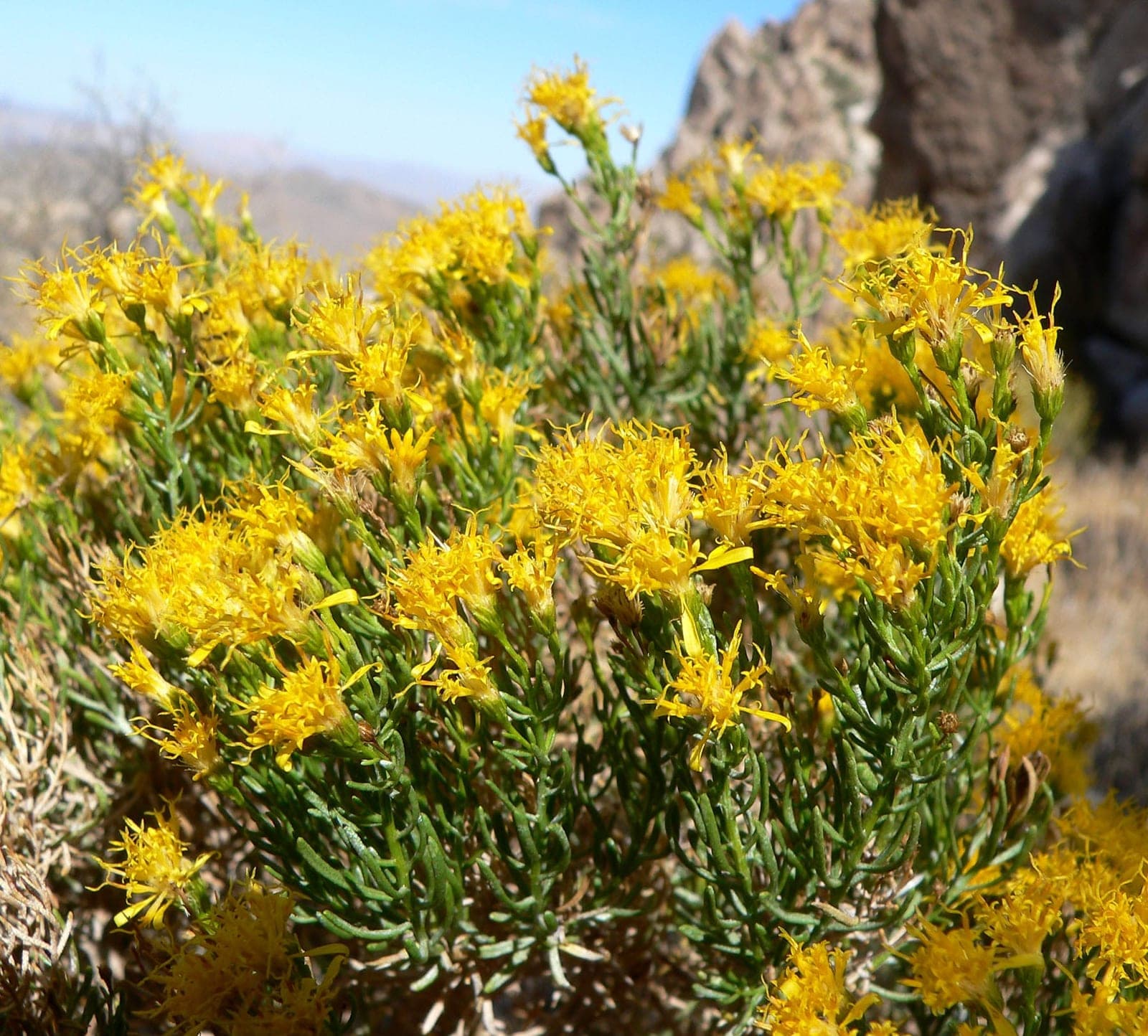
Turpentine Bush is a compact, aromatic evergreen shrub native to rocky desert slopes, canyon walls, and gravelly washes of the southwestern United States and northern Mexico. Its needle-like foliage releases a sharp resinous scent when brushed, and in fall it produces clusters of small bright yellow composite flowers at a time when few other woody plants are blooming in desert gardens.
It thrives in lean, rocky, alkaline, fast-draining soils and handles intense reflected heat and prolonged drought without supplemental irrigation once established. Naturally occurring on hillsides and rocky outcrops in the Chihuahuan and Sonoran desert regions, typically between 3,500 and 7,000 feet elevation, it adapts well to low-desert residential xeriscape. In the landscape it functions as a low-water border shrub, slope stabilizer, and habitat plant - its fall flowers are a late-season nectar source for native bees and butterflies when little else is available.
Ecoregions:North American DesertsSouthern Semi-Arid HighlandsTemperate Sierras
Root rot
Plants wilt, yellow, and stunt even in moist soil; lower stems and roots turn brown, soft, and mushy and the plant may collapse. Most common in heavy, wet, or poorly drained ground.
Improve drainage and stop overwatering, and never plant too deep. Lift and destroy badly affected plants along with the soil around the roots. Grow in raised or free-draining beds to prevent it returning.