
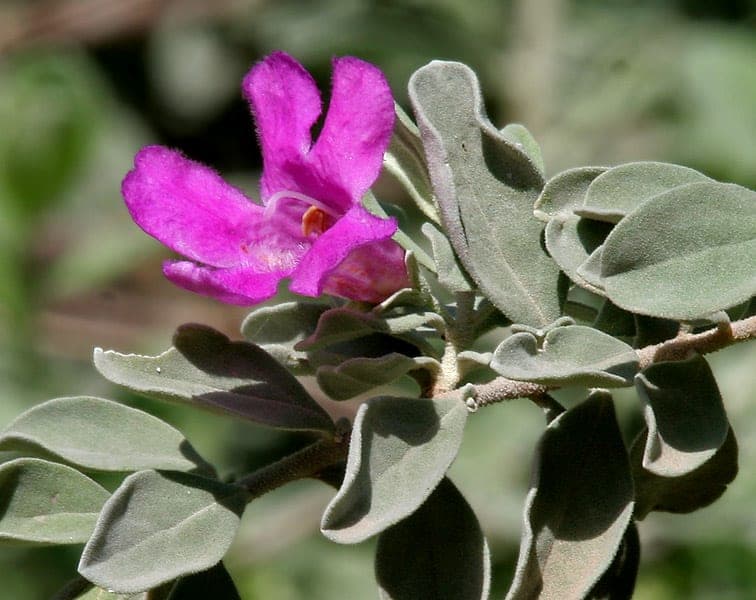
Texas Sage (Leucophyllum frutescens) is an evergreen shrub native to limestone hillsides and desert scrub of southern and western Texas and adjacent northern Mexico, and is the official State Native Shrub of Texas. Despite the common name, it belongs to the figwort family (Scrophulariaceae), not to Salvia. Its woolly silver-gray foliage and flushes of purple to lavender flowers make it a staple of xeric landscapes throughout the Southwest.
The shrub's nickname barometerbush reflects its habit of flowering in response to rising humidity, often immediately before or after summer thunderstorms rather than on a fixed seasonal calendar. It demands full sun and sharp drainage above all else; clay soil or excess irrigation leads quickly to root rot and plant decline. Once established in alkaline, rocky, or sandy soil it requires no fertilizer and little supplemental water. It tolerates reflected heat from walls and pavement. Light, periodic shaping maintains a compact form; cutting hard into old, leafless wood should be avoided.
In Mexican folk medicine, cenizo has been used as a fever remedy, with leaf preparations also applied for skin infections. Chemical analyses of leaf extracts have identified terpenoids and phenolic compounds with confirmed antimicrobial activity.
Ecoregions:Eastern Temperate ForestsGreat PlainsNorth American Deserts
Texas Root Rot
Sudden wilting of branches or the entire canopy, often following a wet period. White cottony fungal mats develop on infected roots. Wood at the crown appears dark and water-soaked. Decline can progress to tree death within weeks.
No effective chemical cure exists. Ensure excellent drainage and avoid overwatering. Remove and destroy all infected plant material. Avoid replanting susceptible species in the same soil for several years.
Root rot
Plants wilt, yellow, and stunt even in moist soil; lower stems and roots turn brown, soft, and mushy and the plant may collapse. Most common in heavy, wet, or poorly drained ground.
Improve drainage and stop overwatering, and never plant too deep. Lift and destroy badly affected plants along with the soil around the roots. Grow in raised or free-draining beds to prevent it returning.
Powdery mildew
White or grey powdery coating on leaves - usually starting on older growth in humid conditions or when nights cool.
Improve air circulation by thinning plants. Apply neem oil or potassium bicarbonate spray at first sign. Avoid overhead watering.