
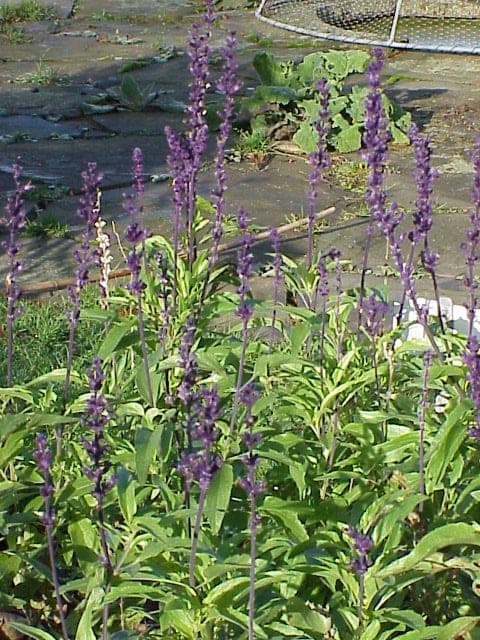
Salvia farinacea is a herbaceous perennial native to Texas, Oklahoma, and the Mexican state of Nuevo León, grown across much of North America as a heat-tolerant annual in cooler climates. Its violet-blue spikes rise above glossy, narrow foliage - the glossy leaf texture sets it apart from most salvias, which carry matte or velvety leaves. The name farinacea refers to the mealy, floury coating visible on the calyces and stems.
In zones 8–10 it reliably returns from the root after mild winters; in zone 7 survival is marginal and mulching the crown after first frost improves the odds. Farther north it is treated as an annual and planted out after the last frost date. Blooming runs from late spring through hard frost, and cutting spent stems promotes a continuous supply of new spikes. Butterflies, native bees, and hummingbirds use the plant heavily throughout the season. It performs best in lean to average, well-drained soil; rich or consistently wet ground encourages soft growth and root problems.
Ecoregions:Eastern Temperate ForestsGreat Plains
Powdery mildew
White or grey powdery coating on leaves - usually starting on older growth in humid conditions or when nights cool.
Improve air circulation by thinning plants. Apply neem oil or potassium bicarbonate spray at first sign. Avoid overhead watering.
Root rot
Plants wilt, yellow, and stunt even in moist soil; lower stems and roots turn brown, soft, and mushy and the plant may collapse. Most common in heavy, wet, or poorly drained ground.
Improve drainage and stop overwatering, and never plant too deep. Lift and destroy badly affected plants along with the soil around the roots. Grow in raised or free-draining beds to prevent it returning.
Fungal leaf spot
Brown or purplish spots on the leaves, often ringed with a yellow halo, that spread and merge in warm, humid, or wet weather; heavily spotted leaves yellow and drop early.
Pick off spotted leaves and clear fallen debris to remove overwintering spores. Improve air circulation by thinning, and water at the base so foliage dries quickly. If it persists, apply a copper- or sulfur-based fungicide at the first sign.