
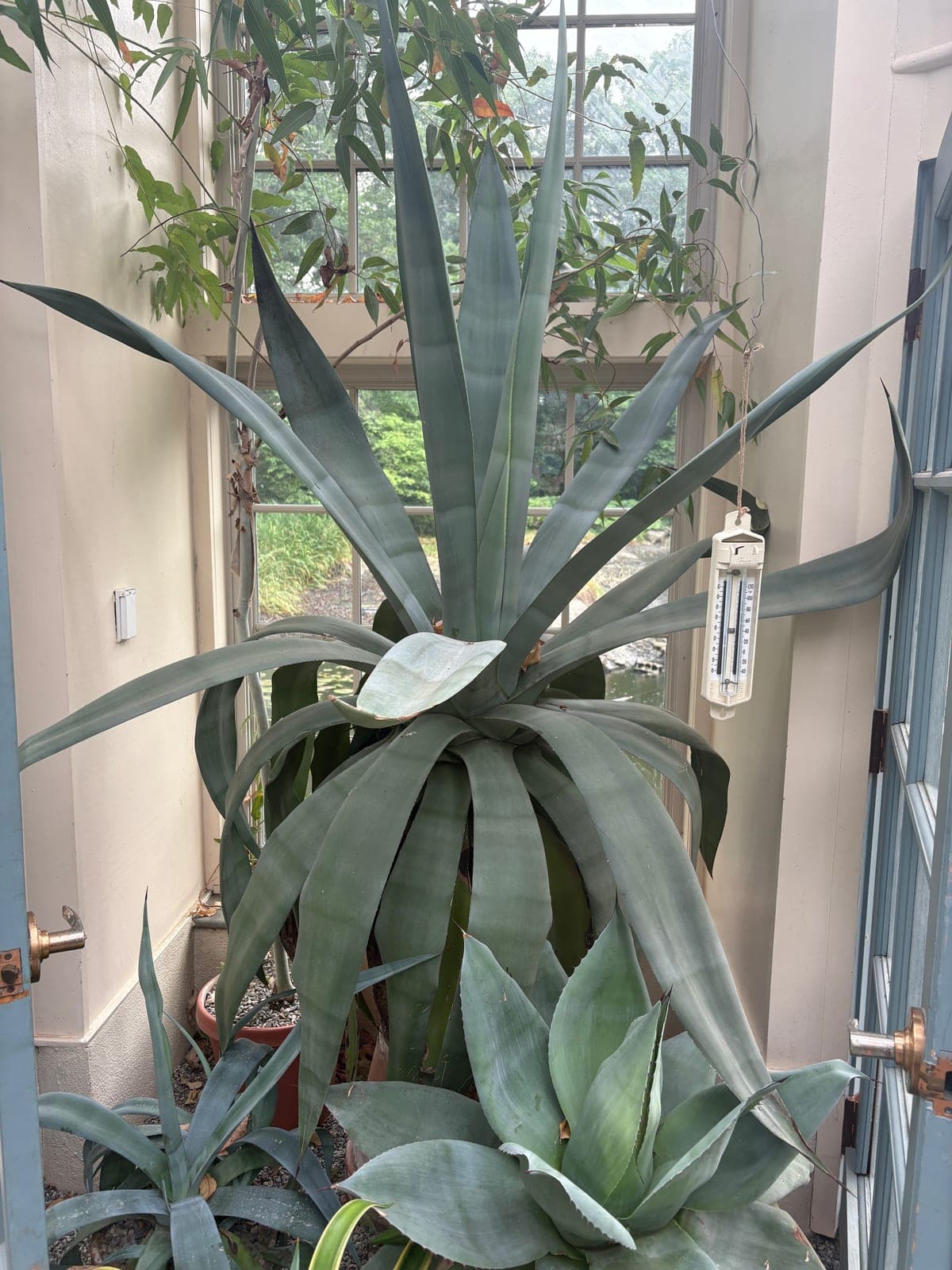
Agave americana is one of those plants that rewards patience and punishes neglect only when you crowd it - get the basics right and it practically grows itself. Start with the sharpest-draining soil you can manage: dig in at least 50% coarse grit or decomposed granite if your native soil holds moisture. Plant in spring or early summer when soil temperatures are reliably warm, setting the crown at or just above ground level so water sheds away from the base. The single most common mistake is overwatering - more agaves die from wet roots than from drought. In containers, terracotta is your friend. Give it a location with blasting full sun, and resist the urge to fertilize heavily; a light feed of low-nitrogen cactus fertilizer in spring is more than enough. After several decades (not quite a century, despite the name), your plant will send up a towering flower spike, set seed, and die - but not before producing pups around the base that carry the lineage forward. Wear thick gloves and long sleeves when working near it; the terminal spines are genuinely dangerous.
Beyond the garden, Agave americana has a rich history of human use that makes it one of the more remarkable plants you can grow. In traditional Mexican medicine, the sap from the leaf base has long been applied to wounds and burns for its mild antiseptic and anti-inflammatory properties, and a tea made from small amounts of the root was used to support digestion and liver function - though internal use calls for real caution and informed guidance. On the culinary side, the young flower stalk can be roasted before it fully elongates, and many describe the flavor as similar to molasses-sweet asparagus; in Mexico this is still a seasonal delicacy. The plant's sap is the raw material for pulque, an ancient fermented beverage, and with further processing, mezcal. The leaf fibers, called sisal or henequen depending on the species, have been used for rope and textiles for thousands of years. For the home gardener, simply knowing you're growing a plant that has clothed, fed, healed, and intoxicated people for millennia adds a satisfying layer to every season you spend watching it slowly unfurl.
Growing it indoors up north? See the indoor care guide - light, water, and the rhythm that keeps it flowering as a houseplant.