
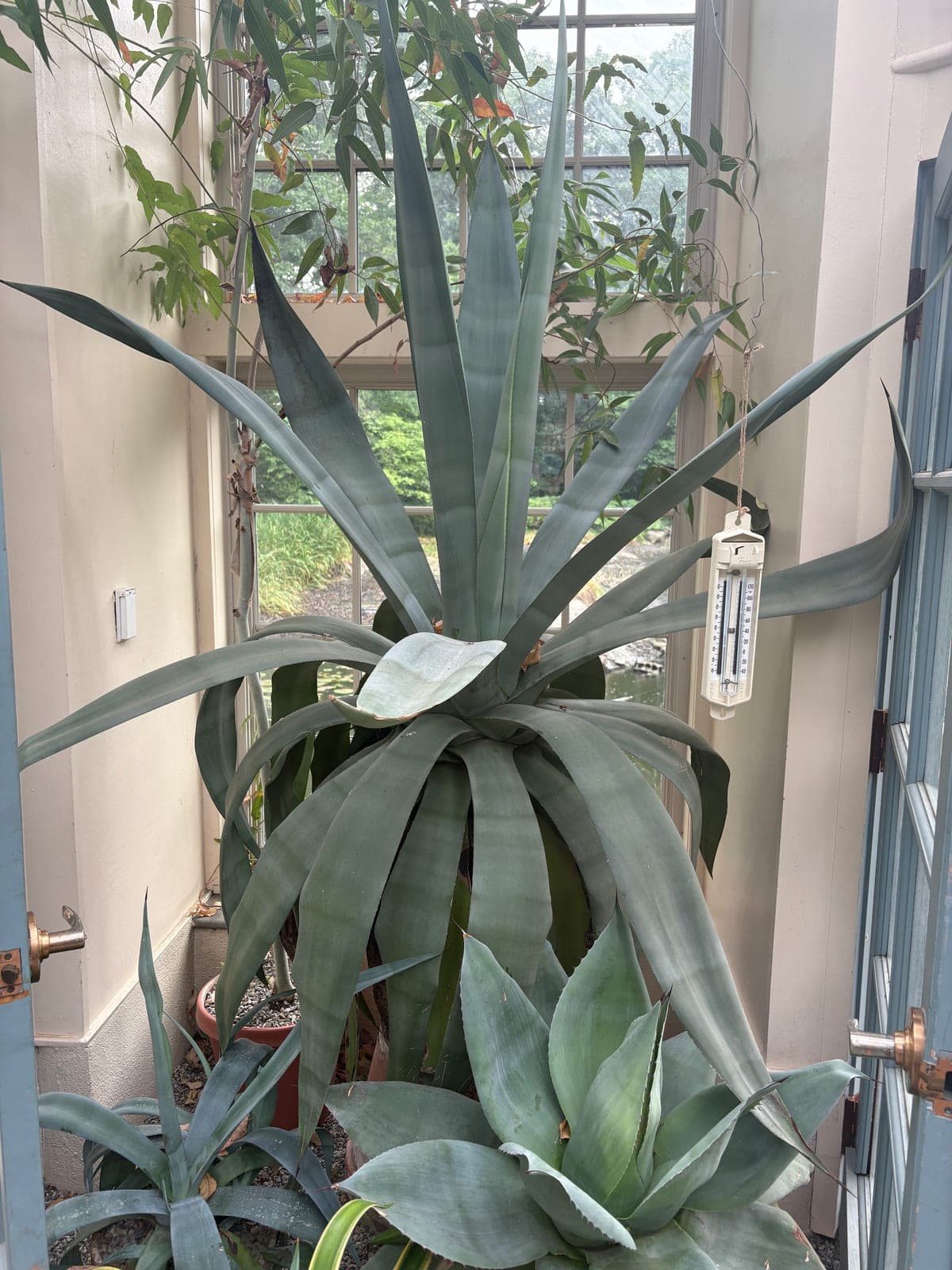
The century plant is a big architectural succulent grown indoors for its bold, blue-grey rosette of thick, sword-shaped leaves edged with teeth and tipped with a wicked spine. The name is a myth - it does not take a century to flower - but it is monocarpic: after many years it throws up a towering flower spike, sets seed, and then the mother rosette dies, leaving a ring of offsets to carry on. As a houseplant you are really growing it for the foliage, and the most common way to kill one is overwatering. Treat it like the desert plant it is: drench, then let it dry out completely, and ease right off through the winter.
It is not winter-hardy in the Northeast, which is exactly why it earns its place as a container plant - summer it outdoors in the brightest spot you have, then bring it inside before the first frost to a cool, bright window where it rests until spring. Repot only when it is truly crowded; agave flowers and stays compact when its roots are snug, and frequent repotting just encourages soft, floppy growth. Wear gloves and watch the leaf tips when you move it - those spines are no joke. Pair it with other sun-loving succulents on a bright sill and it will ask almost nothing of you.
Wants the brightest spot you have - a south- or west-facing windowsill with several hours of direct sun. In low light the rosette stretches and loses its tight architectural form.
Putting it outside for summer? See its garden profile - hardiness zones, bloom window, and when to bring it back in.Soak the soil, then leave it bone dry before watering again; cut right back in winter
Feed with a dilute succulent fertiliser
Watch for stretching or floppy leaves - a sign it needs more light
Check the leaf bases and undersides for mealybugs and scale
Repot into gritty cactus mix only when crowded; pot up offsets to propagate