
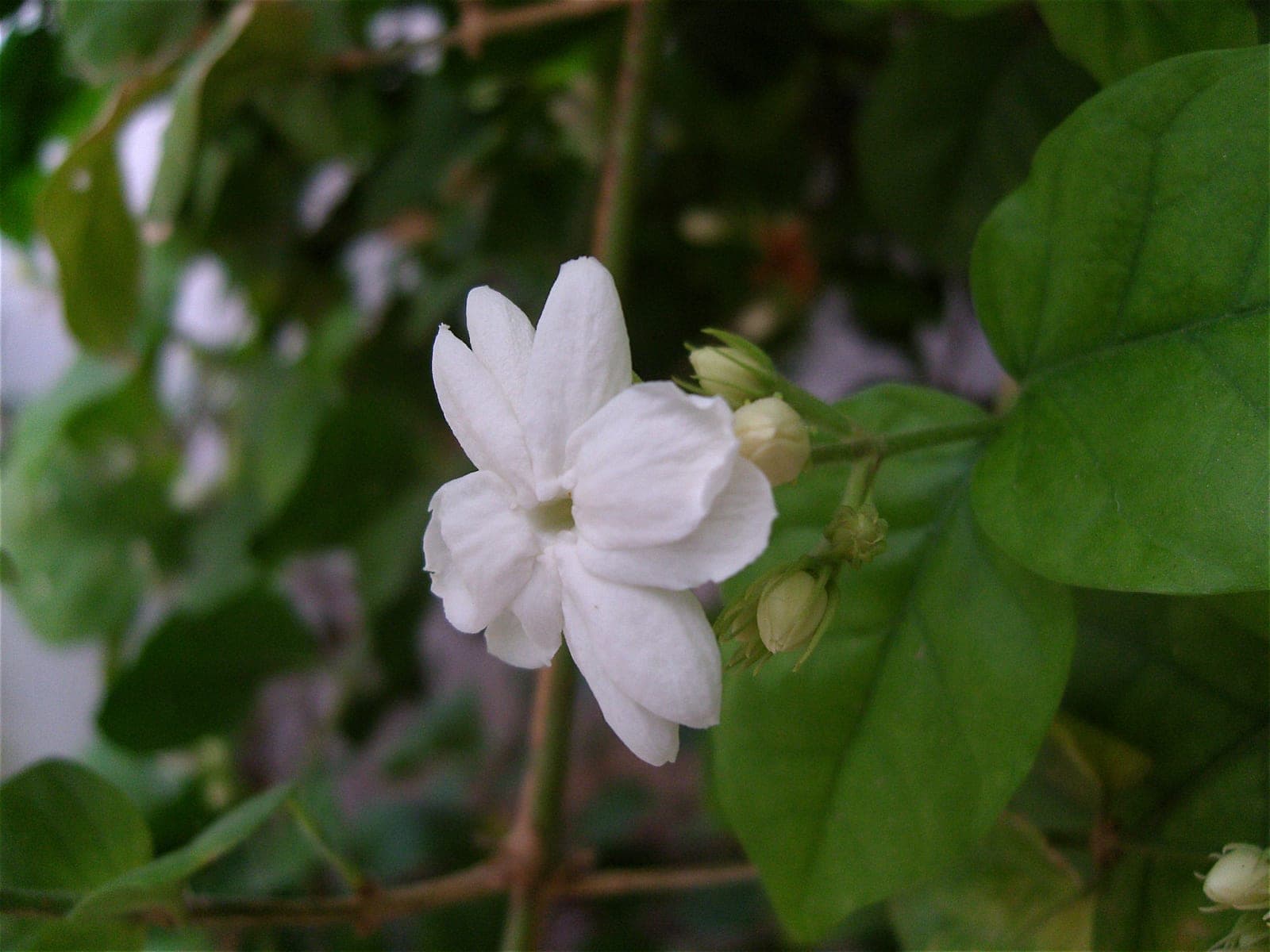
Flushes repeat through warm weather with enough sun; the scent is strongest after dark.
Arabian jasmine is the jasmine of garlands, leis, and jasmine tea - small, waxy white flowers that open in the evening with a heavy, sweet scent and fade to pink as they age. Unlike pink jasmine it needs no cool trigger: it flowers in flushes whenever it is warm, bright, and well fed, which makes it a rewarding indoor plant through the warm months.
What it will not tolerate is cold. Below about 50°F it stalls and drops leaves, so in the Northeast it lives as a warm, bright houseplant year-round, summering outdoors only once nights are reliably mild. Keep humidity up, feed regularly through the growing season, and pinch the shrubby growth to keep it bushy and full of flowering tips.
Brightest spot you can give it, with several hours of direct sun. The more light, the more flowers.
Putting it outside for summer? See its garden profile - hardiness zones, bloom window, and when to bring it back in.Keep evenly moist in warmth; ease off if winter growth slows
Feed with a balanced or high-potash fertiliser to sustain repeat bloom
Pinch and tip-prune to keep it bushy - flowers come on new growth
Keep it above 50°F; cold causes leaf drop and stalled growth
Mist or use a pebble tray - dry air invites spider mites
Repot in spring as it outgrows its container