
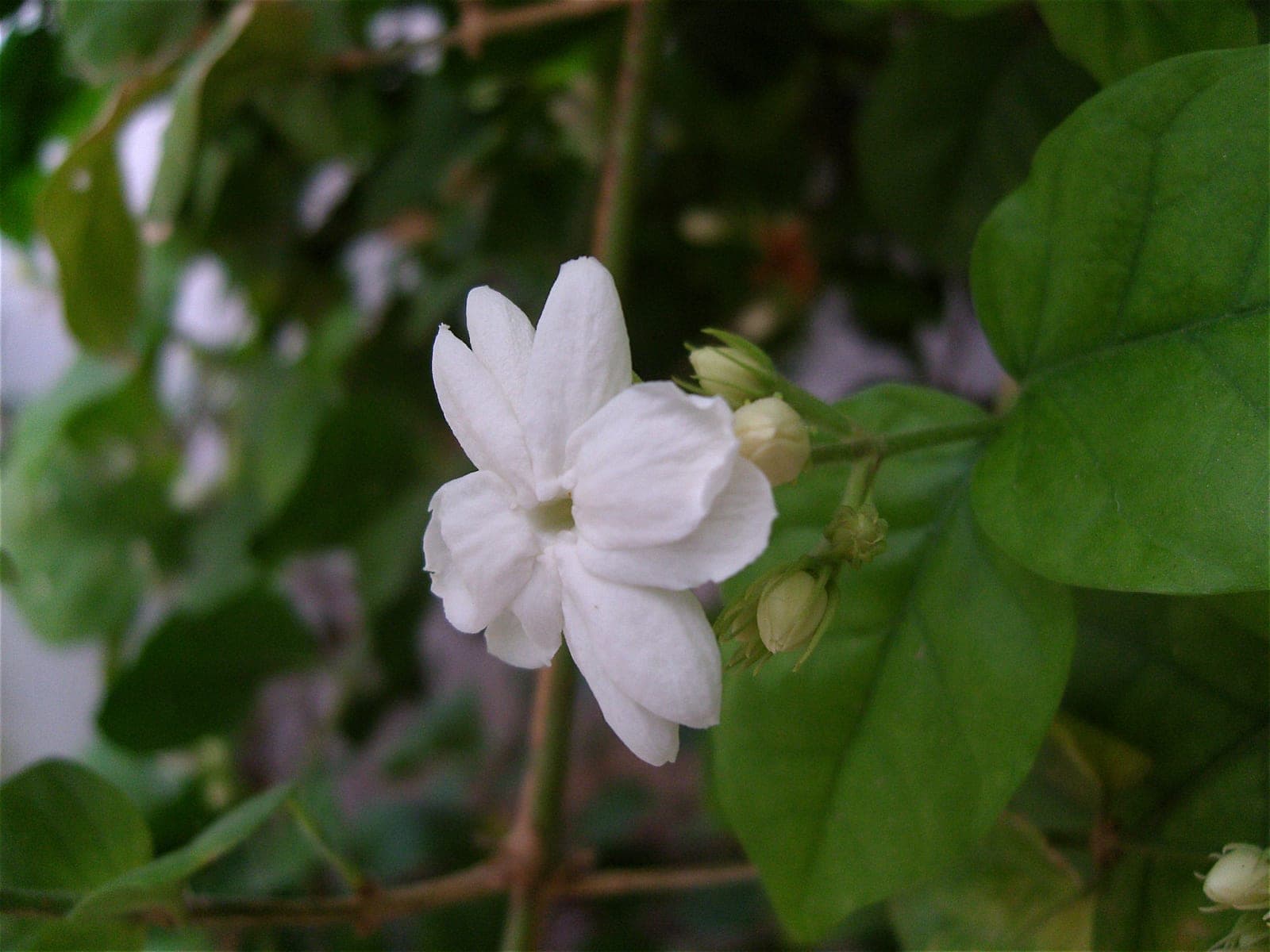
Jasminum sambac is a tropical evergreen vine native to India and Bhutan, grown widely across South and Southeast Asia for its intensely fragrant white flowers. It is the national flower of the Philippines, where it is called sampaguita, and one of three national flowers of Indonesia. Gardeners in zones 9b–11b can grow it outdoors year-round; in cooler regions it performs well in containers brought indoors for winter.
The plant grows as a sprawling shrub or twining vine and benefits from a trellis, arbor, or wire support. In warm, humid conditions it can flower nearly year-round, with the heaviest production from late spring through fall. Consistent moisture with good drainage and monthly feeding with a balanced fertilizer support prolific growth. Pruning after each flowering flush encourages the next cycle and prevents a woody, tangled base. Mulching the root zone helps retain moisture and moderate soil temperature at the upper edge of its range in zone 9b.
Flowers are used to scent jasmine tea-a practice widespread in China, India, and Southeast Asia-where fresh petals are layered with green or white tea leaves overnight. The essential oil is a key ingredient in commercial perfumery. In Ayurvedic and traditional Southeast Asian medicine, flowers and leaves have been applied to headache, fever, anxiety, and skin conditions.
Growing it indoors up north? See the indoor care guide - light, water, and the rhythm that keeps it flowering as a houseplant.Fungal leaf spot
Brown or purplish spots on the leaves, often ringed with a yellow halo, that spread and merge in warm, humid, or wet weather; heavily spotted leaves yellow and drop early.
Pick off spotted leaves and clear fallen debris to remove overwintering spores. Improve air circulation by thinning, and water at the base so foliage dries quickly. If it persists, apply a copper- or sulfur-based fungicide at the first sign.
Powdery mildew
White or grey powdery coating on leaves - usually starting on older growth in humid conditions or when nights cool.
Improve air circulation by thinning plants. Apply neem oil or potassium bicarbonate spray at first sign. Avoid overhead watering.
Sooty Mold (Scale-Associated)
Black, powdery or crusty coating on upper leaf surfaces and stems. Affected leaves may yellow and drop in severe cases. The mold grows on honeydew secreted by scale insects, mealybugs, or aphids feeding on the plant.
Control the underlying pest infestation first using horticultural oil or neem oil applied thoroughly to stems and leaf undersides. Once pest populations are reduced, sooty mold stops spreading and weathers away over time. Rinse foliage with a strong stream of water to dislodge existing mold deposits.
Root-Knot Nematode
Swollen galls on roots, poor vigor, wilting in heat, and reduced fruiting. Containers and sandy soils are more prone.
Use clean potting mix in containers. Avoid replanting in infested soil. Maintain plant vigor with mulch and steady watering. Solarize affected garden soil.