
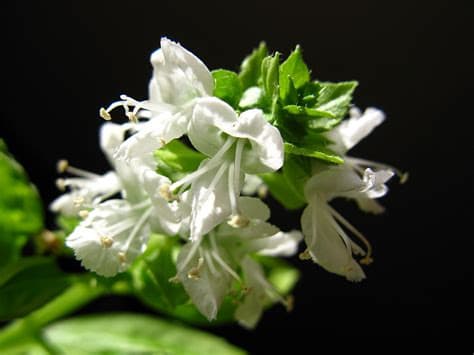
Basil grown to flower is one of the best-kept secrets in the cutting garden. The tiny white blooms on long branching stems add a delicate filler that smells extraordinary in an arrangement, and bees cover them. For the kitchen, the same plant wants the opposite treatment: pinch the flowers off and the leaves stay sweet.
Start seed indoors six weeks before last frost or direct sow once the soil is warm; basil sulks below 50°F and blackens at the first touch of frost. Set plants 12 to 18 inches apart in full sun and rich, moist soil that drains. The key is to pinch the central stem early and often, above a pair of leaves, to build a bushy plant with many stems. Harvest from the top, never by stripping the lower leaves.
Downy mildew is the common trouble in humid summers: yellowing leaves with grey fuzz beneath. Water at the base, give plants air, and sow a second batch in early summer so there are young plants to take over. Cut whole stems before the first frost and dry or freeze what you cannot use.
Fusarium wilt
Sudden wilting, brown streaks in stems, yellowing leaves. Affects sweet basil varieties most.
No cure. Remove and destroy plants. Do not replant in the same spot for 3+ years. Choose resistant varieties.
Downy mildew
Yellowing on top of leaves with grey-purple fuzz underneath. Spreads rapidly in humid conditions.
Remove affected leaves. Improve air circulation. Avoid overhead watering. Copper spray as preventive.