
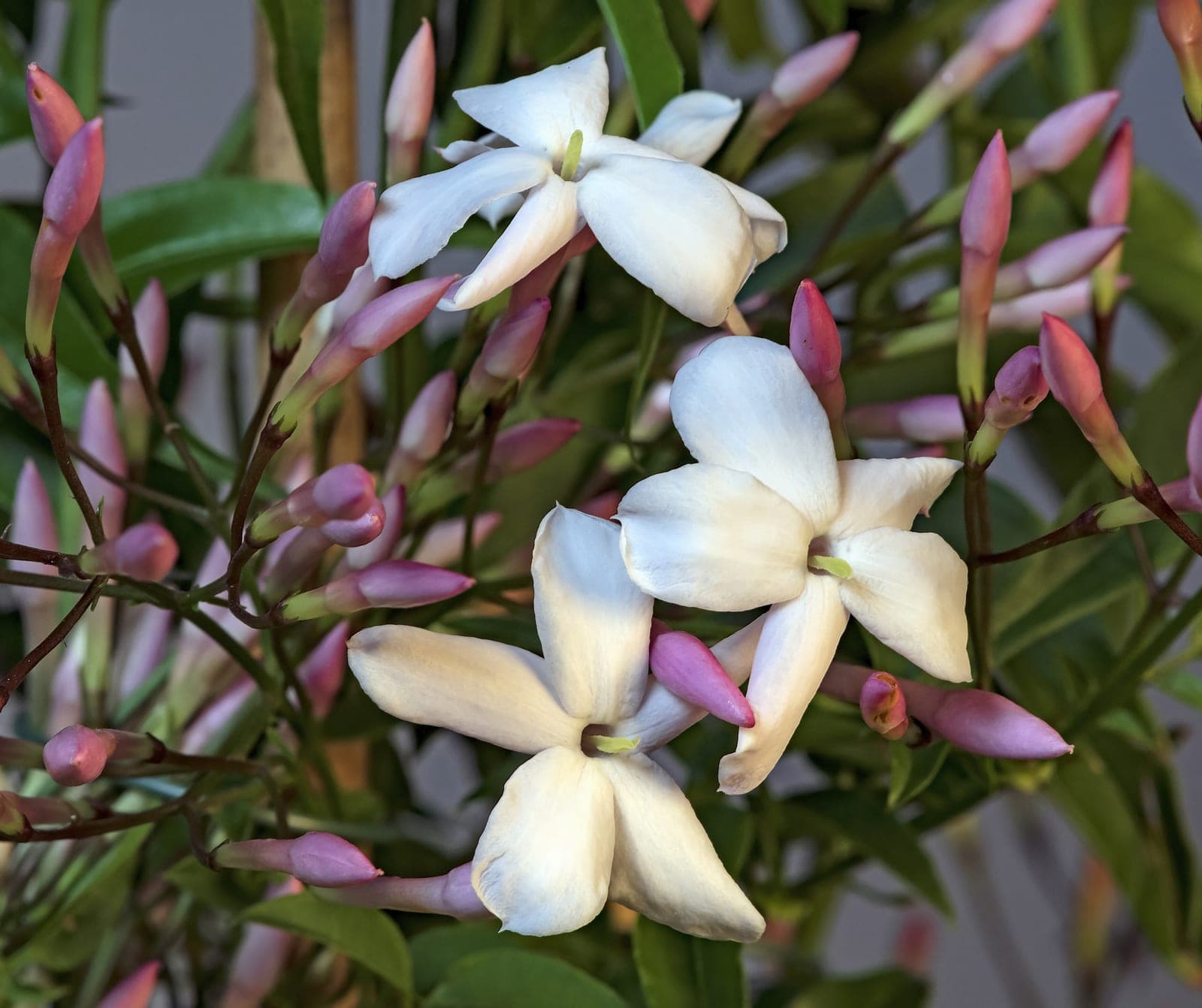
Jasminum polyanthum is a fast-growing evergreen twining vine native to China and Myanmar, grown across zones 8–11 for its intensely fragrant flowers. Buds emerge deep pink and open to white; the scent carries well in open air and is detectable from a distance. It is one of the most widely sold jasmine vines in garden centers worldwide and is commonly grown as a houseplant or conservatory plant in colder zones.
It blooms in late winter through early spring - typically February through April in warm climates - and can cover a trellis, fence, or pergola within two to three seasons. In mild-winter climates, particularly coastal California and Hawaii, it naturalizes readily and can outcompete native vegetation; check local invasive species guidelines before planting. Post-bloom pruning is essential for controlling spread and for stimulating the vigorous new stems that will carry the following season's growth.
The flowers are used to scent tea blends and are a source material in perfumery. In traditional Chinese medicine, jasmine flowers are associated with calming effects and have been used for headaches and anxiety. The essential oil appears extensively in commercial aromatherapy products, though clinical evidence specific to J. polyanthum is limited.
Growing it indoors up north? See the indoor care guide - light, water, and the rhythm that keeps it flowering as a houseplant.Powdery mildew
White or grey powdery coating on leaves - usually starting on older growth in humid conditions or when nights cool.
Improve air circulation by thinning plants. Apply neem oil or potassium bicarbonate spray at first sign. Avoid overhead watering.
Phytophthora Root Rot
Wilting despite moist soil, yellowing leaves, stunted growth, and dark, decayed roots and crown tissue. Vines may collapse during hot weather.
Plant in well-draining soil and avoid waterlogging. Remove and destroy affected vines. Improve drainage with raised beds or amended soil and avoid overwatering.
Sooty Mold (Scale-Associated)
Black, powdery or crusty coating on upper leaf surfaces and stems. Affected leaves may yellow and drop in severe cases. The mold grows on honeydew secreted by scale insects, mealybugs, or aphids feeding on the plant.
Control the underlying pest infestation first using horticultural oil or neem oil applied thoroughly to stems and leaf undersides. Once pest populations are reduced, sooty mold stops spreading and weathers away over time. Rinse foliage with a strong stream of water to dislodge existing mold deposits.
Fungal leaf spot
Brown or purplish spots on the leaves, often ringed with a yellow halo, that spread and merge in warm, humid, or wet weather; heavily spotted leaves yellow and drop early.
Pick off spotted leaves and clear fallen debris to remove overwintering spores. Improve air circulation by thinning, and water at the base so foliage dries quickly. If it persists, apply a copper- or sulfur-based fungicide at the first sign.