
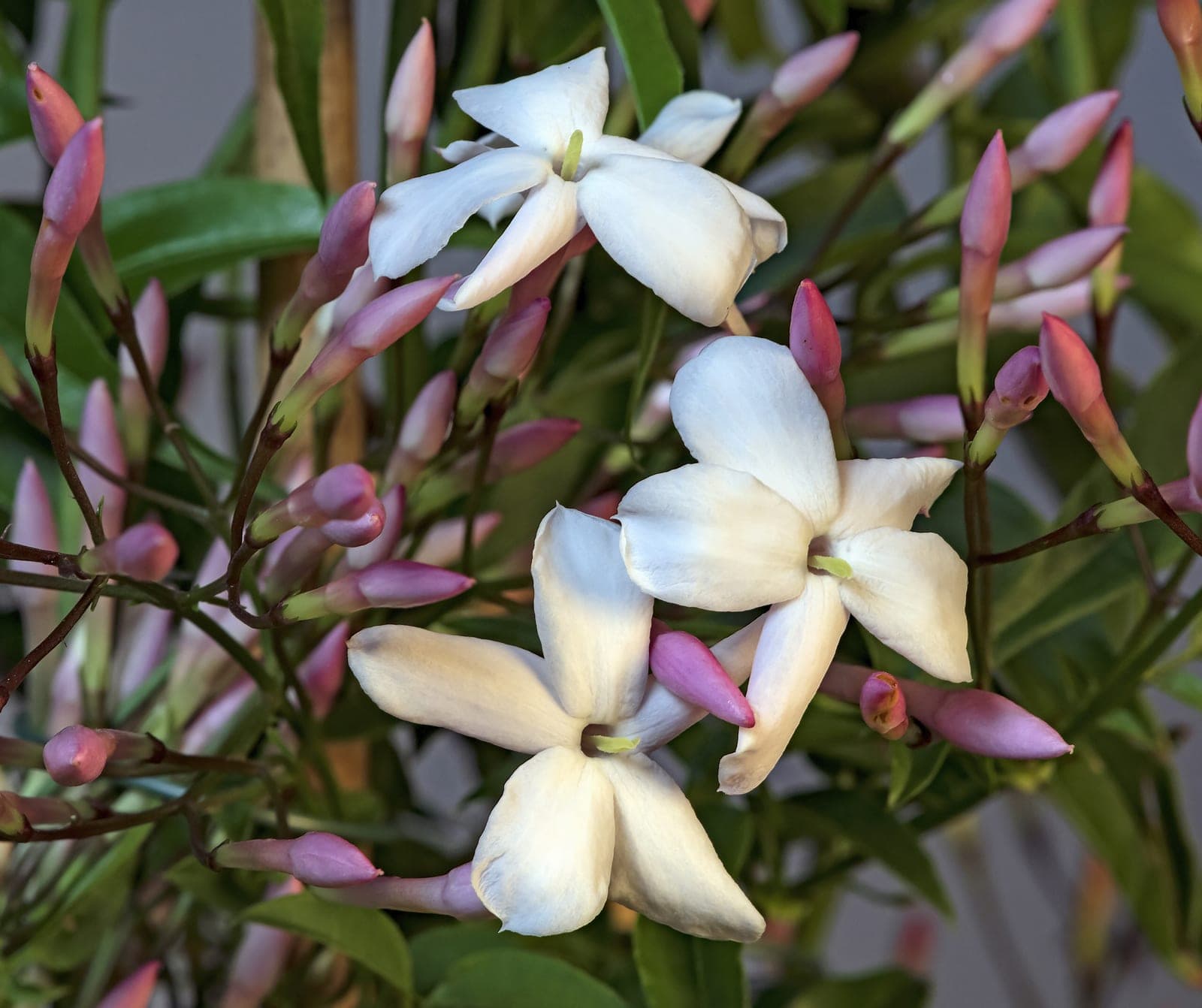
To encourage bloom: Six weeks of cool nights (40 to 55°F) and short days in autumn set the buds; keep it bright the whole time.
Once the buds show, keep it cool and evenly moist; a hot room drops them.
Pink jasmine is the one that perfumes a whole room in late winter - masses of pink-budded buds opening to white stars with a scent that carries. In the Northeast it is a container plant, not a garden one: it summers outdoors on a patio and comes inside before the first frost.
The trick to flowers is a cool autumn. Pink jasmine sets its buds in response to several weeks of cool nights (40–55°F) and short days, so a chilly bright porch or unheated room in autumn is what triggers the winter show - a warm living room keeps it leafy and bloomless. Give it a hoop or small trellis to twine on, keep it bright, and prune right after flowering to keep the vigorous growth in bounds.
Wants the brightest window you have, with a few hours of direct sun. Too little light and it climbs happily but never flowers.
Putting it outside for summer? See its garden profile - hardiness zones, bloom window, and when to bring it back in.Water when the top inch dries; cut back hard in winter
Feed with a high-potash (tomato) fertiliser to push bloom
Prune to shape right after the flowers fade - it blooms on the previous year's growth
Give it a cool, bright spell in autumn or it will not set buds
Check leaf undersides for spider mites and aphids in dry indoor air
Repot when roots fill the pot - slightly pot-bound plants flower better