
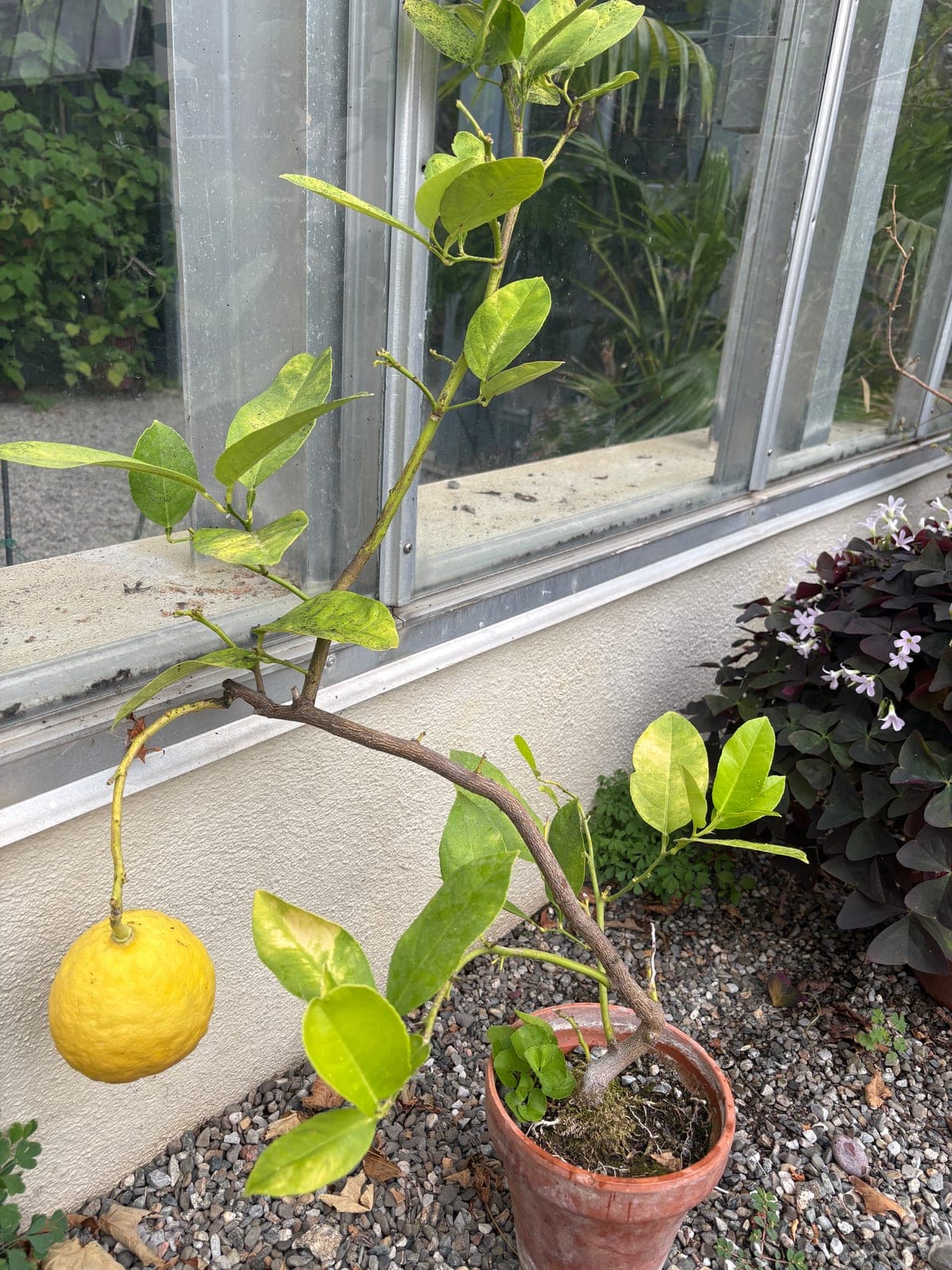
The Ponderosa lemon is not a true lemon at all but a pomelo-citron hybrid that turned up as a chance seedling in Hagerstown, Maryland around 1887 and reached the nursery trade by 1900. It is slow-growing, eventually reaching twelve to twenty-four feet in the ground, with long glossy citron-like leaves, spiny branches, and a charming purple tinge to its new growth and flower buds. The single most important thing to know is that it is less cold-hardy than an ordinary lemon, so almost everyone outside the frost-free zones grows it in a container grafted to a dwarfing rootstock and brings it under cover before the first hard frost. Plant it in a free-draining, slightly acidic mix, give it at least six hours of sun, and water deeply but let the top inch dry between drinks - soggy roots invite phytophthora, the number one killer of potted citrus. Feed with a slow-release citrus fertiliser in early spring and again in midsummer, and resist the urge to overpot; citrus fruit better when their roots are a little snug.
The real party trick is the fruit: enormous, thick-skinned, bumpy lemons that can weigh well over a pound, full of seeds, with a flavour and acidity genuinely indistinguishable from a grocery lemon - one fruit yields enough juice for several lemon pies and substitutes measure-for-measure in any recipe calling for lemon. Because the tree flowers and fruits more or less continuously, you often get intensely fragrant white-and-purple blossom and heavy fruit on the plant at the same time, which is exactly why it has been a prized ornamental and conservatory plant for over a century. The fruit holds on the tree for months without losing quality, so there is no rush to pick. Zest the aromatic peel into cakes and dressings, juice it for lemonade and marinades, or simply enjoy it as a dramatic, scented houseplant; keep container specimens near herbs like chamomile and pollinator-friendly calendula to draw beneficial insects to the blooms.