
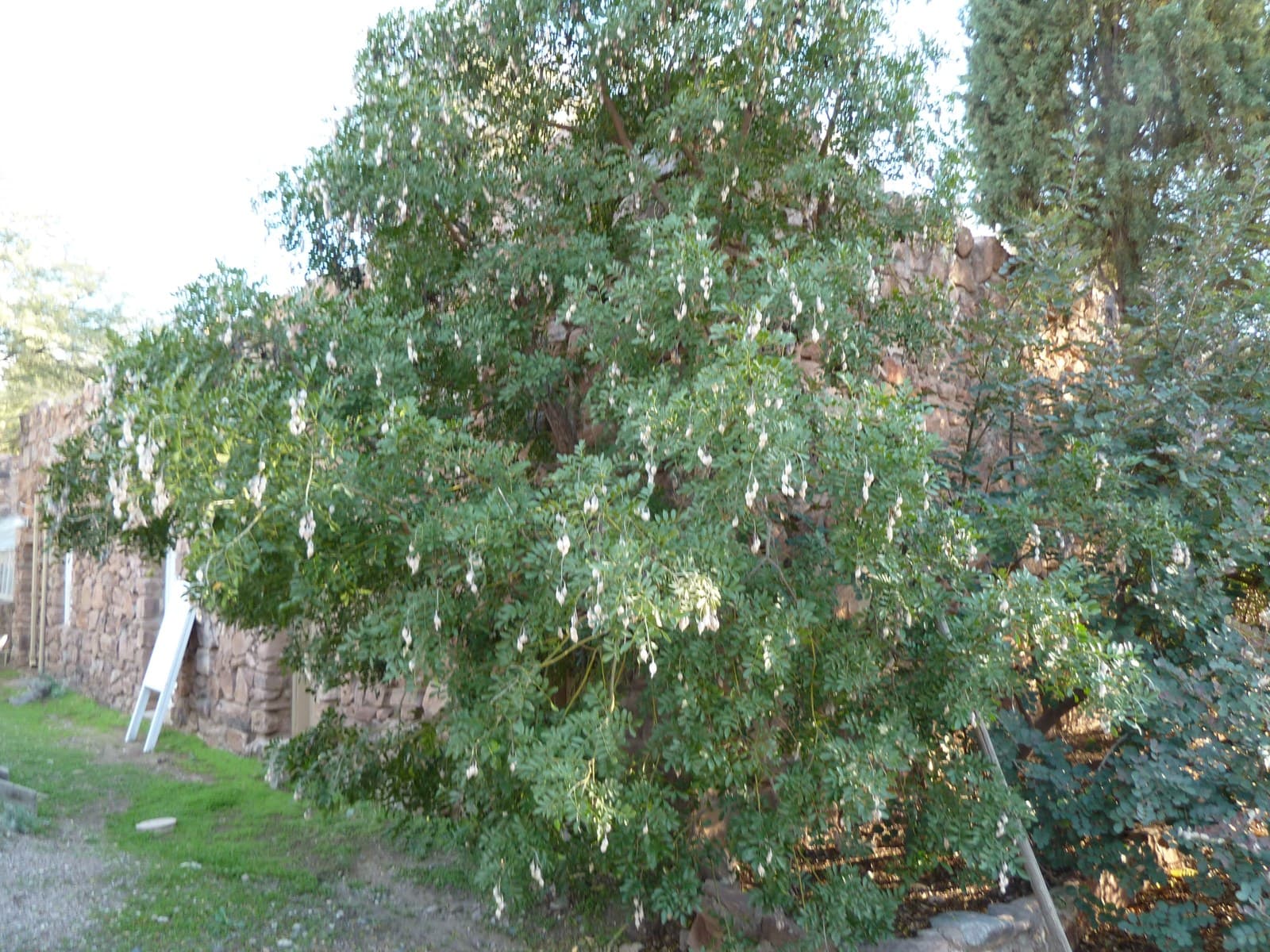
Texas Mountain Laurel (Dermatophyllum secundiflorum) is an evergreen shrub or small tree native to limestone slopes, rocky canyon walls, and desert grasslands from central Texas through New Mexico and into northern Mexico. It belongs to the legume family and produces pendulous clusters of violet to purple flowers in early spring that carry a strong grape-like fragrance detectable from a considerable distance. Woody pods follow, holding bright red seeds that are highly toxic to humans, pets, and livestock.
The plant grows slowly - often only 2–3 inches per year in youth - but is long-lived and can reach 15–20 feet at maturity. It performs best in full sun with alkaline, rocky soil and sharp drainage; poorly drained or clay-heavy ground promotes fatal root rot. Once established it needs no supplemental irrigation. Root nodules fix atmospheric nitrogen, gradually improving surrounding soil. Avoid amending planting holes with compost or fertilizer, which encourages shallow roots and can reduce drought adaptation.
The hard red seeds were historically used in ceremonial contexts by Native peoples of Texas and the Southwest as part of the Red Bean Ceremony, documented as predating widespread peyote use in the region. Seeds contain cytisine and related quinolizidine alkaloids that are hallucinogenic at sub-lethal doses and lethal in larger amounts; fallen seeds should be collected and disposed of promptly.
Ecoregions:Eastern Temperate ForestsGreat PlainsNorth American DesertsTemperate Sierras
Texas Root Rot
Sudden wilting of branches or the entire canopy, often following a wet period. White cottony fungal mats develop on infected roots. Wood at the crown appears dark and water-soaked. Decline can progress to tree death within weeks.
No effective chemical cure exists. Ensure excellent drainage and avoid overwatering. Remove and destroy all infected plant material. Avoid replanting susceptible species in the same soil for several years.
Fungal leaf spot
Brown or purplish spots on the leaves, often ringed with a yellow halo, that spread and merge in warm, humid, or wet weather; heavily spotted leaves yellow and drop early.
Pick off spotted leaves and clear fallen debris to remove overwintering spores. Improve air circulation by thinning, and water at the base so foliage dries quickly. If it persists, apply a copper- or sulfur-based fungicide at the first sign.