
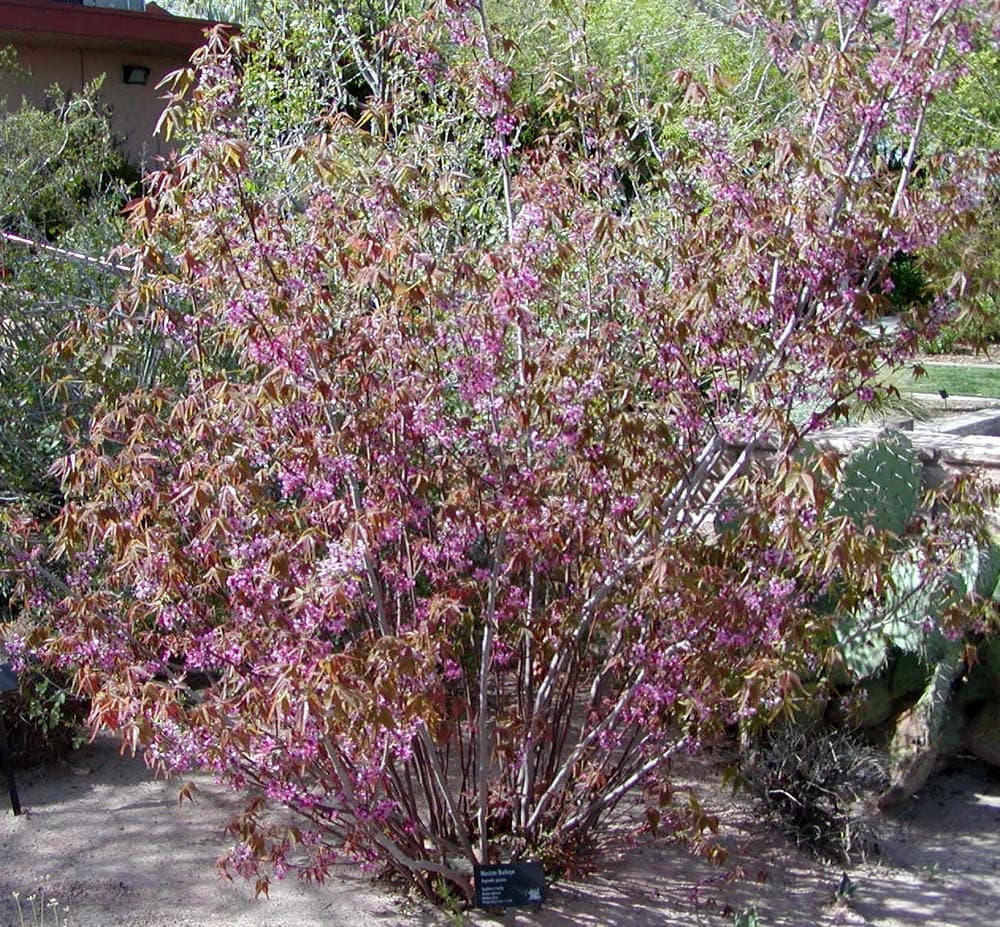
Mexican buckeye (Ungnadia speciosa) is a deciduous native small tree or large multi-stemmed shrub from Texas, southern New Mexico, and northern Mexico. Clusters of rose-pink flowers open in early spring before the leaves emerge, giving it strong seasonal impact, and the distinctive three-lobed seed pods with large, shiny chestnut-brown seeds are visually striking through late summer and fall. Despite the shared common name, it is unrelated to true buckeyes (Aesculus).
Native to thin, rocky, alkaline soils - caliche hillsides, canyon slopes, and limestone outcrops - it is highly drought-tolerant once established. It grows well in full sun or dappled shade, requires excellent drainage, and needs little to no supplemental irrigation after the first two to three seasons. Soil pH tends toward alkaline, typically 7.0–8.5. It can be trained to a single trunk or left as a multi-stemmed large shrub and rarely needs more than occasional structural pruning.
The early flowers are an important nectar source for native bees at a time when few other plants are yet in growth. Seeds contain cycloartanol and related saponins and are toxic to humans and livestock; pods should not be confused with those of edible species.
Ecoregions:Eastern Temperate ForestsGreat PlainsNorth American DesertsTemperate Sierras
Texas Root Rot
Sudden wilting of branches or the entire canopy, often following a wet period. White cottony fungal mats develop on infected roots. Wood at the crown appears dark and water-soaked. Decline can progress to tree death within weeks.
No effective chemical cure exists. Ensure excellent drainage and avoid overwatering. Remove and destroy all infected plant material. Avoid replanting susceptible species in the same soil for several years.
Root rot
Plants wilt, yellow, and stunt even in moist soil; lower stems and roots turn brown, soft, and mushy and the plant may collapse. Most common in heavy, wet, or poorly drained ground.
Improve drainage and stop overwatering, and never plant too deep. Lift and destroy badly affected plants along with the soil around the roots. Grow in raised or free-draining beds to prevent it returning.
Powdery mildew
White or grey powdery coating on leaves - usually starting on older growth in humid conditions or when nights cool.
Improve air circulation by thinning plants. Apply neem oil or potassium bicarbonate spray at first sign. Avoid overhead watering.