
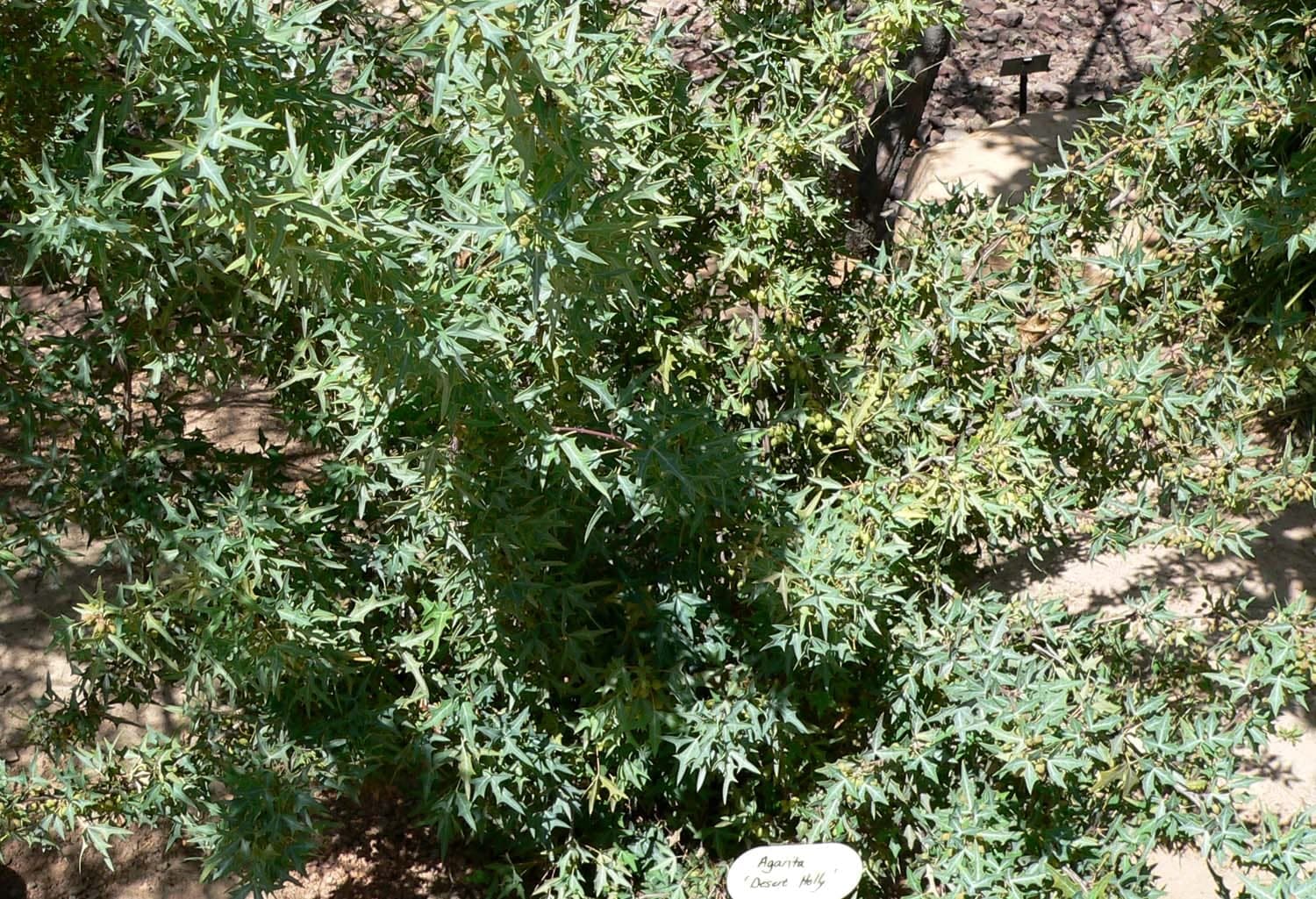
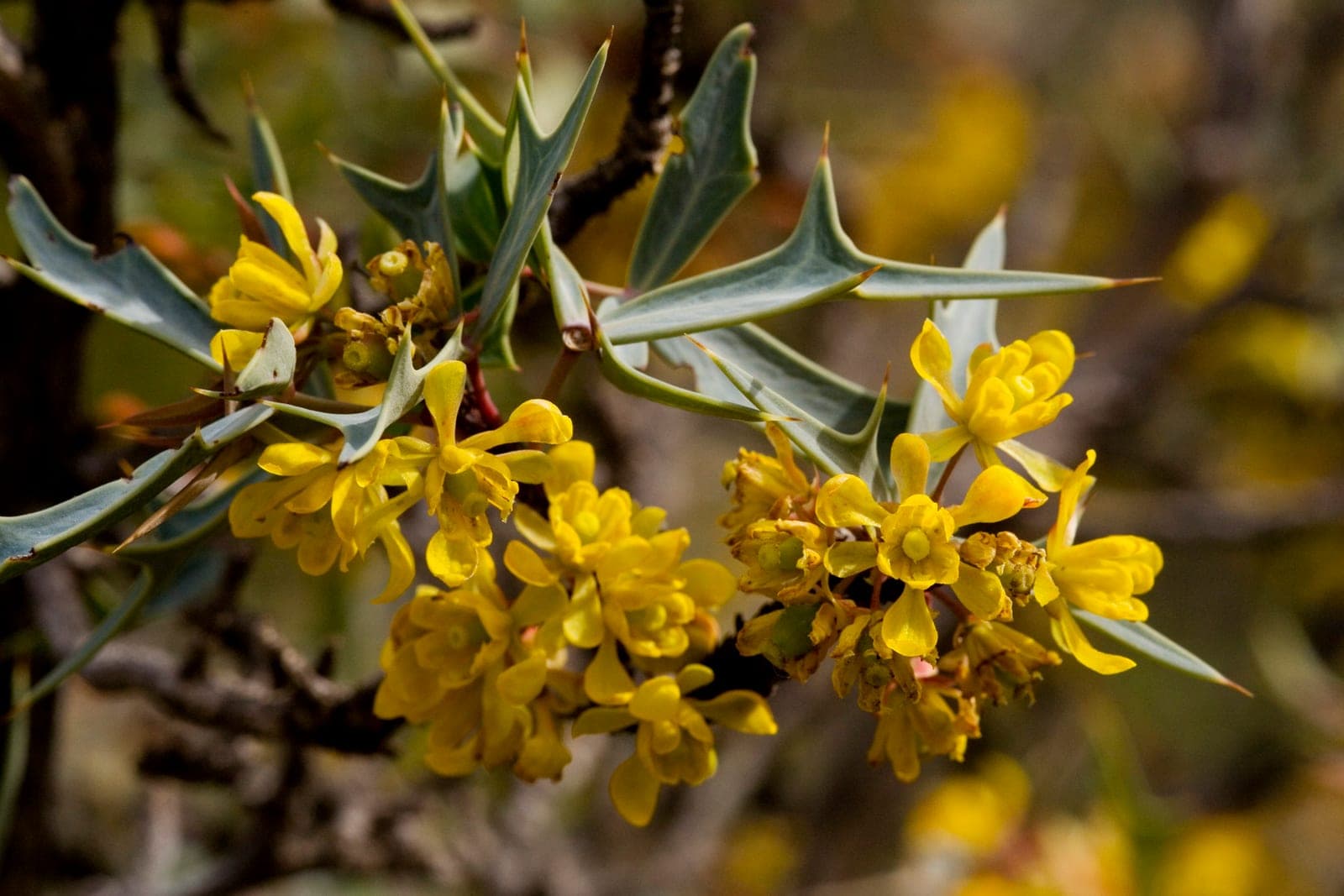
Agarita is a dense, evergreen shrub native to Texas, New Mexico, and northern Mexico, where it grows on limestone hills, rocky plains, and dry chaparral. Its stiff, blue-grey trifoliate leaves have sharp-tipped leaflets - the Spanish name translates roughly as 'grabs a little' - and it produces clusters of fragrant yellow flowers in late winter, followed by bright red berries in May. Few native shrubs are as reliably low-maintenance across hot, dry regions of the Southwest and south-central states.
Adapted to rocky limestone and caliche soils, agarita requires no supplemental fertilizer and is highly drought-tolerant once established. The prickly foliage provides dense cover and nesting sites for birds, which also consume the berries rapidly once they ripen; gardeners who want to harvest should check the shrub daily as berries begin to color. It is effective as a barrier hedge, a wildlife planting, or massed on a dry slope where most ornamentals struggle.
The tart red berries are edible and used for jelly, juice, and wine. Like other members of Berberidaceae, agarita roots and stems contain berberine, an alkaloid with a documented history of use in traditional medicine for digestive complaints and as an antimicrobial agent.
Ecoregions:Eastern Temperate ForestsGreat PlainsNorth American Deserts
Texas Root Rot
Sudden wilting of branches or the entire canopy, often following a wet period. White cottony fungal mats develop on infected roots. Wood at the crown appears dark and water-soaked. Decline can progress to tree death within weeks.
No effective chemical cure exists. Ensure excellent drainage and avoid overwatering. Remove and destroy all infected plant material. Avoid replanting susceptible species in the same soil for several years.
Root rot
Plants wilt, yellow, and stunt even in moist soil; lower stems and roots turn brown, soft, and mushy and the plant may collapse. Most common in heavy, wet, or poorly drained ground.
Improve drainage and stop overwatering, and never plant too deep. Lift and destroy badly affected plants along with the soil around the roots. Grow in raised or free-draining beds to prevent it returning.
Powdery mildew
White or grey powdery coating on leaves - usually starting on older growth in humid conditions or when nights cool.
Improve air circulation by thinning plants. Apply neem oil or potassium bicarbonate spray at first sign. Avoid overhead watering.