
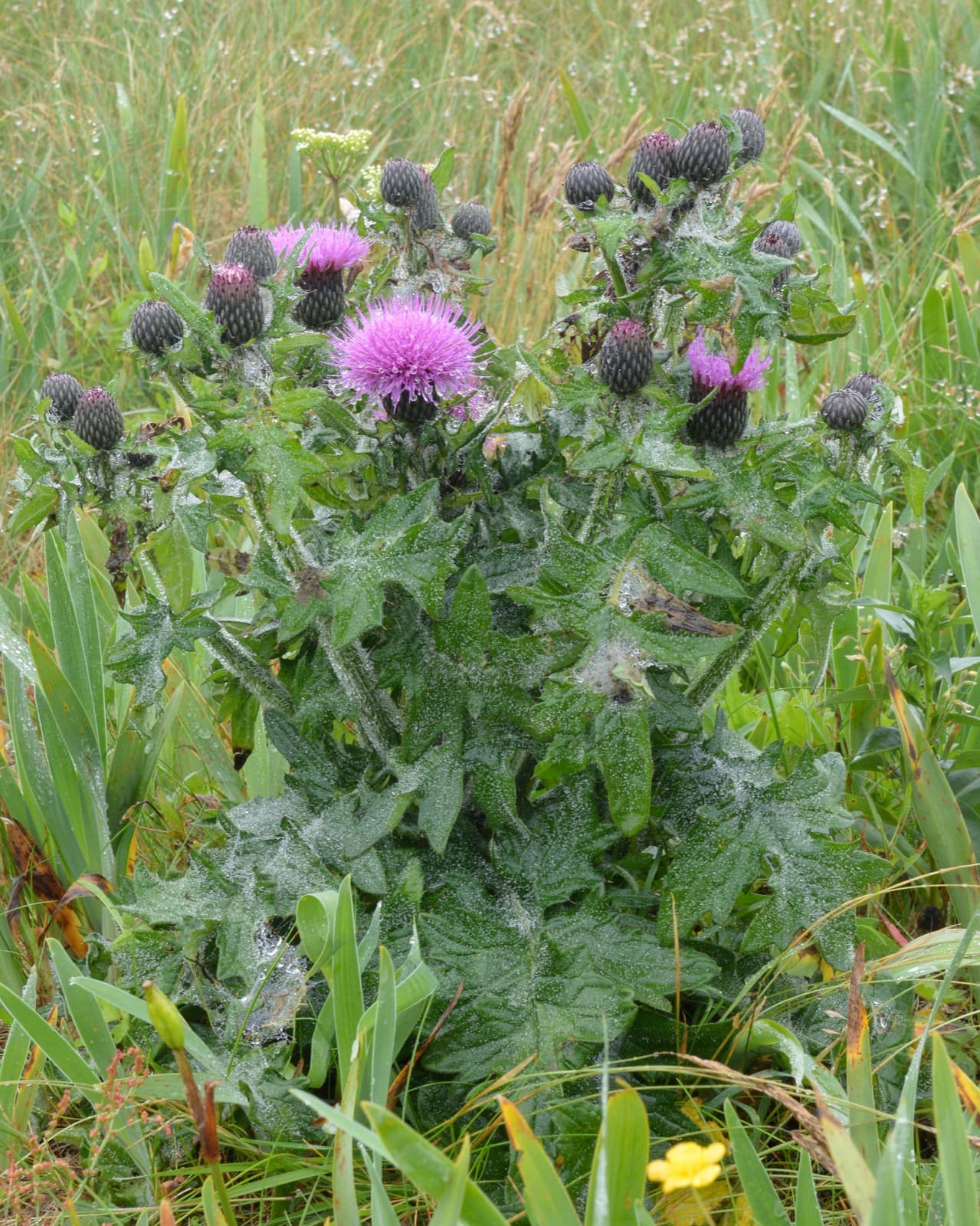
Swamp thistle is a native North American biennial found in fens, wet meadows, swamp edges, and stream corridors from Manitoba to the Atlantic coast and south through the Midwest and Appalachians. It forms soft-spined, deeply lobed foliage in its first year and tall hollow stems topped with rose-purple flower heads in its second. Its leaf spines are short and pliable compared to most thistles, making it workable in a managed garden.
The plant is strictly biennial: a basal rosette develops in year one, then it flowers, sets seed, and dies in year two. It self-sows reliably in consistently moist to wet ground and will naturalize in rain gardens, pond margins, and wetland restoration plantings without becoming invasive. Soil should remain moist to wet; the plant will not tolerate prolonged drought. Slightly acidic to neutral pH is preferred, and a mulch layer helps retain moisture between rains.
Swamp thistle is among the most important native plants for bumblebees, including specialist Bombus species that preferentially forage on Cirsium pollen. American goldfinches harvest the seeds in late summer and fall. The hollow stems persist through winter and provide nesting cavities for small solitary bees.
Ecoregions:Northern ForestsEastern Temperate ForestsGreat Plains
Aster Yellows
Deformed, greenish flowers, stunted growth, and yellowed foliage. Flower centers may produce tufts of leafy growth instead of normal petals.
No cure. Remove and destroy infected plants immediately to stop spread. Control leafhoppers, which transmit the disease, and remove nearby weed hosts.
Rust
Orange to brown raised pustules on the undersides of leaves, with yellow spotting on the upper surface. Heavy infections cause leaves to yellow and drop.
Remove and destroy infected leaves. Avoid overhead watering and improve air circulation. Apply a sulfur or copper-based fungicide if it spreads. Clear plant debris in fall.
Fungal leaf spot
Brown or purplish spots on the leaves, often ringed with a yellow halo, that spread and merge in warm, humid, or wet weather; heavily spotted leaves yellow and drop early.
Pick off spotted leaves and clear fallen debris to remove overwintering spores. Improve air circulation by thinning, and water at the base so foliage dries quickly. If it persists, apply a copper- or sulfur-based fungicide at the first sign.
Powdery mildew
White or grey powdery coating on leaves - usually starting on older growth in humid conditions or when nights cool.
Improve air circulation by thinning plants. Apply neem oil or potassium bicarbonate spray at first sign. Avoid overhead watering.