
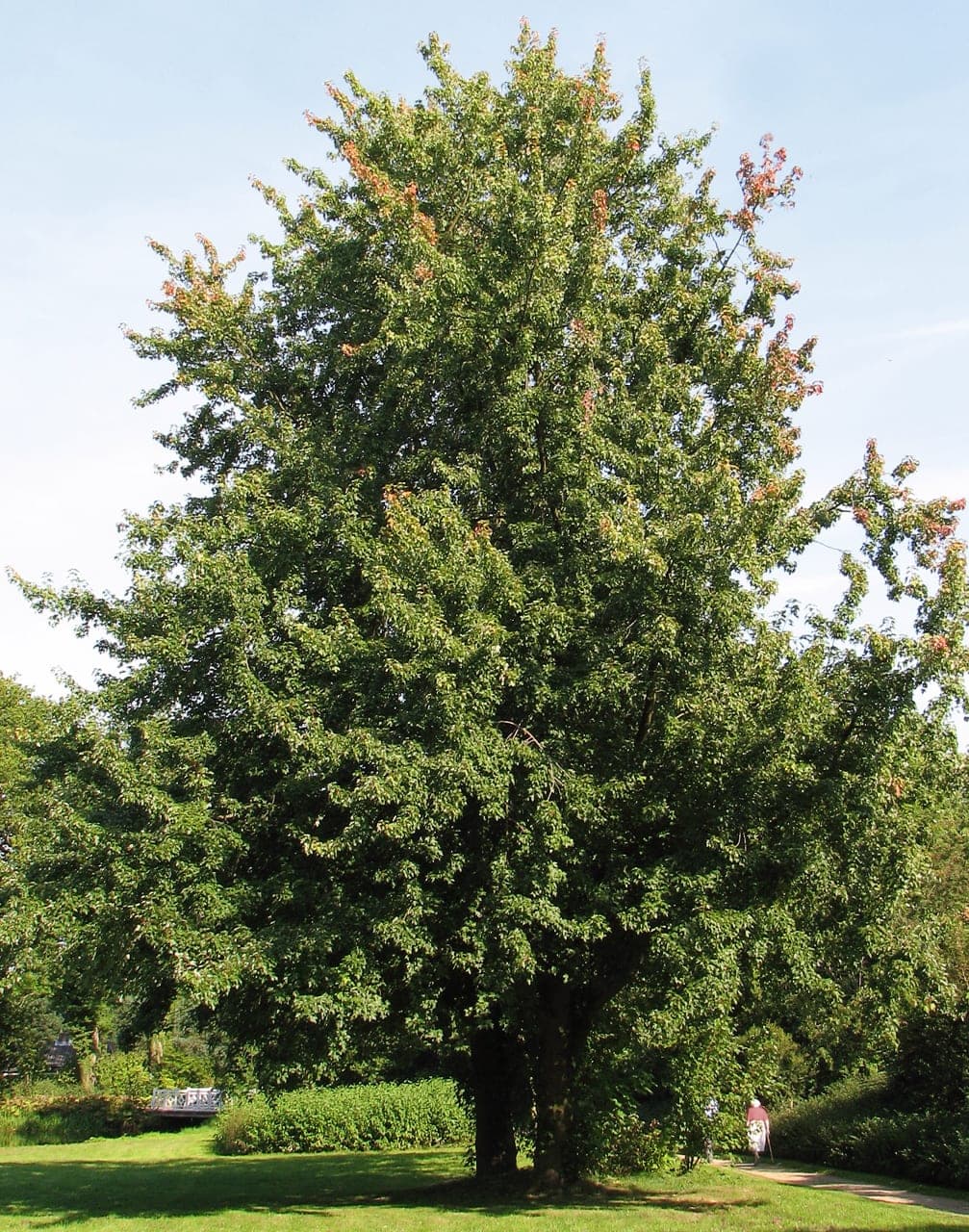
Silver maple (Acer saccharinum) is a fast-growing native tree of eastern and central North America, most at home along stream banks, river floodplains, and low-lying sites. Its leaves have deeply cut lobes and silver-white undersides that flash in the breeze - the source of the common name. It is one of the most widely planted shade trees in the country.
Growth is rapid, often 3–7 feet per year in youth, with mature height typically reaching 50–80 feet and a broad, open crown. The wood is softer and more brittle than hard maple, making scaffold branches prone to ice and wind breakage; wide branch angles and structural pruning from an early age reduce that risk considerably. The shallow, aggressive root system can displace pavement and invade drainage lines, so siting away from hardscape, foundations, and utilities is essential. Samaras ripen in late spring - earlier than most maples - germinate rapidly, and can produce abundant volunteers. Prefers moist to wet soils, tolerates periodic flooding and clay, and is one of the more pollution-tolerant native maples.
Sap can be tapped in late winter before growth resumes, though sugar content (roughly 1–2%) is considerably lower than sugar maple, requiring substantially more sap per gallon of syrup. Prolific samaras are a key early-season food source for finches, grosbeaks, squirrels, and chipmunks. Iroquois and other Native American peoples used inner bark decoctions as an eye wash for soreness and inflammation.
Ecoregions:Northern ForestsEastern Temperate ForestsGreat Plains
Maple Anthracnose
Irregular brown or tan spots that follow and spread between leaf veins, giving leaves a scorched or blighted appearance. Severe infections cause premature leaf drop. In wet springs, small cankers may appear on young shoots.
Rake and remove fallen leaves each autumn to reduce overwintering fungal spores. Avoid overhead irrigation. Apply a copper-based fungicide at bud break during wet spring conditions. Prune selectively to improve canopy airflow.
Maple Tar Spot
Pale yellow-green spots appear on upper leaf surfaces in early summer. By late summer they enlarge into raised, glossy black blotches up to 1 in across, closely resembling tar splashes. Caused by Rhytisma acerinum and related species.
Rake and destroy all fallen leaves in autumn to eliminate overwintering spores. Fungicide applications are rarely justified on established trees. Improve air circulation through selective pruning where practical.
Verticillium Wilt
Lower leaves yellow and wilt, often on one side of the plant, with brown streaking in the stem and crown tissue when cut open. Plants are stunted and decline over the season.
Remove and destroy affected plants. Avoid planting in soil that has grown infected tomatoes, peppers, or other susceptible crops. Rotate beds and improve drainage; there is no cure once a plant is infected.
Armillaria Root Rot
Thinning, yellowing canopy with progressive dieback; white, fan-shaped mycelial mats visible beneath bark at or just below the soil line; honey-colored mushroom clusters appearing at the trunk base or on surface roots in autumn.
No chemical cure exists. Improve drainage and avoid any injury to roots or trunk. Remove severely infected trees along with as much root material as possible. Do not replant susceptible species in the same spot.
Eutypella Canker
Large, target-shaped cankers on the trunk and major limbs, with concentric rings of callus tissue surrounding sunken, dead bark. Infected wood shows orange-brown discoloration in cross section. Cankers expand over multiple years and can girdle and kill major limbs or the entire tree.
No effective chemical control exists. Remove infected branches with at least 6 in margin into healthy wood and destroy the debris. Trunk cankers may be surgically excised by a certified arborist if the canker has not girdled the stem. Remove trees with girdling trunk cankers. Prevent bark wounds during mowing and maintenance. Maintain tree vigor through mulching and adequate soil moisture to slow canker expansion.
Hypoxylon Canker
Outer bark sloughs off stressed limbs to reveal gray, tan, or black crusty fungal stromata on the exposed wood surface; affected branches die back progressively and cross-sections of sapwood show brown streaking.
No effective chemical control exists. Remove affected limbs promptly and dispose of all infected wood off-site - do not chip or compost it on the property. Reduce predisposing stress by providing deep irrigation during drought and avoiding mechanical injury to roots and bark. The fungus is opportunistic; healthy, unstressed trees resist infection.