
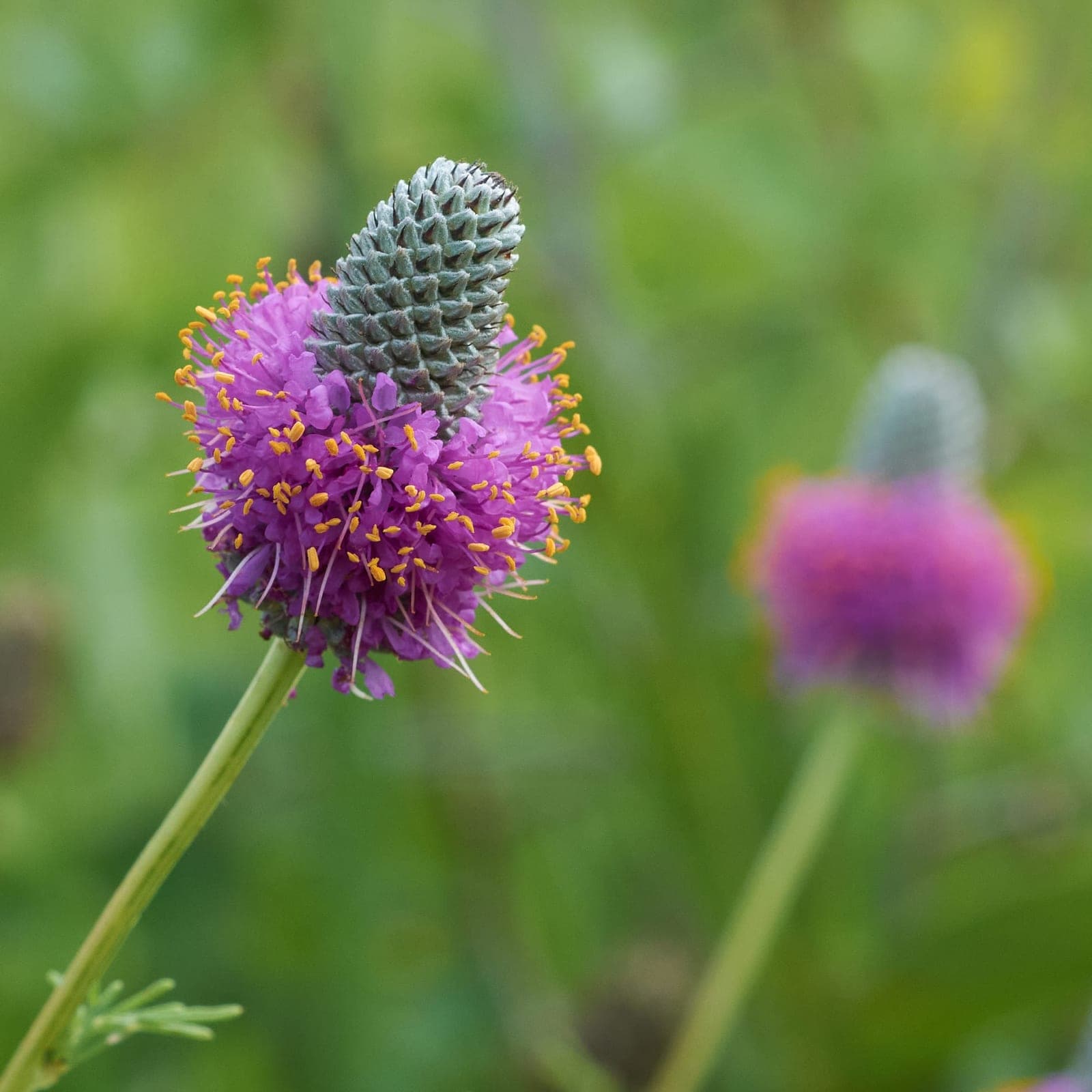
Dalea purpurea is a native perennial legume of the Great Plains and tallgrass prairie, producing dense, cylindrical spikes of magenta-purple flowers from late June through August. It draws bumblebees, digger bees, and butterflies in large numbers and, as a nitrogen-fixer, gradually improves the poor or degraded soils where it naturally thrives. It suits prairie restorations, meadow gardens, and low-maintenance naturalistic plantings.
The plant forms a deep taproot early in life and should be sown in place; established plants do not transplant well. Seeds require cold stratification - 60 to 90 days near freezing - which fall direct sowing provides naturally. Rich or consistently wet soils encourage weak, floppy growth and increase crown and root rot risk; lean, well-drained ground suits it best. Once established it is essentially self-sufficient and long-lived.
Several Plains peoples dried and steeped the foliage as a tea. Dalea purpurea is a documented larval host for the Southern Dogface butterfly and Reakirt's Blue. Seeds are taken by ground-feeding birds, and root nodules fix atmospheric nitrogen, an advantage that accumulates over seasons in restoration plantings.
Ecoregions:Northern ForestsNorthwestern Forested MountainsEastern Temperate ForestsGreat Plains
Root rot
Plants wilt, yellow, and stunt even in moist soil; lower stems and roots turn brown, soft, and mushy and the plant may collapse. Most common in heavy, wet, or poorly drained ground.
Improve drainage and stop overwatering, and never plant too deep. Lift and destroy badly affected plants along with the soil around the roots. Grow in raised or free-draining beds to prevent it returning.
Crown Rot
Lower leaves yellow and wilt; the base of the rosette turns brown and soft, sometimes with white fungal threads at the soil line. Plants collapse in wet conditions.
Remove and destroy affected plants. Improve drainage and avoid overhead watering. Do not mulch directly against the crown. Space plants for airflow and avoid replanting in the same wet spot.