
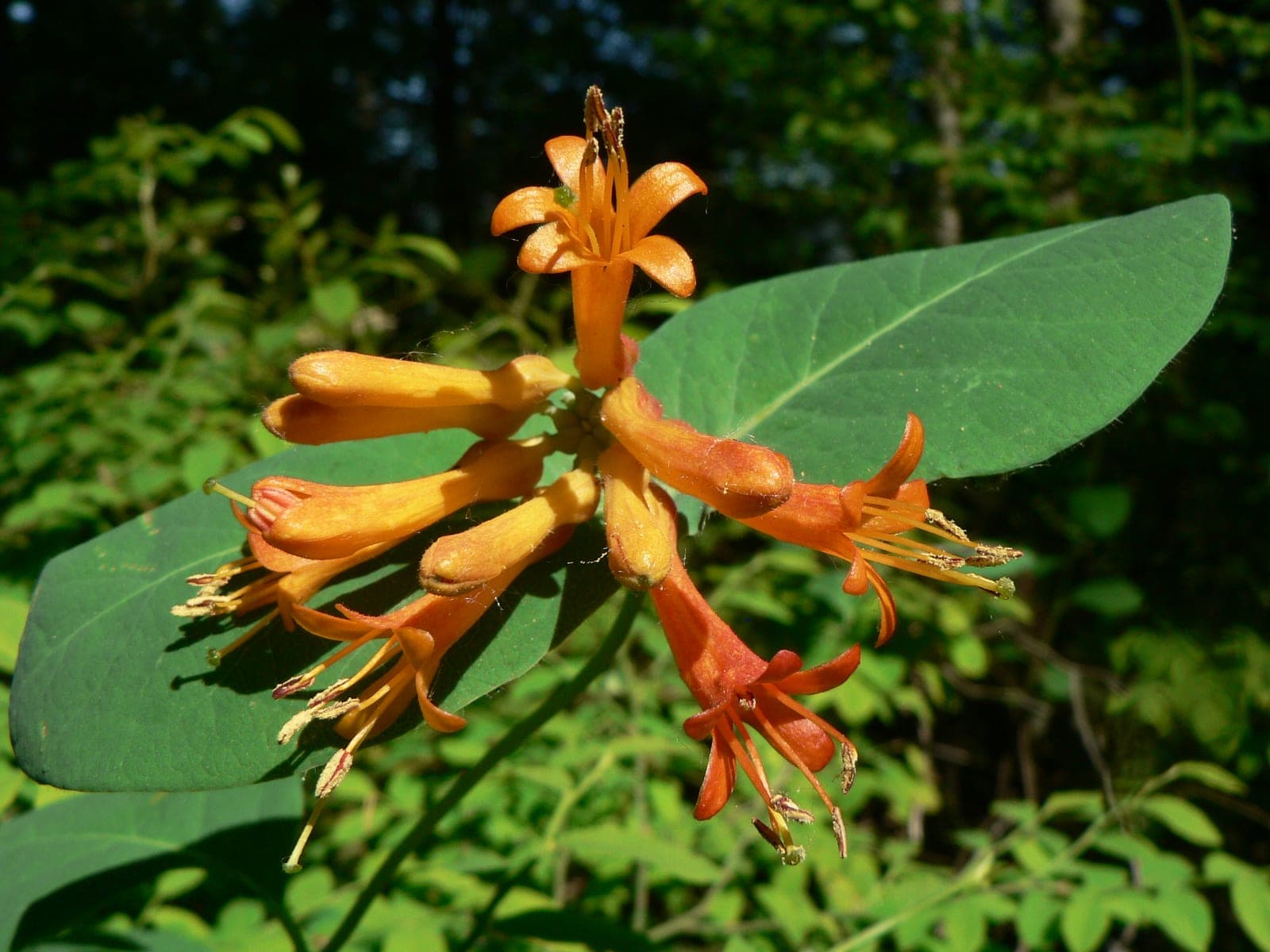
Lonicera ciliosa is a deciduous twining vine native to forest edges and open woodlands of western North America, ranging from British Columbia south into California and east to Montana and Idaho. It climbs by twining stems rather than tendrils or holdfasts, reaching 10–20 ft with adequate support. Orange-red tubular flowers appear in whorled clusters at stem tips from late spring into early summer and are a primary nectar source for hummingbirds. Unlike Lonicera japonica, it is non-invasive and does not self-seed aggressively into surrounding areas.
It tolerates partial shade to full sun and handles considerable summer drought once roots are established, consistent with its native habitat of seasonally dry western forests. Soil pH of 5.5–7.0 suits it well; rich soil is not required and may promote dense leafy growth at the expense of flowering. A 2–3 in mulch layer over the root zone aids establishment during the first two growing seasons. Thin out the oldest woody stems at the base in late winter to maintain vigor and reduce disease pressure from congested growth.
Some Coast Salish peoples used the long, flexible stems for weaving and cordage. Red berries ripen in late summer and are consumed by thrushes, waxwings, and other birds, extending the plant's wildlife value beyond the hummingbird season. The berries are mildly toxic to humans.
Ecoregions:Northwestern Forested MountainsMarine West Coast ForestNorth American Deserts
Powdery mildew
White or grey powdery coating on leaves - usually starting on older growth in humid conditions or when nights cool.
Improve air circulation by thinning plants. Apply neem oil or potassium bicarbonate spray at first sign. Avoid overhead watering.
Honeysuckle Leaf Blight
Brown or black spots on leaves that enlarge and merge, followed by curling, browning, and early leaf drop, often worse in wet seasons.
Remove and destroy infected leaves, thin growth to improve airflow, avoid overhead watering, and apply a copper-based fungicide if the problem recurs.