
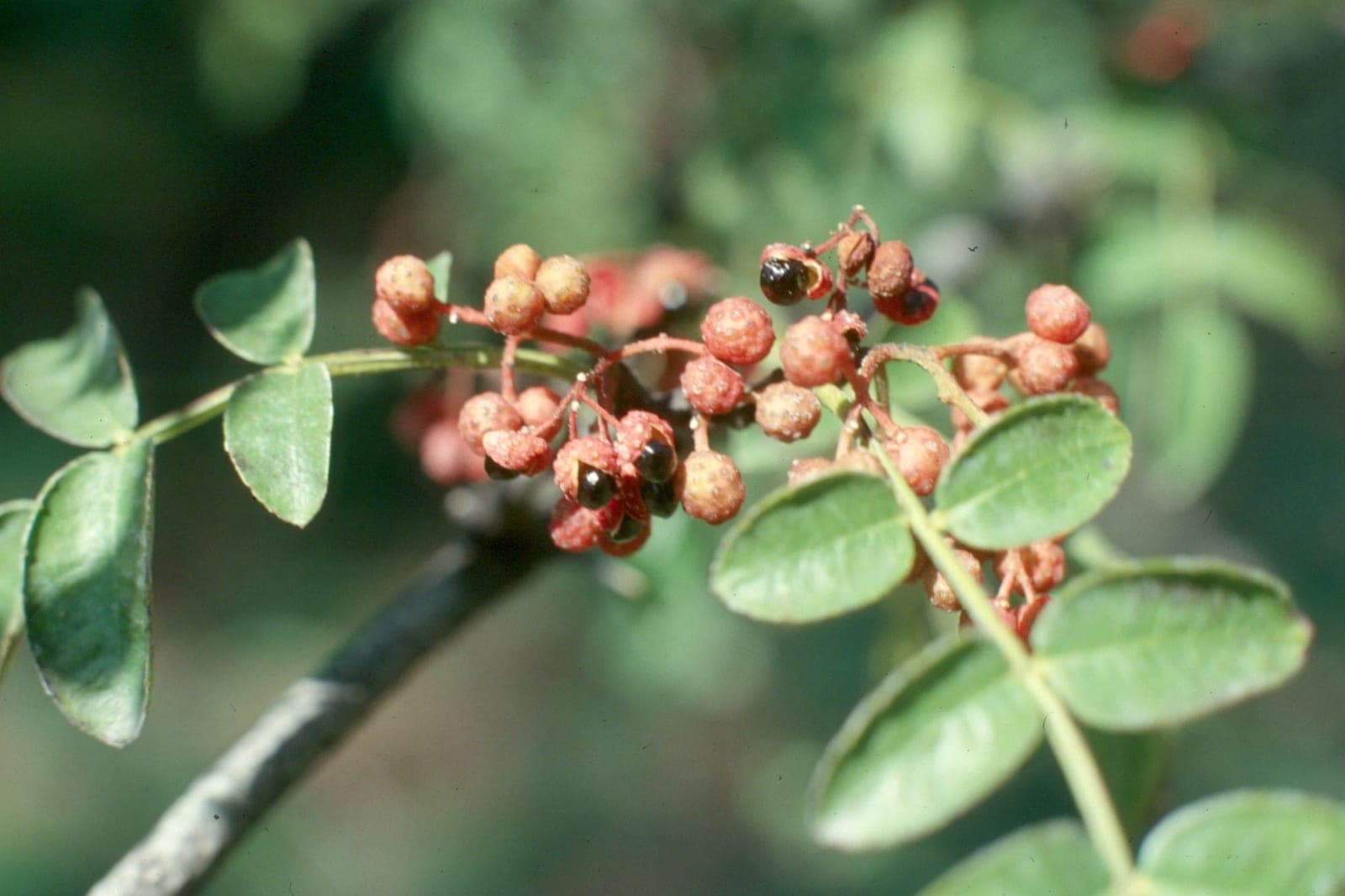
Northern Prickly Ash is a thorny native shrub or small tree in the citrus family (Rutaceae), native to central and eastern North America. It is the northernmost New World member of a genus that also includes the source of Sichuan pepper. Gardeners value it primarily as a wildlife plant - it is a key larval host for the Giant Swallowtail butterfly - and as a durable, low-maintenance native for naturalized areas, hedgerows, and difficult sites.
The shrub spreads by root suckers, forming dense thickets that work well as a thorny barrier but require regular management in formal plantings. It grows on woodland edges, rocky slopes, and stream banks, tolerating drought once established. Small yellowish-green flower clusters appear before the leaves in early spring, followed by aromatic reddish-brown berries. Bark, foliage, and fruit all carry a citrus-like scent. Cold-hardy to zone 3a, it is among the toughest native shrubs available for northern landscapes. Sucker control is the primary maintenance task.
Traditional practitioners used the bark and berries for toothache, rheumatism, and poor circulation, earning the plant the regional name toothache tree. The berries share aromatic compounds with Sichuan pepper and have been used as a spice substitute. Laboratory research has confirmed antifungal and cytotoxic activity in bark oil extracts.
Ecoregions:Northern ForestsEastern Temperate ForestsGreat Plains
Fungal leaf spot
Brown or purplish spots on the leaves, often ringed with a yellow halo, that spread and merge in warm, humid, or wet weather; heavily spotted leaves yellow and drop early.
Pick off spotted leaves and clear fallen debris to remove overwintering spores. Improve air circulation by thinning, and water at the base so foliage dries quickly. If it persists, apply a copper- or sulfur-based fungicide at the first sign.