
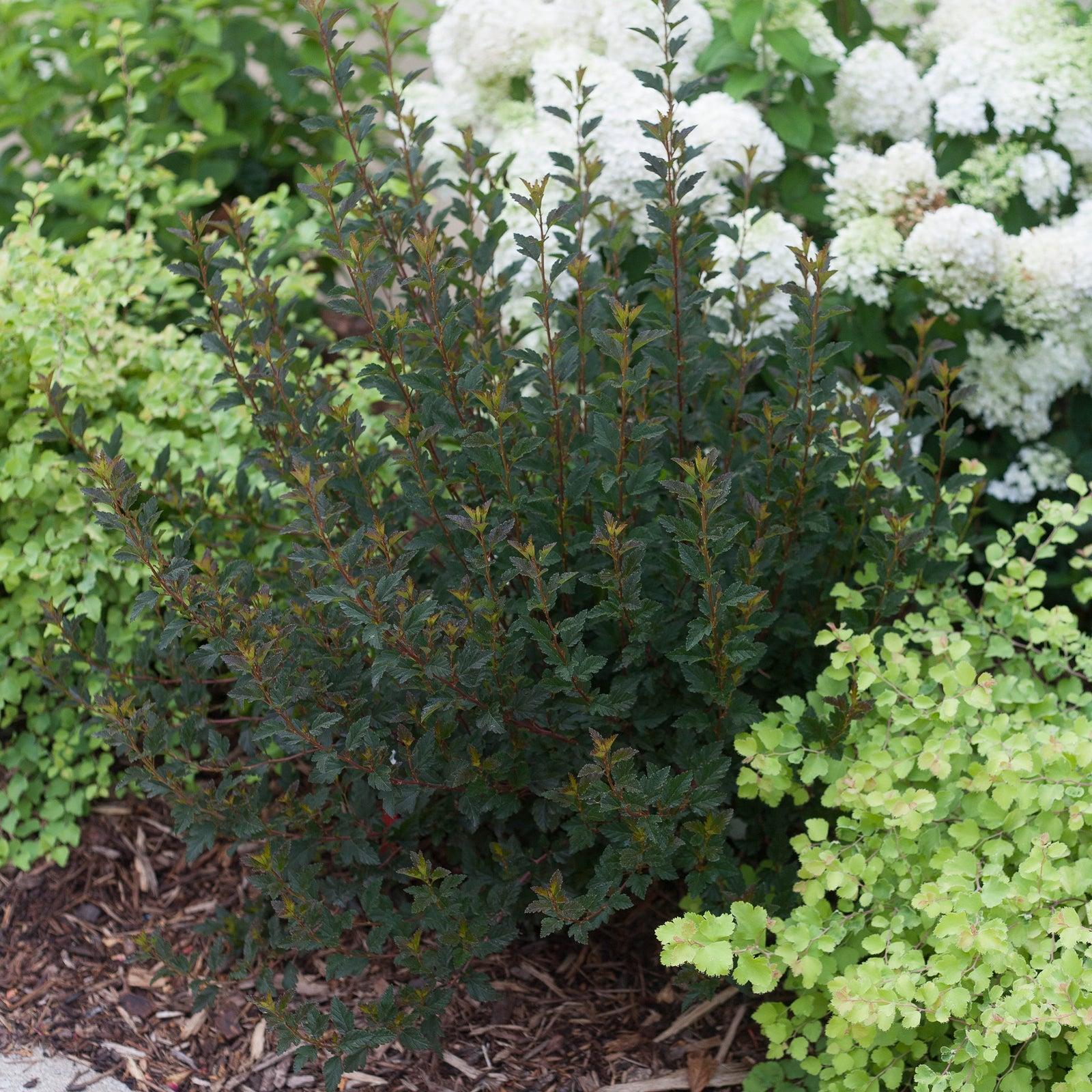
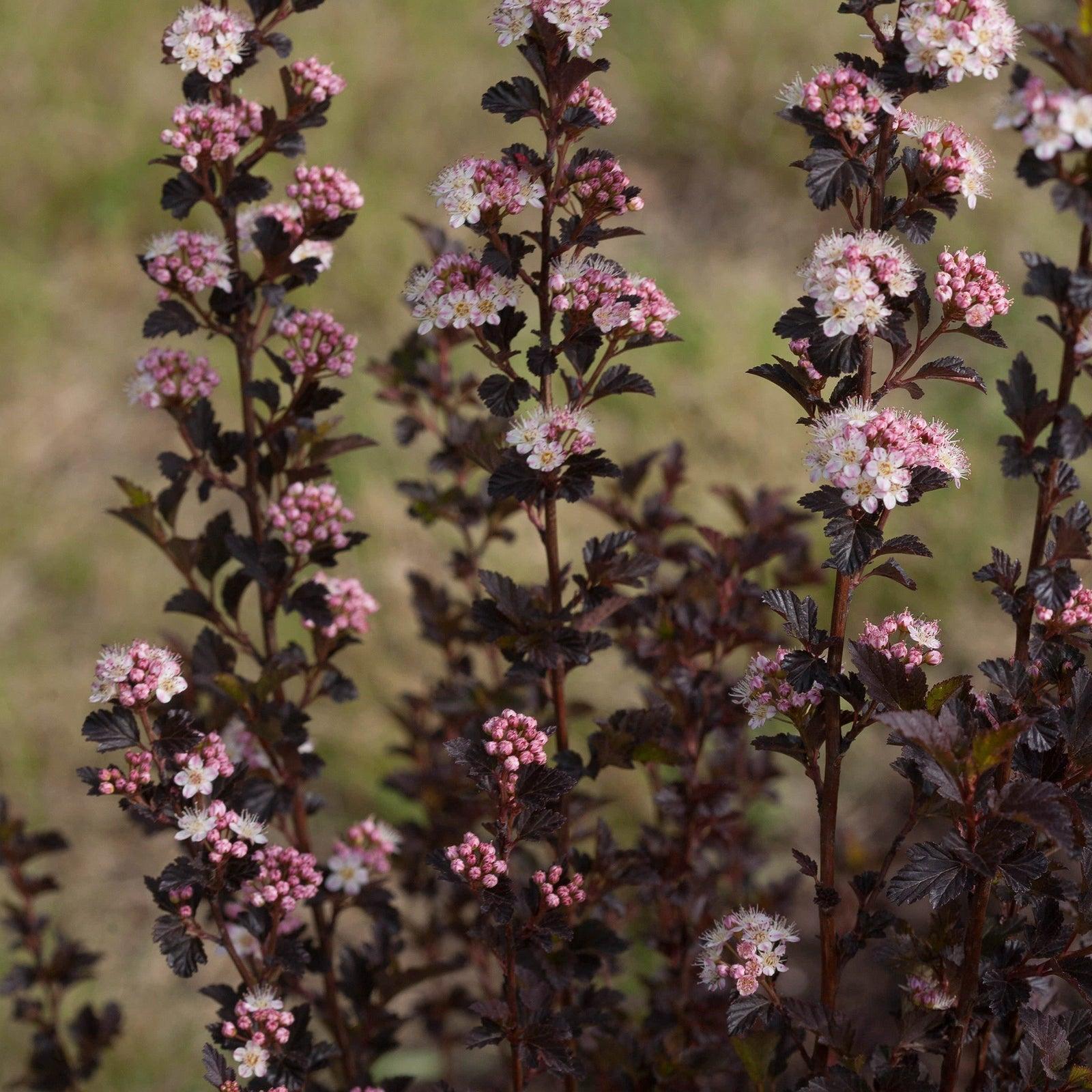
Tiny Wine Ninebark is a compact cultivar of Physocarpus opulifolius, a shrub native to eastern North America. It holds deep burgundy-red foliage from spring through fall, produces dense clusters of small white to pale pink flowers in late spring, and sets inflated reddish seed capsules that persist into early winter. At roughly one-third the size of the full species, it fits foundation plantings, mixed shrub borders, and smaller urban gardens where the straight species would overwhelm.
This cultivar performs best in full sun, which keeps foliage color most saturated; shade shifts leaves toward green. It tolerates clay, loam, and sandy soils as long as drainage is reasonable, and it becomes drought tolerant once established. Avoid excess nitrogen fertilizer, which promotes green growth at the expense of the burgundy pigment. Prune immediately after flowering in early summer to retain the shape without removing the following year's buds. The exfoliating, peeling bark - the source of the common name - provides winter interest after leaves drop.
The late-spring flowers attract native bees and other pollinators. Persistent seed capsules are taken by finches and other birds through late fall. As a Rosaceae family member native to eastern North America, ninebark supports a range of specialist native bee species and several moth and butterfly larvae.
Ecoregions:Northern ForestsEastern Temperate ForestsGreat Plains
These dates are for Zone 6b. Enter your ZIP to time every job to your own frost dates.
- buy · Jan 2 - Jan 16Buy plants - about two months before planting out
- plant · Mar 13 - Apr 3Plant container stock in full sun at the depth it sat in the pot and water in deeply. Shade dulls the bronze-maroon leaves to green.
Problems & troubleshooting
Common problems
Powdery mildew
White or grey powdery coating on leaves - usually starting on older growth in humid conditions or when nights cool.
Improve air circulation by thinning plants. Apply neem oil or potassium bicarbonate spray at first sign. Avoid overhead watering.
Fungal leaf spot
Brown or purplish spots on the leaves, often ringed with a yellow halo, that spread and merge in warm, humid, or wet weather; heavily spotted leaves yellow and drop early.
Pick off spotted leaves and clear fallen debris to remove overwintering spores. Improve air circulation by thinning, and water at the base so foliage dries quickly. If it persists, apply a copper- or sulfur-based fungicide at the first sign.