
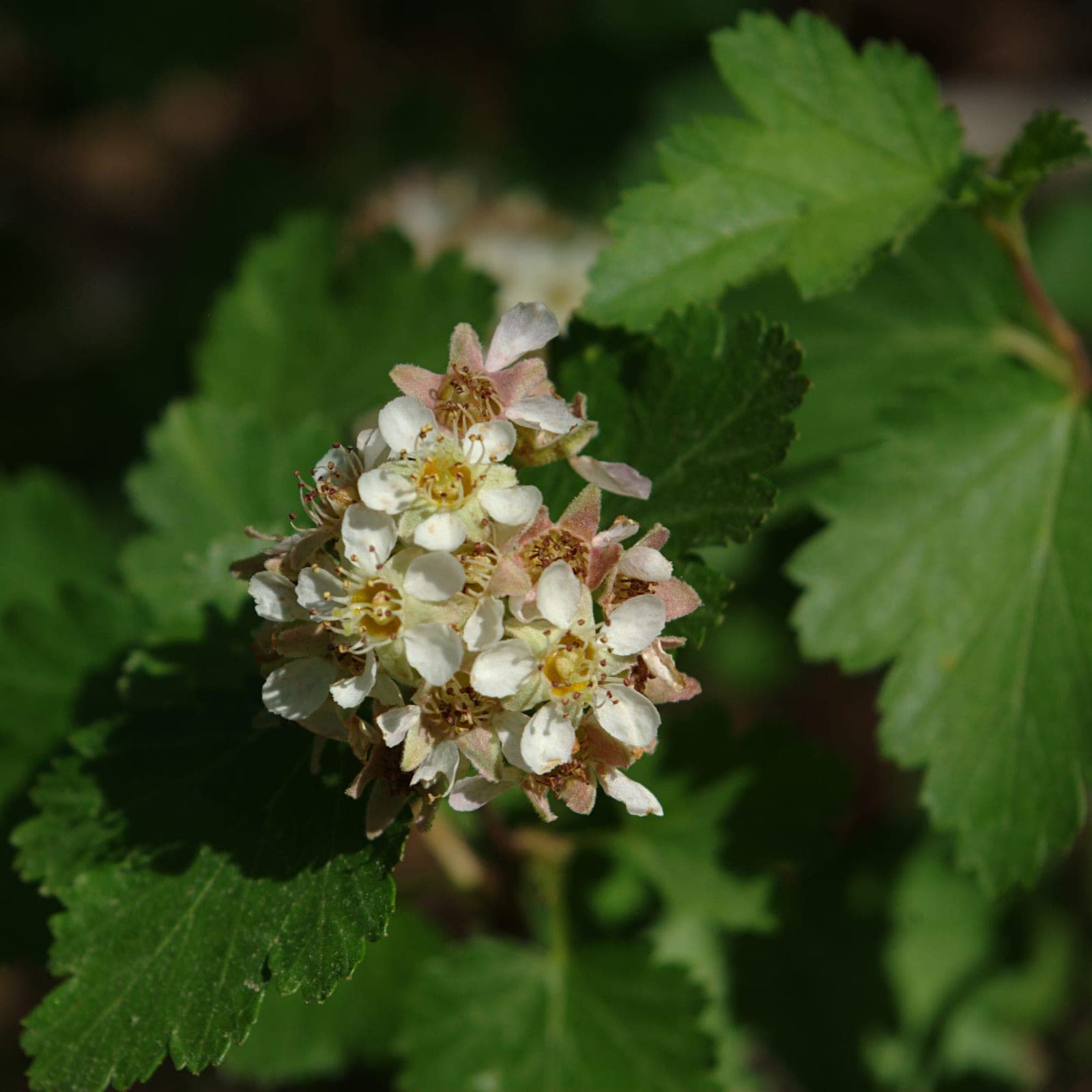
Mountain ninebark is a compact deciduous shrub native to the Rocky Mountain foothills and canyons, ranging from South Dakota south through Colorado, New Mexico, and Arizona. It tops out at 2–5 feet tall and wide, producing clusters of small white to pale-pink flowers in late spring followed by reddish seed capsules, and its most distinctive feature - multi-layered, shredding bark - provides structural interest through winter. Considerably smaller than the eastern ninebark (Physocarpus opulifolius), it is proportioned for rock gardens, dry slopes, and habitat plantings rather than large specimen use.
This shrub establishes well in thin, rocky, or gravelly soils where moisture drains quickly, and it tolerates wind exposure typical of mountain foothills. It grows best in neutral to slightly acidic, well-drained conditions and is notably drought-tolerant once rooted in. Prune immediately after flowering ends to shape the plant and encourage strong regrowth; a hard rejuvenation cut every few years prevents the interior from becoming excessively woody. Dense branching provides nesting cover, and birds feed on the seed clusters through fall.
Ecoregions:Northwestern Forested MountainsGreat PlainsNorth American DesertsTemperate Sierras
Powdery mildew
White or grey powdery coating on leaves - usually starting on older growth in humid conditions or when nights cool.
Improve air circulation by thinning plants. Apply neem oil or potassium bicarbonate spray at first sign. Avoid overhead watering.
Fungal leaf spot
Brown or purplish spots on the leaves, often ringed with a yellow halo, that spread and merge in warm, humid, or wet weather; heavily spotted leaves yellow and drop early.
Pick off spotted leaves and clear fallen debris to remove overwintering spores. Improve air circulation by thinning, and water at the base so foliage dries quickly. If it persists, apply a copper- or sulfur-based fungicide at the first sign.
Fire Blight
Water-soaked, wilting blossoms and young stems that rapidly turn brown to black. Infected shoot tips curl into a characteristic shepherd's crook. Bark beneath the infection may show reddish-brown discoloration.
Prune infected wood 8–12 inches below visible symptoms during dry weather. Sterilize tools with 70% isopropyl alcohol or a 10% bleach solution between cuts. Avoid high-nitrogen fertilizers that produce soft, disease-susceptible growth. Copper-based bactericides applied at early flowering can reduce spread in high-pressure years.