
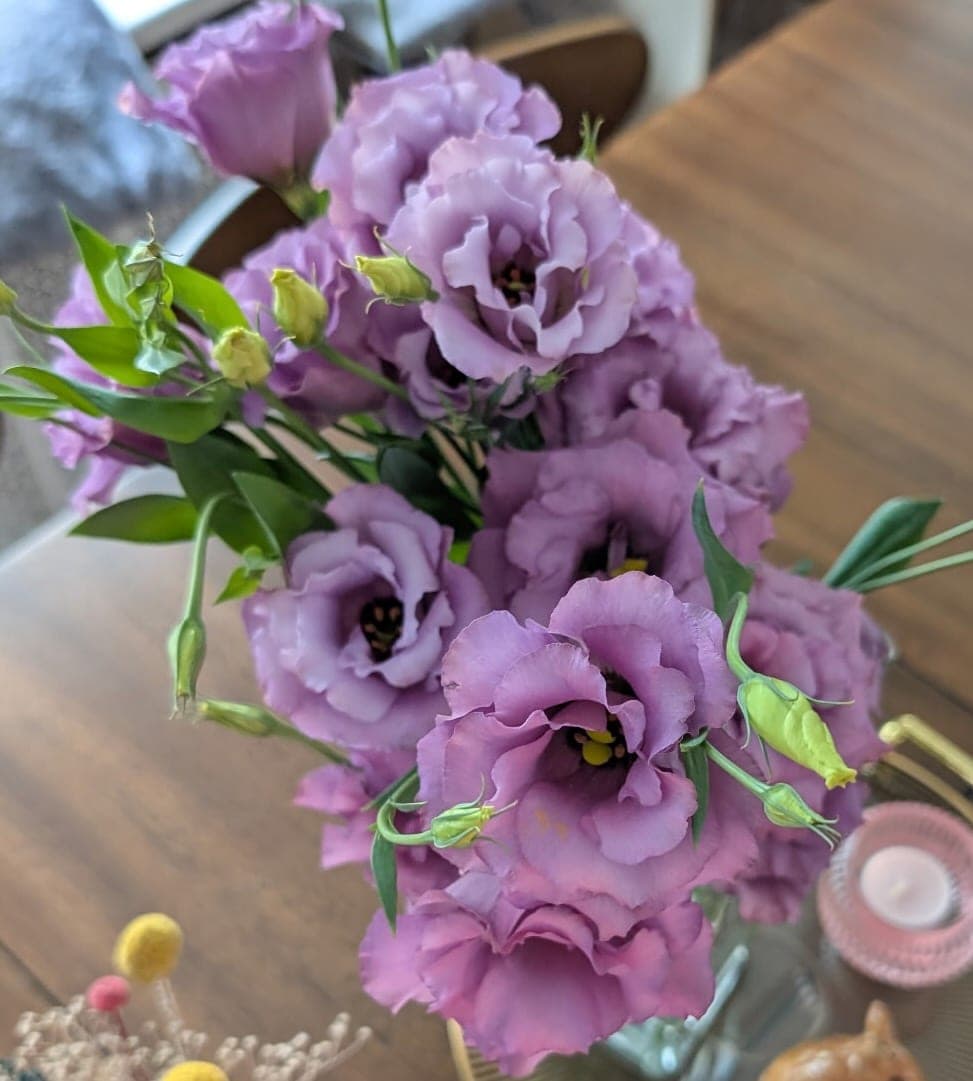
Lisianthus (Eustoma grandiflorum) is a native North American prairie plant in the gentian family, found wild along stream banks and prairie margins from Nebraska through Texas and into Mexico. In cultivation it is valued as a premium cut flower, producing large, layered blooms in shades of purple, white, pink, and bicolor over an extended season. It is perennial in zones 8–10 and grown as a warm-season annual in cooler climates.
Growing lisianthus from seed is unusually slow - germination takes 14–21 days and seedlings need 14–16 weeks indoors before they are transplant-ready, so most gardeners start with purchased plug transplants. Soil must be well-drained and held near neutral to slightly alkaline pH; chronically wet roots trigger rapid crown and root rot. Raised beds and well-amended planting sites improve drainage and reduce disease pressure considerably. In hot climates, afternoon shade extends the blooming period.
Lisianthus is a major commercial cut flower crop, particularly in Japan and the Netherlands, where intensive breeding has produced double-flowered and ruffled varieties far removed from the simple, single-petaled wild form. Vase life of two to three weeks makes it one of the longest-lasting cut flowers in commerce.
Ecoregions:Eastern Temperate ForestsGreat PlainsNorth American Deserts
Fusarium wilt
Sudden wilting, brown streaks in stems, yellowing leaves. Affects sweet basil varieties most.
No cure. Remove and destroy plants. Do not replant in the same spot for 3+ years. Choose resistant varieties.
Botrytis (grey mould)
Grey fuzzy mould on petals and stems, worst in cool wet conditions.
Remove affected parts immediately. Improve air circulation. Avoid overhead watering. Apply copper fungicide if severe.
Crown Rot
Lower leaves yellow and wilt; the base of the rosette turns brown and soft, sometimes with white fungal threads at the soil line. Plants collapse in wet conditions.
Remove and destroy affected plants. Improve drainage and avoid overhead watering. Do not mulch directly against the crown. Space plants for airflow and avoid replanting in the same wet spot.