
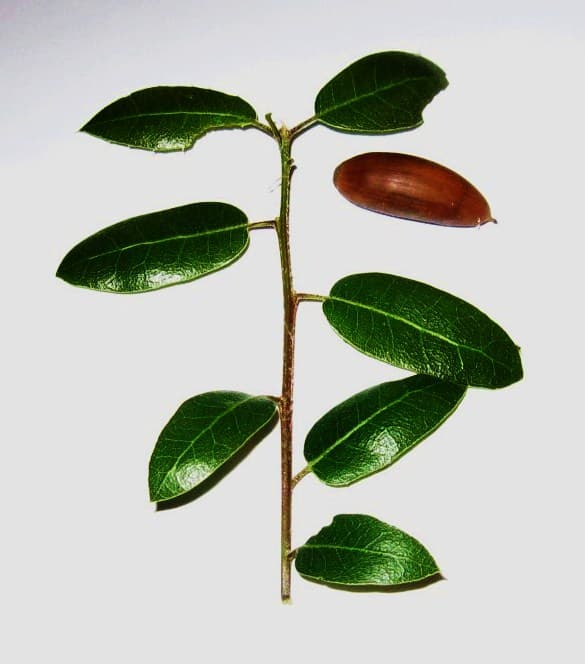
Interior live oak (Quercus wislizeni) is an evergreen oak native to the foothills, canyons, and lower mountain slopes of California and northern Baja California. It is highly variable in form, ranging from dense multi-stemmed shrubs on exposed ridges to single-trunked trees exceeding 60 feet on sheltered slopes. It is one of the most reliable native trees for low-water California landscapes and holds its foliage year-round.
Established trees are strongly drought adapted and do not tolerate summer irrigation near the root zone; added summer water promotes root rots and sudden oak death. Plant container-grown stock in fall at the onset of the rainy season and water deeply every two to three weeks through the first two dry seasons only, then eliminate supplemental irrigation. The species tolerates slightly acidic to neutral soils and performs best with unamended native backfill. Avoid soil disturbance, grading, or trenching within the drip line of any established tree.
Acorns are a critical food source for acorn woodpeckers, scrub jays, band-tailed pigeons, mule deer, and black bears. Native Californians leached tannins from ground acorns to produce flour and porridge. The dense evergreen canopy supports cavity-nesting birds, and the bark and leaf litter sustain a distinct assemblage of invertebrates and small mammals.
Ecoregions:Northwestern Forested MountainsMarine West Coast ForestNorth American DesertsMediterranean California
Oak Wilt
Leaves wilt and brown starting at branch tips, progressing rapidly toward the trunk. Discoloration may appear as brown or yellow veining across the leaf blade. Individual branches or the entire canopy can defoliate within days to weeks. A cross-section of affected branches reveals dark streaking in the outer sapwood ring.
Contact a certified arborist for trunk injection of propiconazole fungicide, which is most effective as a preventive measure or at earliest symptom onset. Sever root grafts between infected and neighboring live oaks by cutting a trench 3–4 ft deep between trees to prevent fungal spread through connected root systems. Remove and immediately chip, burn, or bury all infected wood; do not store as firewood. Avoid any pruning from March through July when nitidulid sap-feeding beetles that carry the pathogen are most active. Apply wound sealant to all cuts made outside this window within minutes of cutting.
Sudden Oak Death
Reddish-brown to black bleeding cankers on the lower trunk ooze dark sap; inner bark beneath the canker is stained deep red-brown. Foliage may wilt and die rapidly as the canker girdles the stem. Leaf lesions occur on some hosts but are secondary on oaks.
No systemic cure is available once infection is established. Preventive trunk injections with potassium phosphite applied before infection can slow canker progression in high-risk areas. Remove and chip or burn infected wood on-site; do not transport infected material off the property. Report confirmed or suspected cases to the California Department of Food and Agriculture.
Phytophthora Root Rot
Wilting despite moist soil, yellowing leaves, stunted growth, and dark, decayed roots and crown tissue. Vines may collapse during hot weather.
Plant in well-draining soil and avoid waterlogging. Remove and destroy affected vines. Improve drainage with raised beds or amended soil and avoid overwatering.
Powdery mildew
White or grey powdery coating on leaves - usually starting on older growth in humid conditions or when nights cool.
Improve air circulation by thinning plants. Apply neem oil or potassium bicarbonate spray at first sign. Avoid overhead watering.