
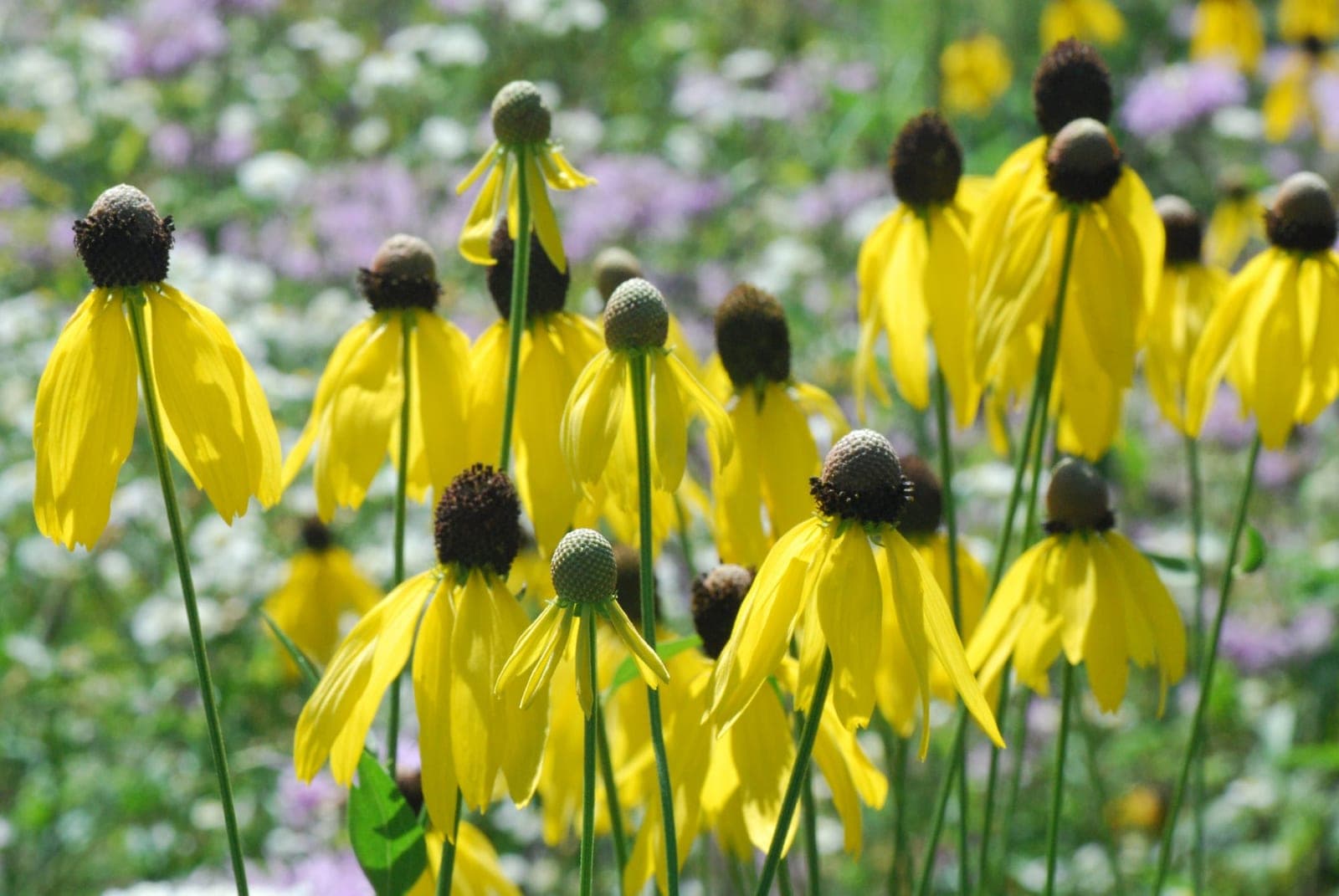
Ratibida pinnata is a native prairie perennial with long, drooping yellow ray petals surrounding a tall cone that starts gray and matures to brown. It grows across the central and eastern US into Ontario and reaches 3–5 feet at maturity, making it a reliable choice for naturalistic borders, rain gardens, and prairie-style plantings.
Given full sun and well-drained to average soil, it establishes readily and becomes highly drought tolerant. It self-seeds freely and gradually forms loose colonies - deadheading controls spread when needed. Rich or consistently wet soil promotes floppy stems. Leaving seed heads standing through winter provides food for goldfinches and visual structure during the dormant season. Cold-hardiness is strong through zone 3.
Ratibida pinnata is a significant pollen and nectar source for native bees, including prairie specialists, and plays a meaningful role in tallgrass prairie restoration plantings across its native range.
Ecoregions:Northern ForestsEastern Temperate ForestsGreat Plains
Aster Yellows
Deformed, greenish flowers, stunted growth, and yellowed foliage. Flower centers may produce tufts of leafy growth instead of normal petals.
No cure. Remove and destroy infected plants immediately to stop spread. Control leafhoppers, which transmit the disease, and remove nearby weed hosts.
Fungal leaf spot
Brown or purplish spots on the leaves, often ringed with a yellow halo, that spread and merge in warm, humid, or wet weather; heavily spotted leaves yellow and drop early.
Pick off spotted leaves and clear fallen debris to remove overwintering spores. Improve air circulation by thinning, and water at the base so foliage dries quickly. If it persists, apply a copper- or sulfur-based fungicide at the first sign.
Powdery mildew
White or grey powdery coating on leaves - usually starting on older growth in humid conditions or when nights cool.
Improve air circulation by thinning plants. Apply neem oil or potassium bicarbonate spray at first sign. Avoid overhead watering.
Root rot
Plants wilt, yellow, and stunt even in moist soil; lower stems and roots turn brown, soft, and mushy and the plant may collapse. Most common in heavy, wet, or poorly drained ground.
Improve drainage and stop overwatering, and never plant too deep. Lift and destroy badly affected plants along with the soil around the roots. Grow in raised or free-draining beds to prevent it returning.