
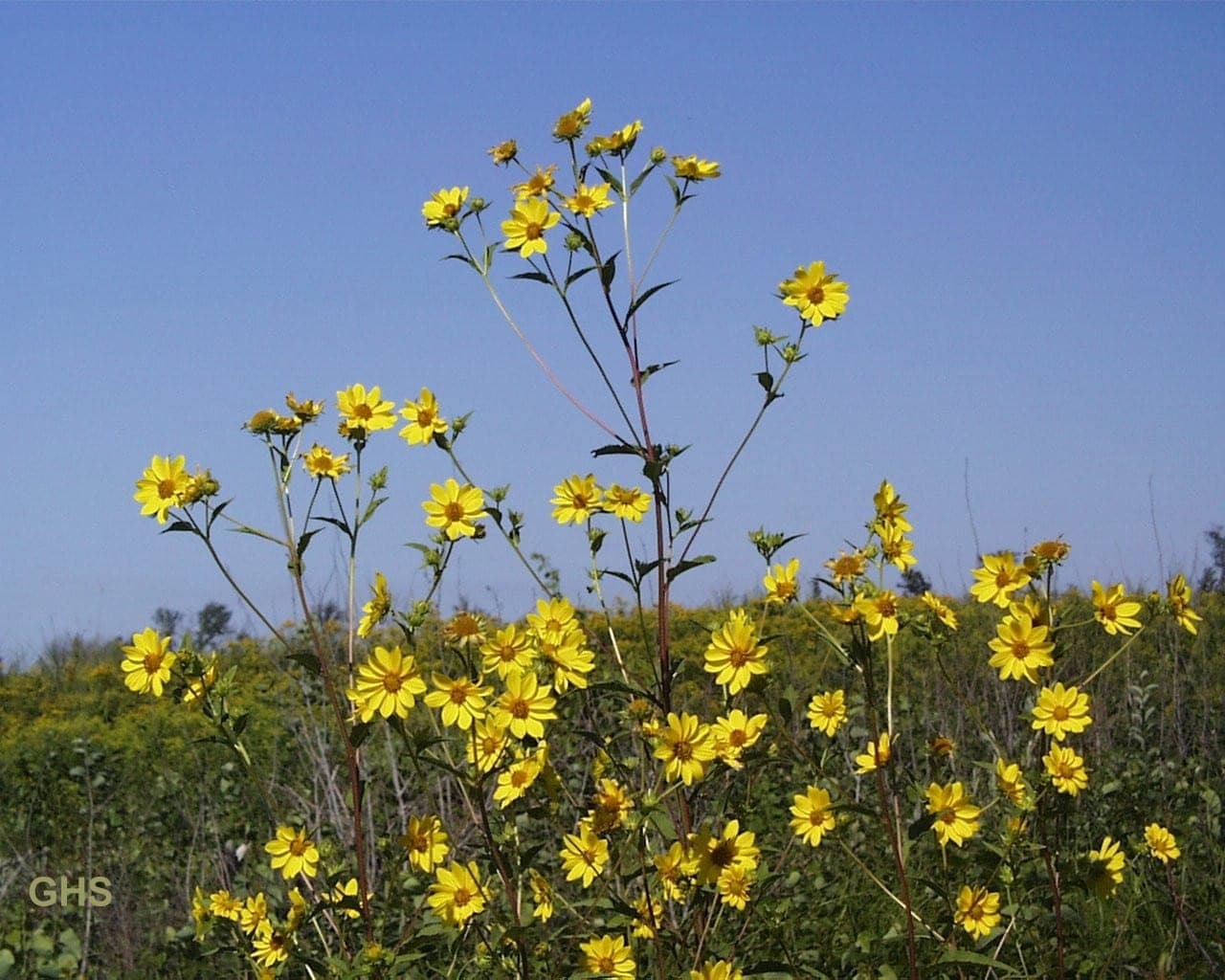
Helianthus giganteus is a native perennial sunflower of eastern North America, ranging from Newfoundland to Alberta and south through the Great Plains and eastern states. It reaches 6–12 feet, branches heavily near the top, and produces large numbers of 2–3-inch yellow flowers from late summer into fall. Few native plants rival it for late-season pollinator support, and its seed heads carry goldfinches, chickadees, and sparrows well into autumn.
This species naturally occupies moist to wet meadows, marshes, and stream banks, tolerating periodic flooding. It spreads vigorously by rhizomes and can form dense colonies within a few seasons; install a buried root barrier or divide clumps every 2–3 years to manage spread. In exposed or windy positions the tall stems may need staking. It thrives in near-neutral to slightly acidic soil and needs little supplemental fertility in organically rich ground.
Seeds of this and related tall sunflowers were harvested by Indigenous peoples of eastern North America, dried and ground into meal or pressed for oil.
Ecoregions:Northern ForestsEastern Temperate ForestsGreat Plains
Powdery mildew
White or grey powdery coating on leaves - usually starting on older growth in humid conditions or when nights cool.
Improve air circulation by thinning plants. Apply neem oil or potassium bicarbonate spray at first sign. Avoid overhead watering.
Rust
Orange to brown raised pustules on the undersides of leaves, with yellow spotting on the upper surface. Heavy infections cause leaves to yellow and drop.
Remove and destroy infected leaves. Avoid overhead watering and improve air circulation. Apply a sulfur or copper-based fungicide if it spreads. Clear plant debris in fall.
Fungal leaf spot
Brown or purplish spots on the leaves, often ringed with a yellow halo, that spread and merge in warm, humid, or wet weather; heavily spotted leaves yellow and drop early.
Pick off spotted leaves and clear fallen debris to remove overwintering spores. Improve air circulation by thinning, and water at the base so foliage dries quickly. If it persists, apply a copper- or sulfur-based fungicide at the first sign.
Downy mildew
Yellowing on top of leaves with grey-purple fuzz underneath. Spreads rapidly in humid conditions.
Remove affected leaves. Improve air circulation. Avoid overhead watering. Copper spray as preventive.
Sclerotinia Head Rot
Soft brown rot on the back of the flower head, white fungal growth, and hard black bodies inside; stems may wilt and collapse.
Remove and destroy infected heads and stems. Avoid overhead watering and crowding. Rotate away from sunflowers and other susceptible crops for several years.