
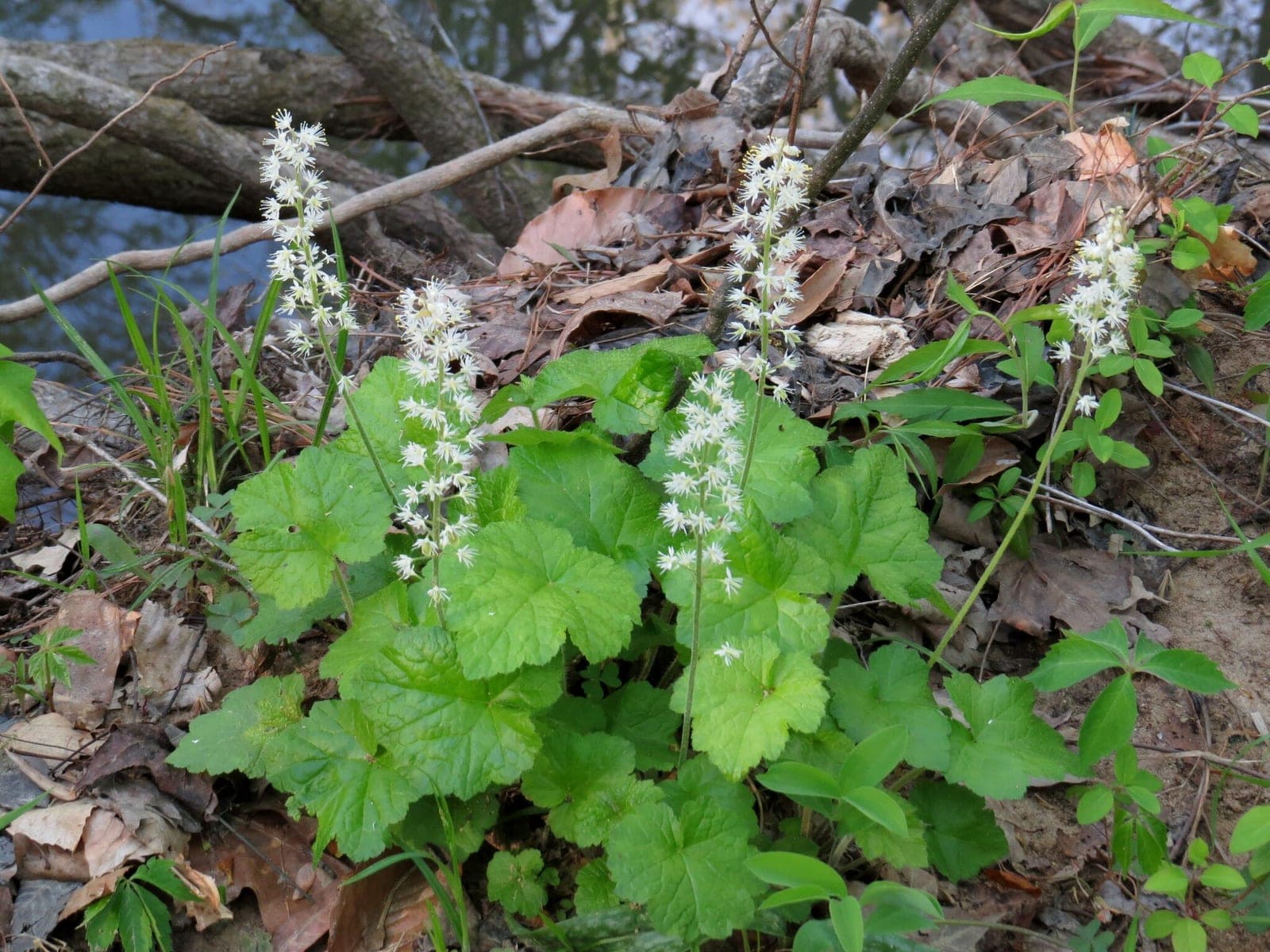
Tiarella 'Angel Wings' is a hybrid foamflower cultivar grown primarily as a shade groundcover. It forms compact mounds of deeply lobed leaves with bold silver patterning along the veins and sends up slender wands of white to pale-pink flowers in mid-spring. Foliage is semi-evergreen in zones 6 and warmer, providing year-round textural interest in shaded beds.
This cultivar spreads slowly by short stolons, gradually filling gaps beneath deciduous trees and along shaded borders. Consistent moisture and a humus-rich, slightly acidic soil are key to strong performance. A 2–3 in layer of leaf mulch helps retain moisture and mimics natural woodland conditions. Poor drainage or compacted soil leads to crown and root rot; avoid planting in low spots.
The flowers are an early-season nectar source for native bees and small butterflies at a time when few other shade plants are producing forage. Tiarella integrates well into layered woodland plantings alongside ferns, native sedges, and spring ephemerals.
Ecoregions:Northern ForestsEastern Temperate ForestsGreat Plains
Powdery mildew
White or grey powdery coating on leaves - usually starting on older growth in humid conditions or when nights cool.
Improve air circulation by thinning plants. Apply neem oil or potassium bicarbonate spray at first sign. Avoid overhead watering.
Fungal leaf spot
Brown or purplish spots on the leaves, often ringed with a yellow halo, that spread and merge in warm, humid, or wet weather; heavily spotted leaves yellow and drop early.
Pick off spotted leaves and clear fallen debris to remove overwintering spores. Improve air circulation by thinning, and water at the base so foliage dries quickly. If it persists, apply a copper- or sulfur-based fungicide at the first sign.
Root rot
Plants wilt, yellow, and stunt even in moist soil; lower stems and roots turn brown, soft, and mushy and the plant may collapse. Most common in heavy, wet, or poorly drained ground.
Improve drainage and stop overwatering, and never plant too deep. Lift and destroy badly affected plants along with the soil around the roots. Grow in raised or free-draining beds to prevent it returning.
Foliar Nematode
Angular brown or yellowish patches bounded by leaf veins, beginning on the lowest leaves and progressing upward. Affected tissue dries to a papery tan while adjacent tissue remains green. Symptoms worsen in warm, wet conditions.
Remove and dispose of all affected leaves-do not compost. Avoid overhead irrigation; water at the base. Increase plant spacing to improve air circulation. No effective chemical treatment exists; severely infected plants should be dug out and discarded to prevent spread to neighboring heucheras.