
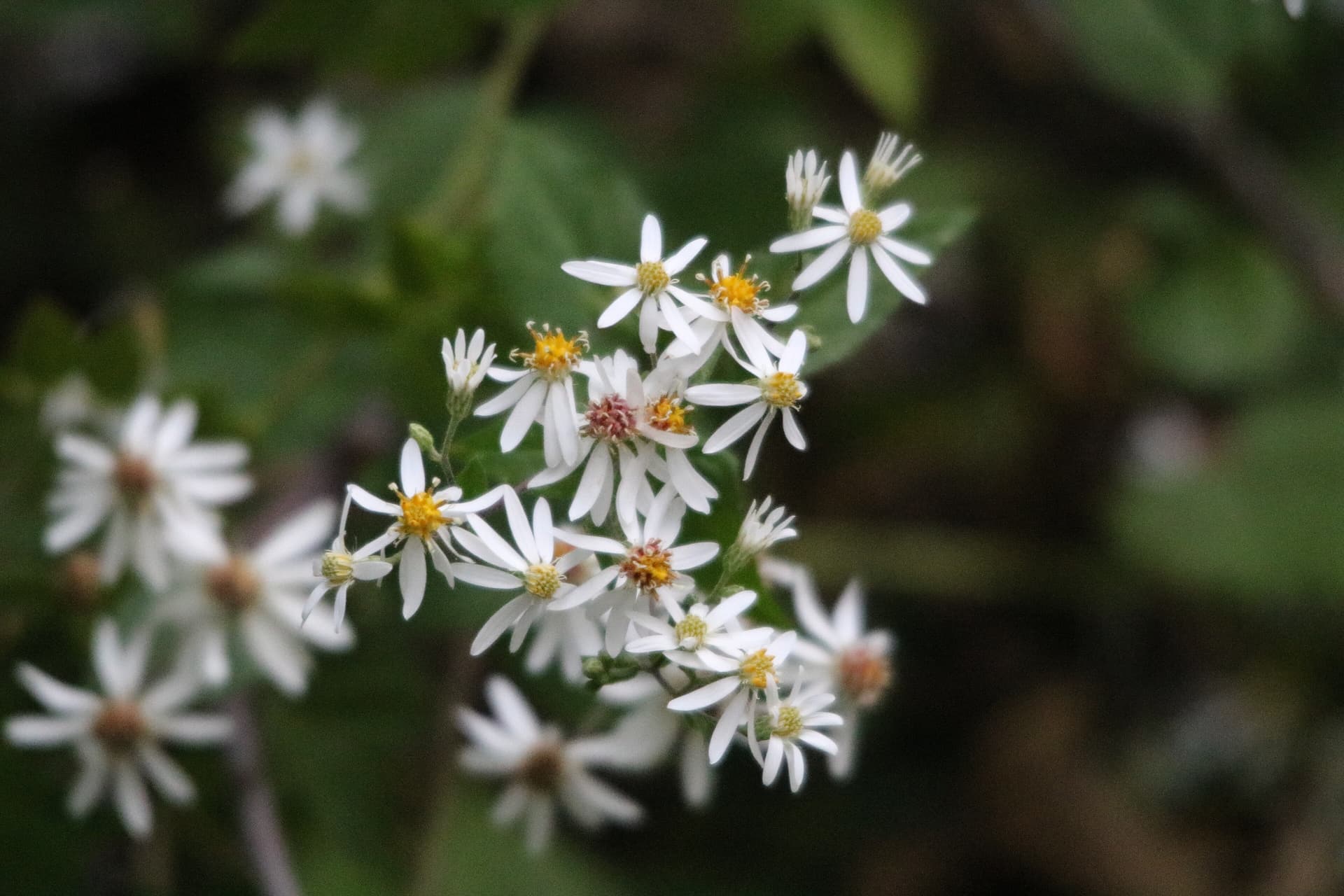
Native from Maine to Alabama, white wood aster is one of the few asters that thrives in dry shade, spreading by rhizomes to form loose colonies of dark, wiry stems and heart-shaped leaves under trees where little else will bloom. Sprays of small, star-shaped white flowers with yellow-to-purple centers cover the plant from late summer into mid-fall.
It's genuinely vigorous in dry, average soil under shade - vigorous enough to spread further than wanted in an open, sparsely planted bed, so deadheading before seed sets or cutting back hard in late spring keeps a planting in check. Deer and drought both leave it unbothered.
Ecoregions:Northern ForestsEastern Temperate Forests
Powdery mildew
White or grey powdery coating on leaves - usually starting on older growth in humid conditions or when nights cool.
Improve air circulation by thinning plants. Apply neem oil or potassium bicarbonate spray at first sign. Avoid overhead watering.