
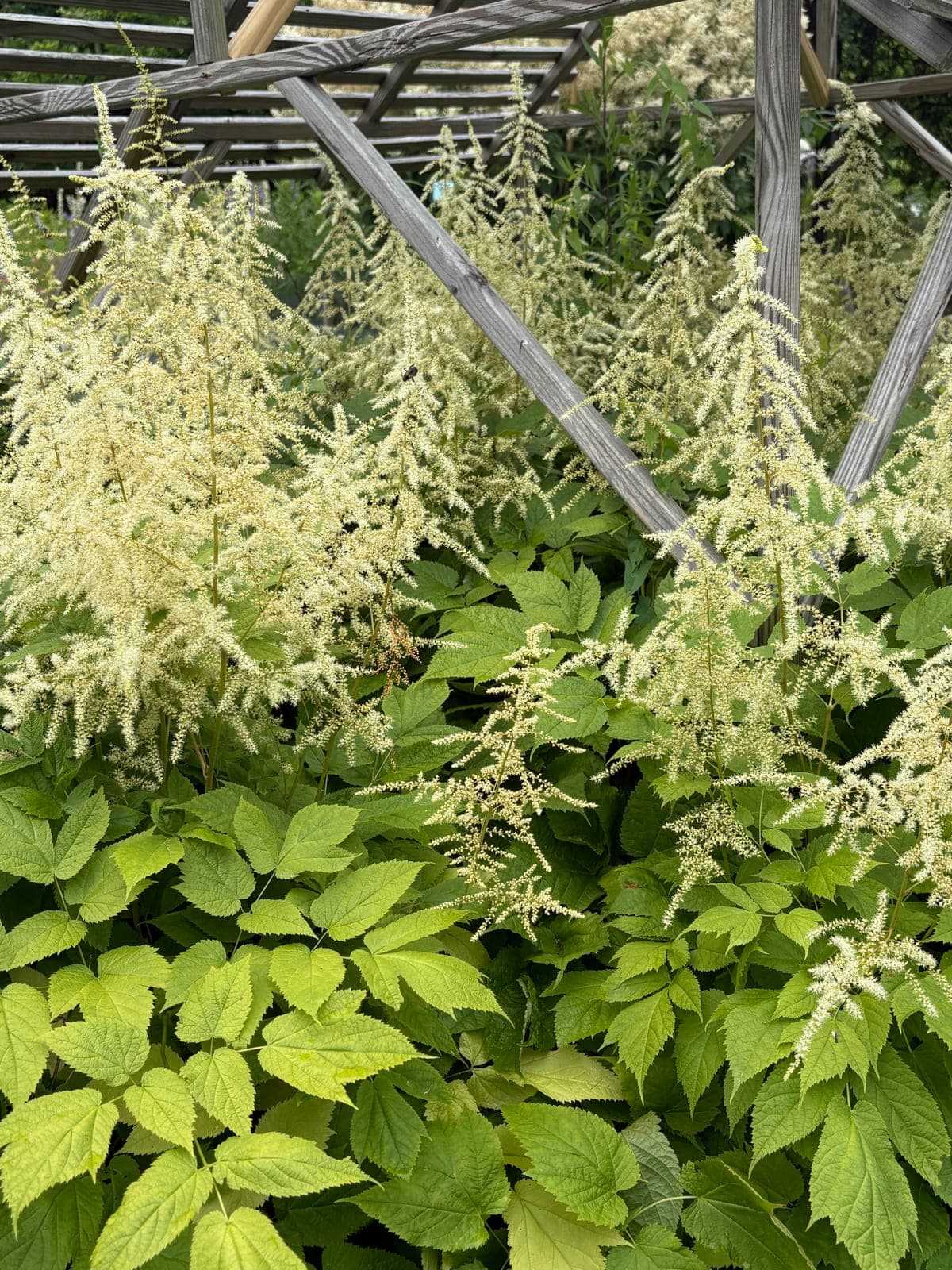
Astilbe biternata is the only astilbe native to North America, and growing it feels like a genuine privilege - it's got a wilder, more architectural presence than the Asian hybrids, with tall creamy-white plumes that rise dramatically above deeply divided foliage in early to midsummer. Start by getting the soil right: work in generous amounts of compost or leaf mold before planting, because this plant evolved on the rich forest floors of the Appalachians and it expects that kind of hospitality. Plant divisions or transplants in early spring or early fall, setting the crown just at soil level - too deep and you'll encourage rot, too shallow and the roots dry out fast. The single biggest mistake gardeners make is siting it somewhere too sunny or too dry. It will sulk, scorch at the leaf edges, and refuse to bloom properly. Give it dappled shade and consistent moisture, mulch the root zone generously each spring to hold that moisture in, and it will reward you with reliable, impressive blooms year after year. Division every three to four years keeps the clumps vigorous and prevents the center from dying out.
On the medicinal and traditional side, Astilbe biternata has a modest but genuine place in Appalachian folk herbalism. Cherokee and other Indigenous peoples of the southeastern mountains historically used root preparations to address fever and general malaise, and the roots have been noted in ethnobotanical records as a treatment for pain and as a general strengthening tonic - though it was never a prominent medicinal plant and caution is warranted with any self-prepared root remedy. There are no established culinary uses for this species; the plant is not considered edible and is best appreciated strictly as an ornamental. In the garden it pairs beautifully with other moisture-loving woodland companions, and its tall structure makes it a natural centerpiece in a shaded border or along a stream edge. If you're gardening in the eastern United States especially, growing this native species is also a quiet act of ecological stewardship - it supports native pollinators and fits naturally into the regional plant community in a way no hybrid quite manages.
Ecoregions:Eastern Temperate Forests