
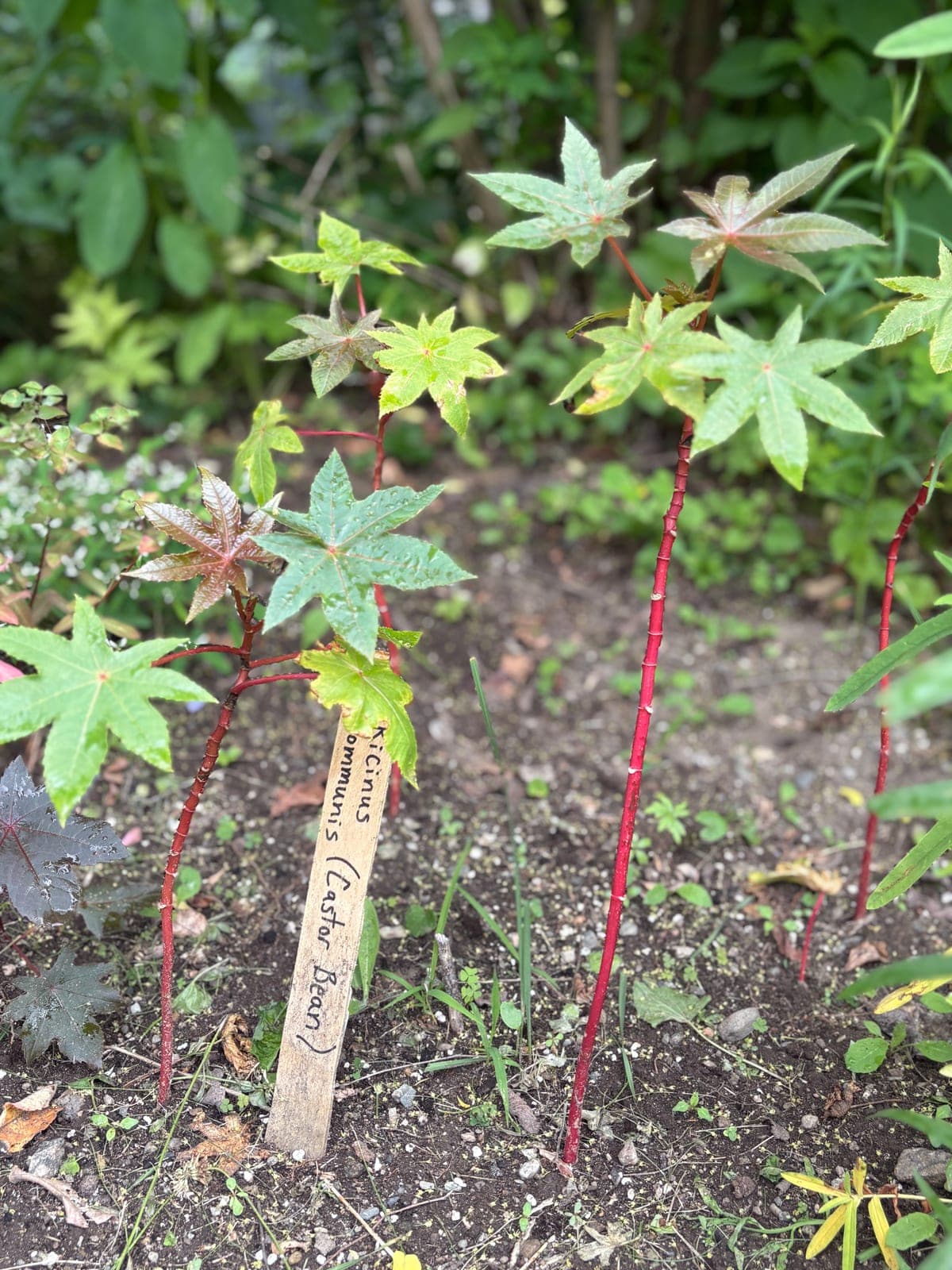
Castor bean is one of those plants that makes a garden look instantly intentional - nothing else gives you that combination of giant palmate leaves, often in deep bronzy purples or bright greens, with such effortless speed. Start seeds indoors 4–6 weeks before your last frost date, or direct sow once soil has warmed to at least 60°F. Soak seeds in warm water for 24 hours before planting to soften the hard seed coat - skipping this step is the number one reason seeds rot in the ground rather than germinating. Plant 1–2 inches deep in rich, loose soil. Castor bean is a heavy feeder, so dig in a generous layer of aged compost at planting time and side-dress with a balanced fertilizer once the plant hits knee height. Full sun is non-negotiable; in partial shade you'll get leggy, floppy growth that never quite delivers that architectural drama you're after. In zones 9 and above it may overwinter as a perennial - cut it back hard in late winter and it'll flush back with vigor. In colder gardens, treat it as a tender annual and pull it at first frost.
A word that can't go unsaid: every part of castor bean is seriously toxic, with the seeds containing ricin, one of the most potent natural toxins known. Wear gloves when handling seeds or pruning, keep children and pets away, and never compost the seed pods. That said, gardeners have grown castor bean safely for centuries, and the risks are manageable with basic awareness. Medicinally, the cold-pressed oil - carefully processed to eliminate ricin - has been used for millennia as a laxative, a skin treatment for dry patches and inflammation, and in traditional Ayurvedic medicine as a remedy for joint pain when applied topically. It also has a long folk history as a mole and vole deterrent when castor oil is watered into the soil.