
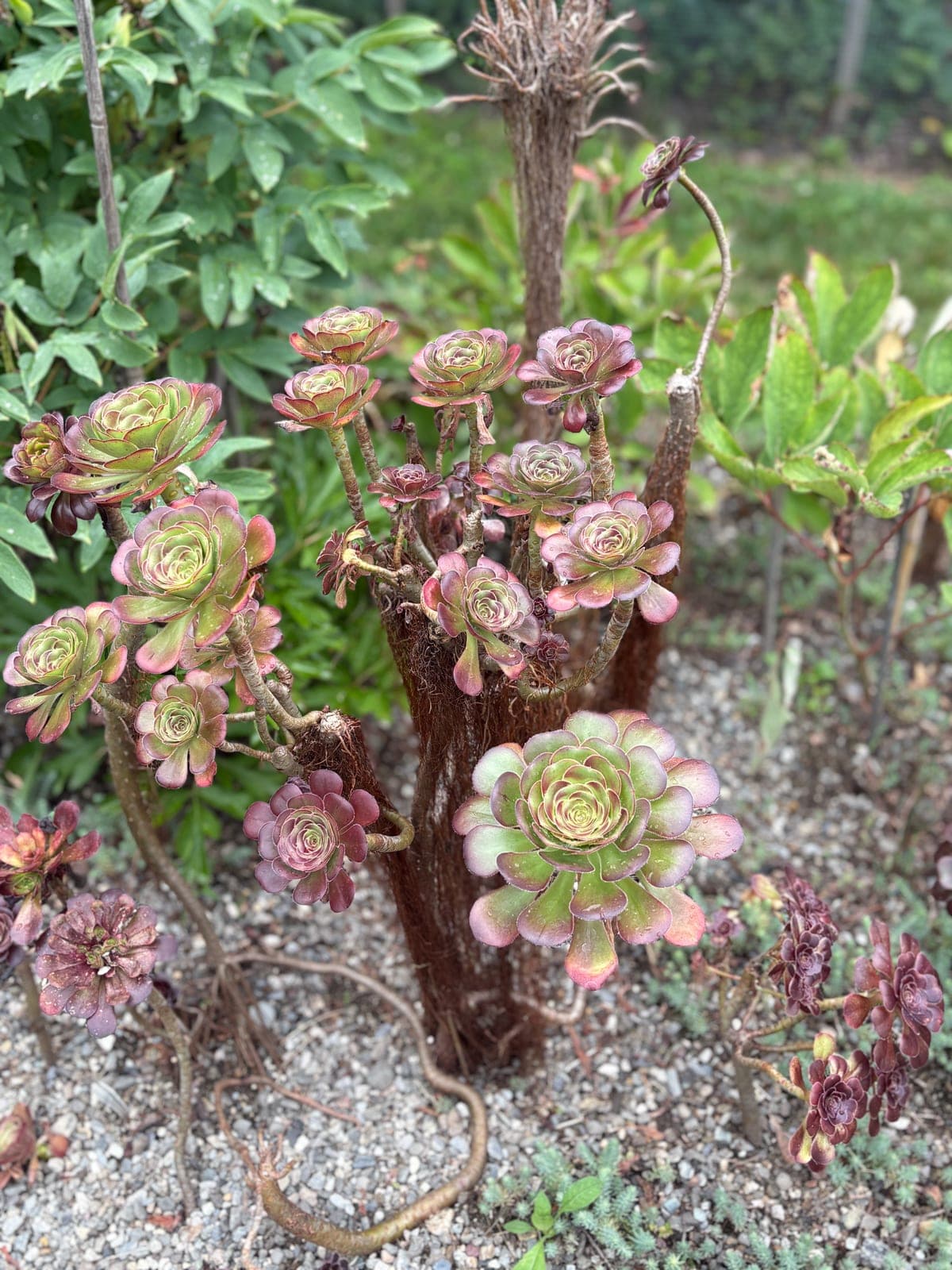
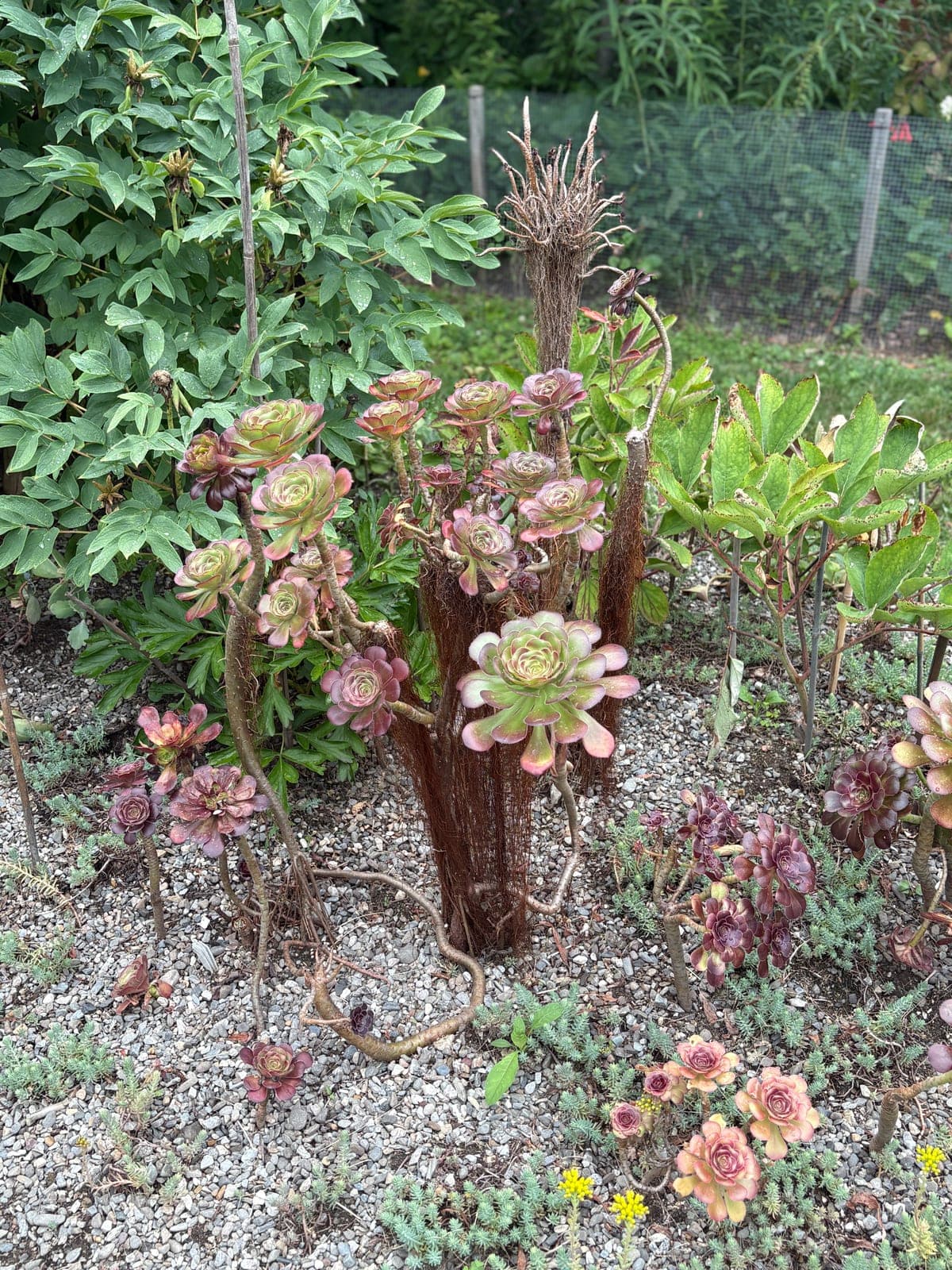
Aeoniums are a joy to grow once you understand their quirky rhythm - unlike most succulents, they actively grow through winter and spring, then slip into dormancy when summer heat arrives. Get your soil right first: they absolutely hate sitting in wet, poorly drained ground, so whether you're planting in the ground or a container, work in plenty of coarse grit or perlite to ensure sharp drainage. In the ground, choose a raised bed or a slope where water naturally runs away from the roots. Plant them out in early spring or autumn when temperatures are mild - avoid planting in the heat of summer when they're dormant and stressed. A common mistake is overwatering in summer; when the rosettes curl inward slightly and the plant looks a little sulky, that's dormancy doing its job, not a sign to reach for the hose. Back off watering almost entirely from midsummer until cooler weather returns. Propagation is wonderfully easy - just snip a healthy rosette with a short stem, let the cut end callous over for a day or two, then push it into gritty compost. They root readily and you'll have new plants to share in no time.
Aeoniums don't carry a significant tradition in culinary or medicinal herbalism - they're purely an ornamental genus, and that's perfectly fine because they earn their keep through sheer visual drama. Some Canary Island communities, where many species originate, have historically used the sticky sap of certain Aeonium species topically for minor skin irritations, though this is folk use rather than established medicine, so treat it as curiosity rather than remedy. In the garden, they pair beautifully with other drought-tolerant plants that share their preference for excellent drainage and a dry summer rest. Plant them alongside lavender, yarrow, or ornamental grasses for a low-maintenance Mediterranean-style planting that looks after itself through dry spells. In containers they're spectacular - a large pot of Aeonium 'Zwartkop' with its near-black rosettes alongside silvery succulents is one of those combinations that always draws comments. Just bring pots under cover if frost threatens, as most species will take a light touch of cold but not a hard freeze.