
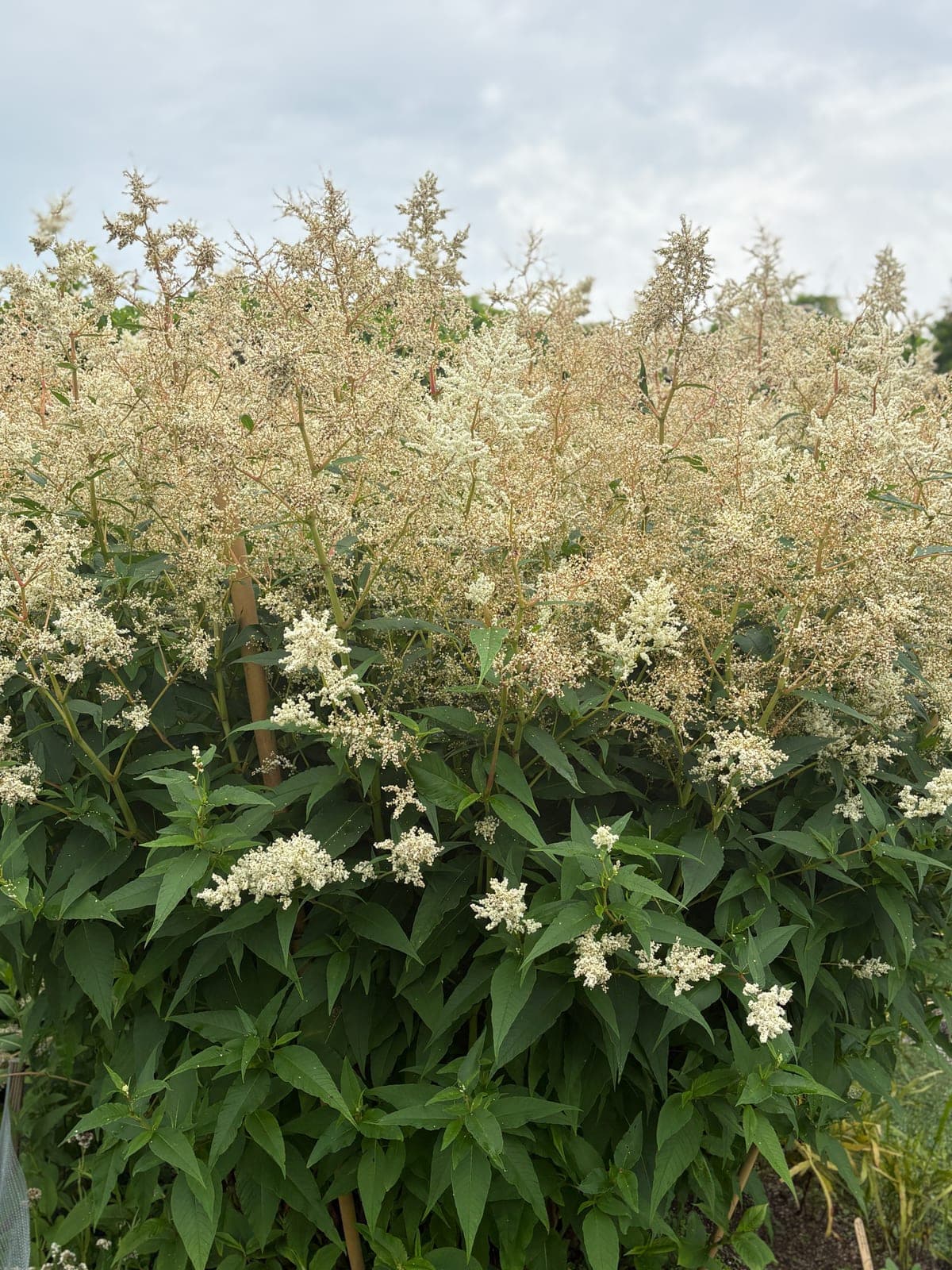
Getting Persicaria polymorpha established well is mostly about site selection and patience in that first season. Dig in generous amounts of compost before planting - this is a big, hungry plant that appreciates a rich root run. It tolerates part shade better than most large perennials, which makes it genuinely useful in those awkward spots under deciduous trees where little else puts on a decent show. Spring planting gives it the longest run to bulk up before winter, and you'll want to give it room - a mature clump will eventually reach two metres across, so resist the urge to crowd it. The most common mistake gardeners make is dividing it too aggressively too soon; let it settle for two or three years before splitting, and always replant divisions straight away without letting the roots dry out. Mulching well in the first autumn helps enormously in the colder end of its hardiness range.
Persicaria polymorpha doesn't carry the same culinary or medicinal history as some of its closer relatives like Persicaria bistorta (whose young leaves have long been used in traditional British dock puddings and as a spring pot herb), but it's worth knowing that many Persicaria species have been explored in folk medicine across Asia for their astringent and anti-inflammatory properties. For the garden, though, its real value is as a structural workhorse - the frothy white plumes age beautifully through summer into warm buff tones in fall, giving you months of interest without any deadheading needed. It's a genuine pollinator magnet when in bloom, drawing in bees and hoverflies in impressive numbers, so pairing it with yarrow or calendula nearby creates a lively and productive planting combination that earns its keep across the whole growing season.