
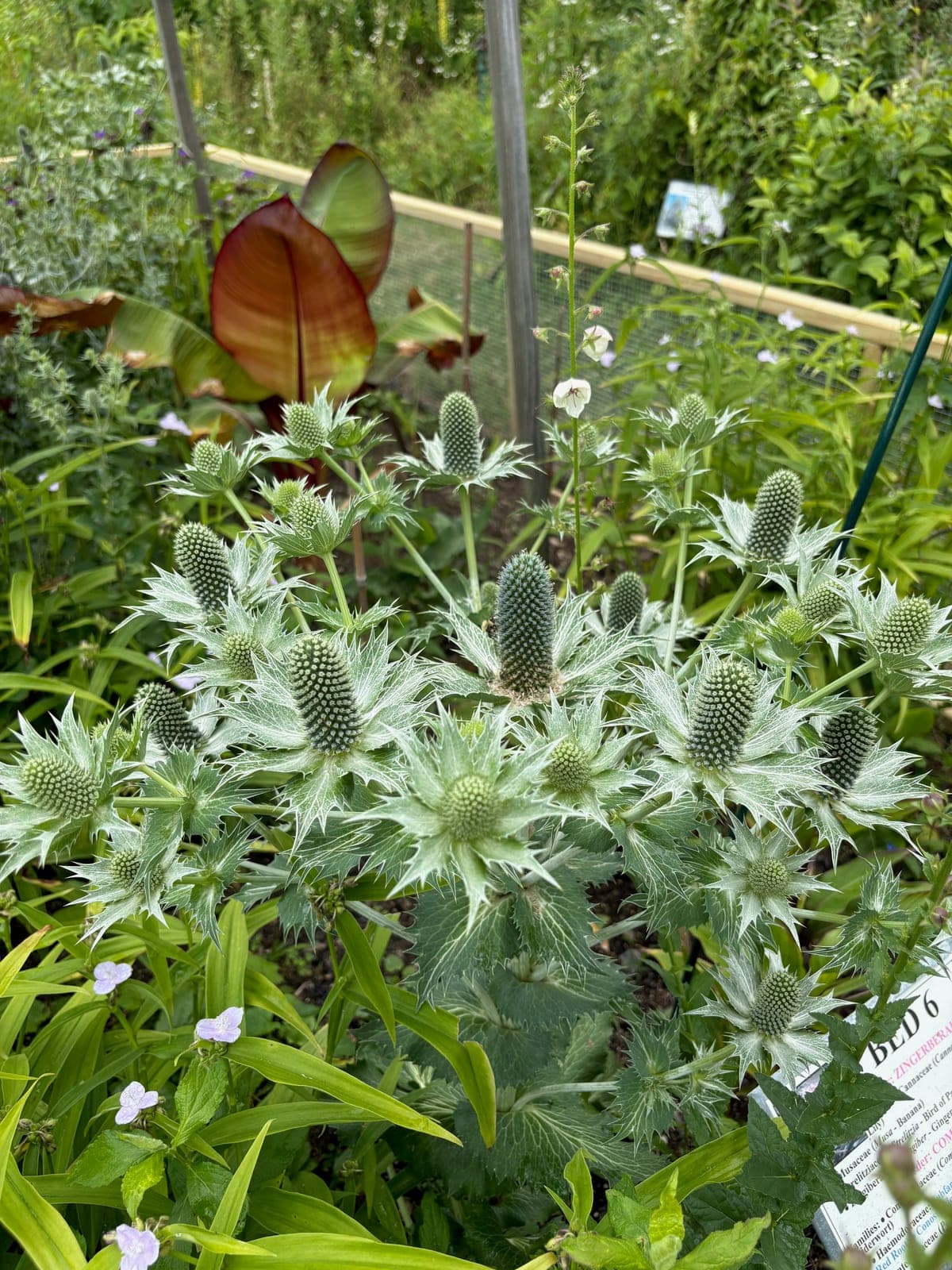
Miss Willmott's Ghost is a biennial, which means you need to think a season ahead - sow it one year to enjoy it the next. The real trick to success is fresh seed and a cold, moist stratification period of four to six weeks before sowing, mimicking what winter naturally does in the ground. Direct sowing in autumn is honestly the easiest route: scatter seed where you want the plants, let frost do the stratification work for you, and thin seedlings to about 45 cm apart in spring. Soil prep matters more than most people expect - this plant despises waterlogged roots. Work the bed well, improve drainage with grit if needed, and resist the urge to enrich the soil too much; rich, fertile ground produces lush foliage at the expense of that dramatic silvery intensity everyone grows it for. The most common mistake is treating it like a perennial and being surprised when it dies after flowering. Embrace its biennial nature: let a few plants go fully to seed each year and you will have a self-sustaining colony that pops up reliably with almost no effort on your part.
Beyond the garden, Eryngium has a long history in European herbal tradition. Roots of related species were candied in Tudor England - sold as 'eringoes' - and used as a restorative and mild aphrodisiac, famously mentioned by Shakespeare. The roots contain saponins and were used in folk medicine as a gentle diuretic and to support kidney function, often brewed into a simple decoction. Culinary use today is largely historical curiosity rather than everyday cooking, but the young shoots of some Eryngium species have been eaten as a vegetable in parts of southern Europe, blanched and dressed with oil. For the modern gardener, the greatest value is in the garden itself - plant it among yarrow and calendula for a late-summer combination that practically looks after itself, and watch it light up as the season turns.