
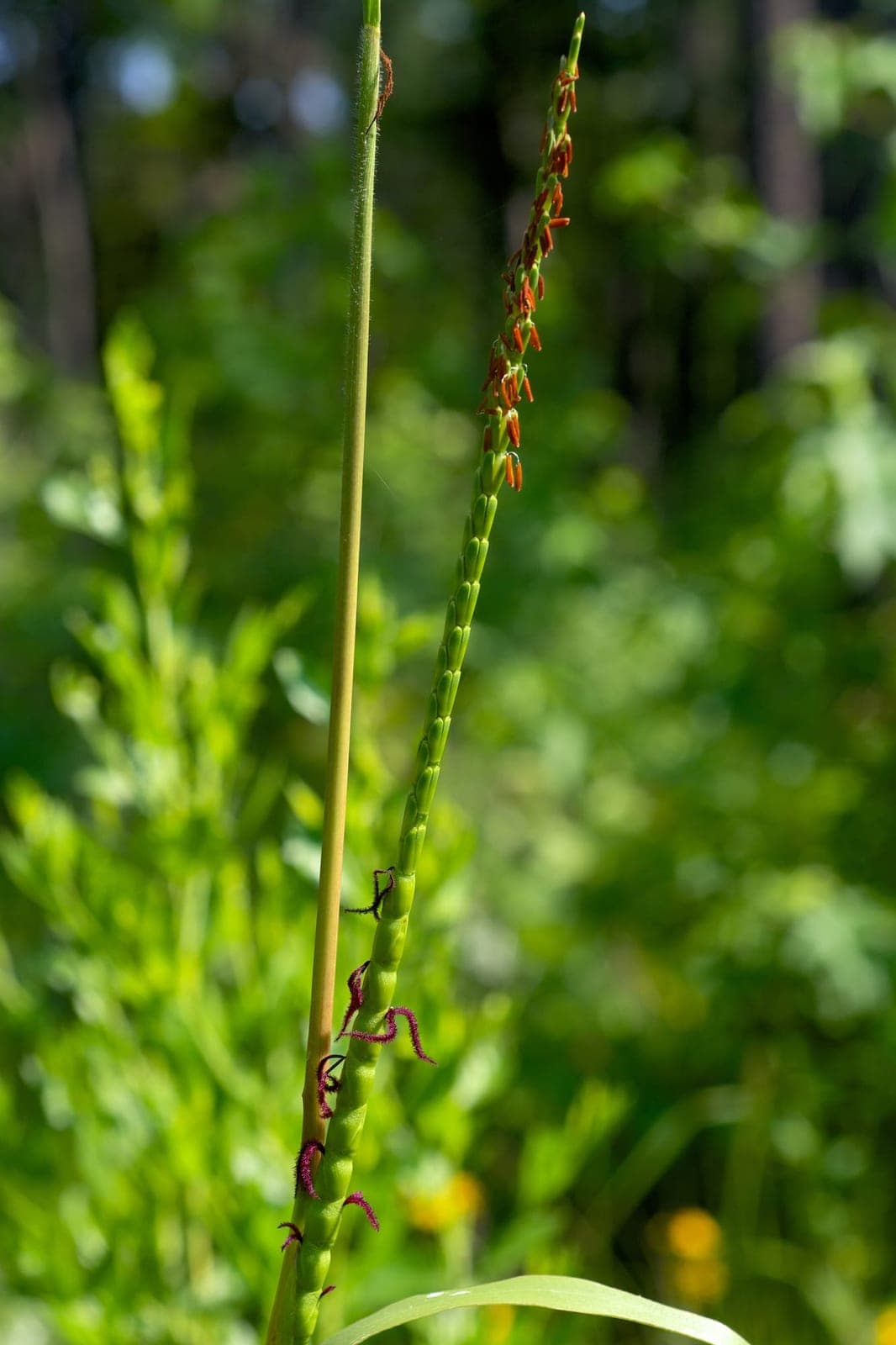
Eastern gamagrass is one of the largest native grasses in North America, a warm-season bunch grass native from the eastern United States through Central America to northern South America. It forms dense clumps 4–8 feet tall and tolerates periodic flooding, making it a reliable choice for rain gardens, bioswales, pond margins, and low spots where most ornamental grasses fail.
The root system penetrates 8–12 feet into the soil, dramatically improving water infiltration and erosion control on problem slopes and compacted sites. Growth resumes late in spring after complete winter dormancy. Despite its preference for moist ground, established plants show solid drought tolerance once roots are established. Seeds require cold stratification; fall direct sowing allows this to occur naturally. Cut clumps back to 4–6 inches in late winter before new growth begins, and divide crowded crowns every 4–5 years to maintain vigor.
Eastern gamagrass is a close relative of corn and produces starchy, protein-rich grain that Native American groups harvested as a food source. Its foliage is highly palatable to livestock, and historical overgrazing sharply reduced its range across much of the Great Plains. Dense clumps provide nesting and thermal cover for ground-nesting birds and waterfowl, and persistent seed heads supply food for granivorous birds through fall and early winter.
Ecoregions:Eastern Temperate ForestsGreat PlainsTropical Wet Forests
Rust
Orange to brown raised pustules on the undersides of leaves, with yellow spotting on the upper surface. Heavy infections cause leaves to yellow and drop.
Remove and destroy infected leaves. Avoid overhead watering and improve air circulation. Apply a sulfur or copper-based fungicide if it spreads. Clear plant debris in fall.
Fungal leaf spot
Brown or purplish spots on the leaves, often ringed with a yellow halo, that spread and merge in warm, humid, or wet weather; heavily spotted leaves yellow and drop early.
Pick off spotted leaves and clear fallen debris to remove overwintering spores. Improve air circulation by thinning, and water at the base so foliage dries quickly. If it persists, apply a copper- or sulfur-based fungicide at the first sign.