
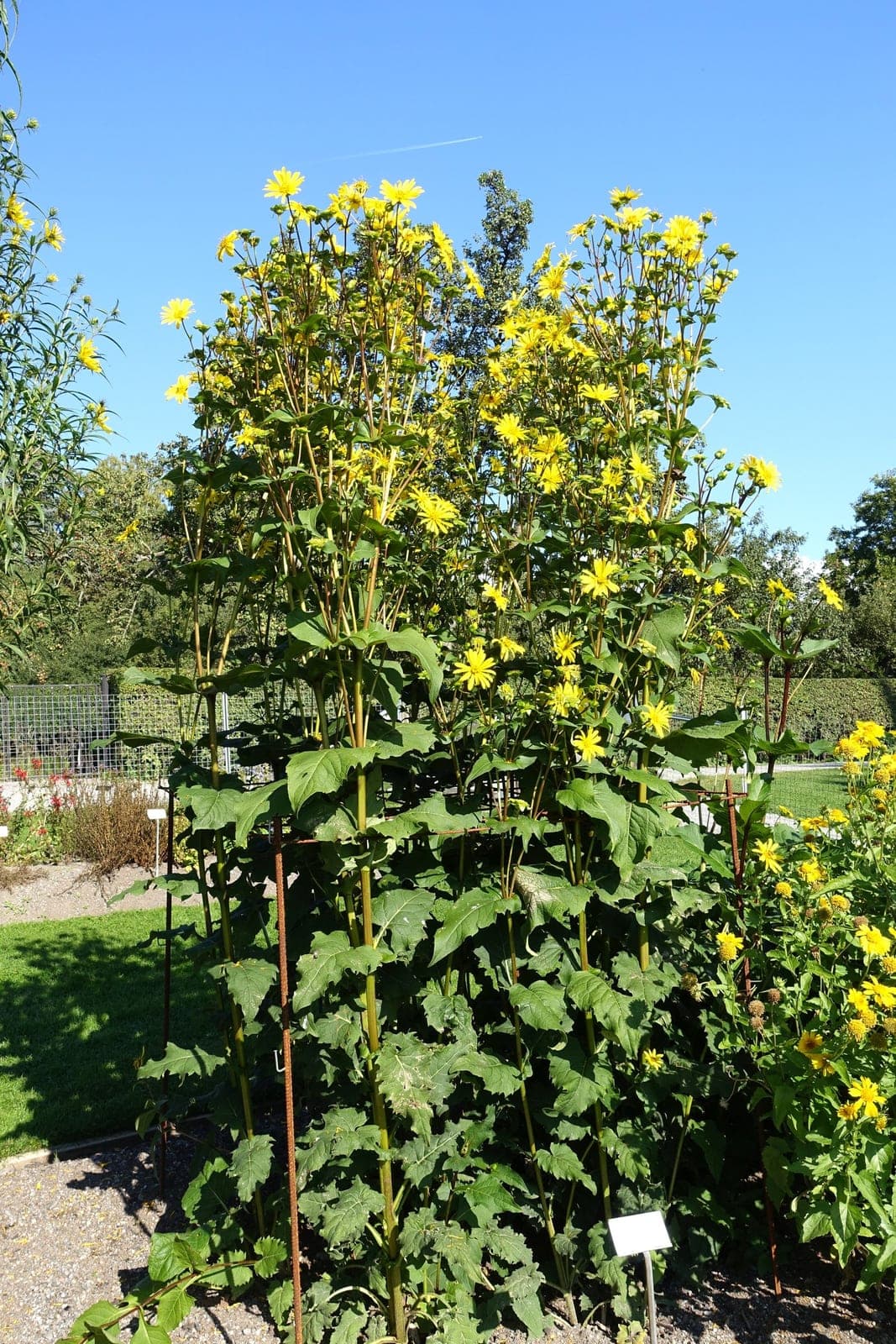
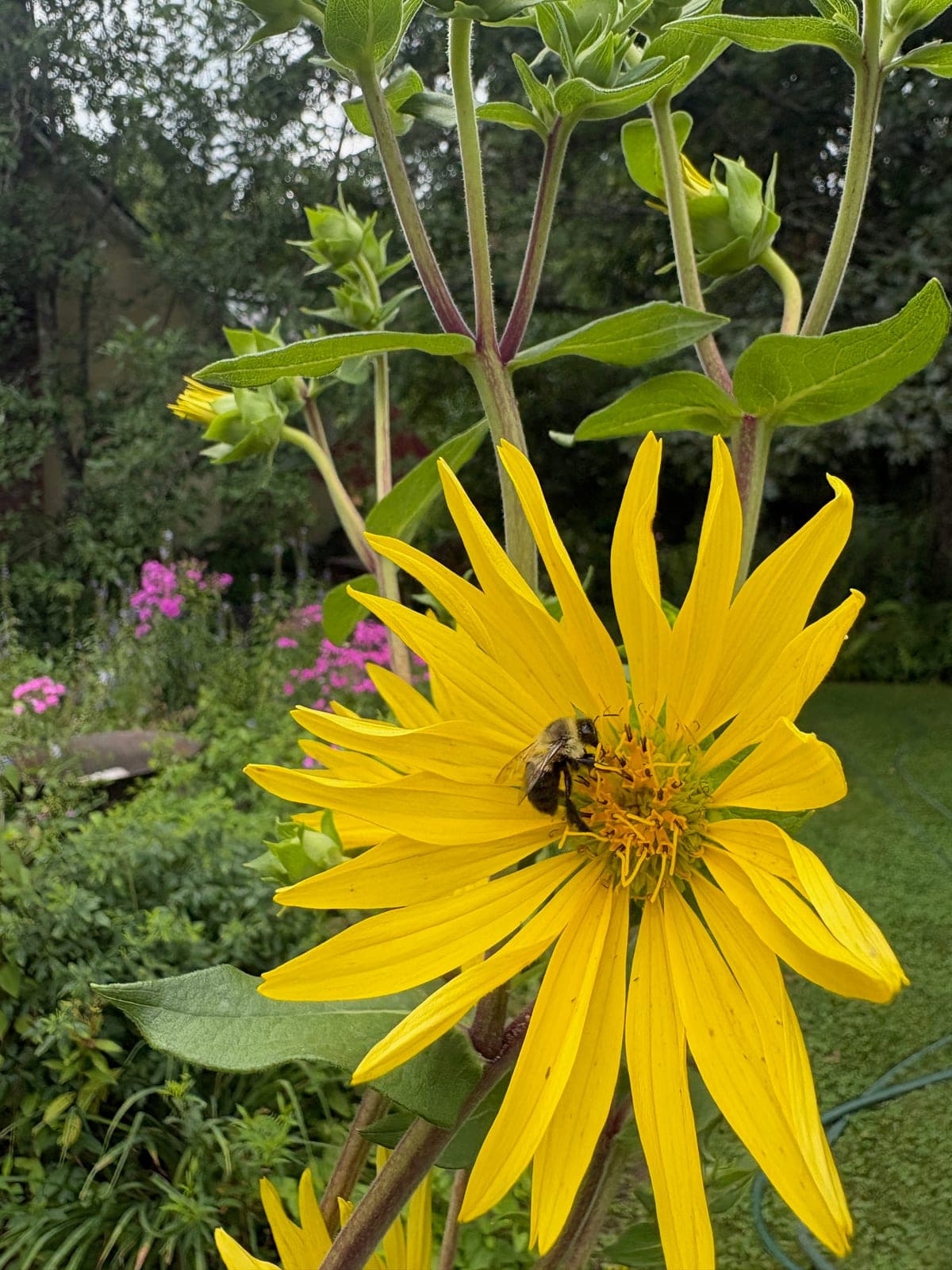
Cup plant is a stout native perennial from eastern and central North America, reaching 4–8 feet on square stems. Opposite leaves fuse at their bases, wrapping around the stem to form a water-collecting cup that insects, spiders, and small birds use for drinking. Yellow composite flowers open in midsummer and draw a broad range of native bees, wasps, and butterflies through late summer.
The species spreads by rhizomes and self-seeds prolifically, making it well suited to naturalized meadows, prairie plantings, and rain garden margins where colonization is welcome. Goldfinches seek out the mature seed heads from late summer onward and are a reliable indicator that the planting has succeeded ecologically. In smaller gardens, mowing the rhizome perimeter annually and cutting stems before seed set are necessary to contain spread. It tolerates clay and periodic wet feet, and established colonies handle moderate drought once roots are deep.
Several Native American nations used root preparations from this species for back pain and rheumatic complaints. Root smoke was applied for head colds, and the resin exuded from the stem was chewed as a gum.
Ecoregions:Northern ForestsEastern Temperate ForestsGreat Plains
Powdery mildew
White or grey powdery coating on leaves - usually starting on older growth in humid conditions or when nights cool.
Improve air circulation by thinning plants. Apply neem oil or potassium bicarbonate spray at first sign. Avoid overhead watering.
Fungal leaf spot
Brown or purplish spots on the leaves, often ringed with a yellow halo, that spread and merge in warm, humid, or wet weather; heavily spotted leaves yellow and drop early.
Pick off spotted leaves and clear fallen debris to remove overwintering spores. Improve air circulation by thinning, and water at the base so foliage dries quickly. If it persists, apply a copper- or sulfur-based fungicide at the first sign.