
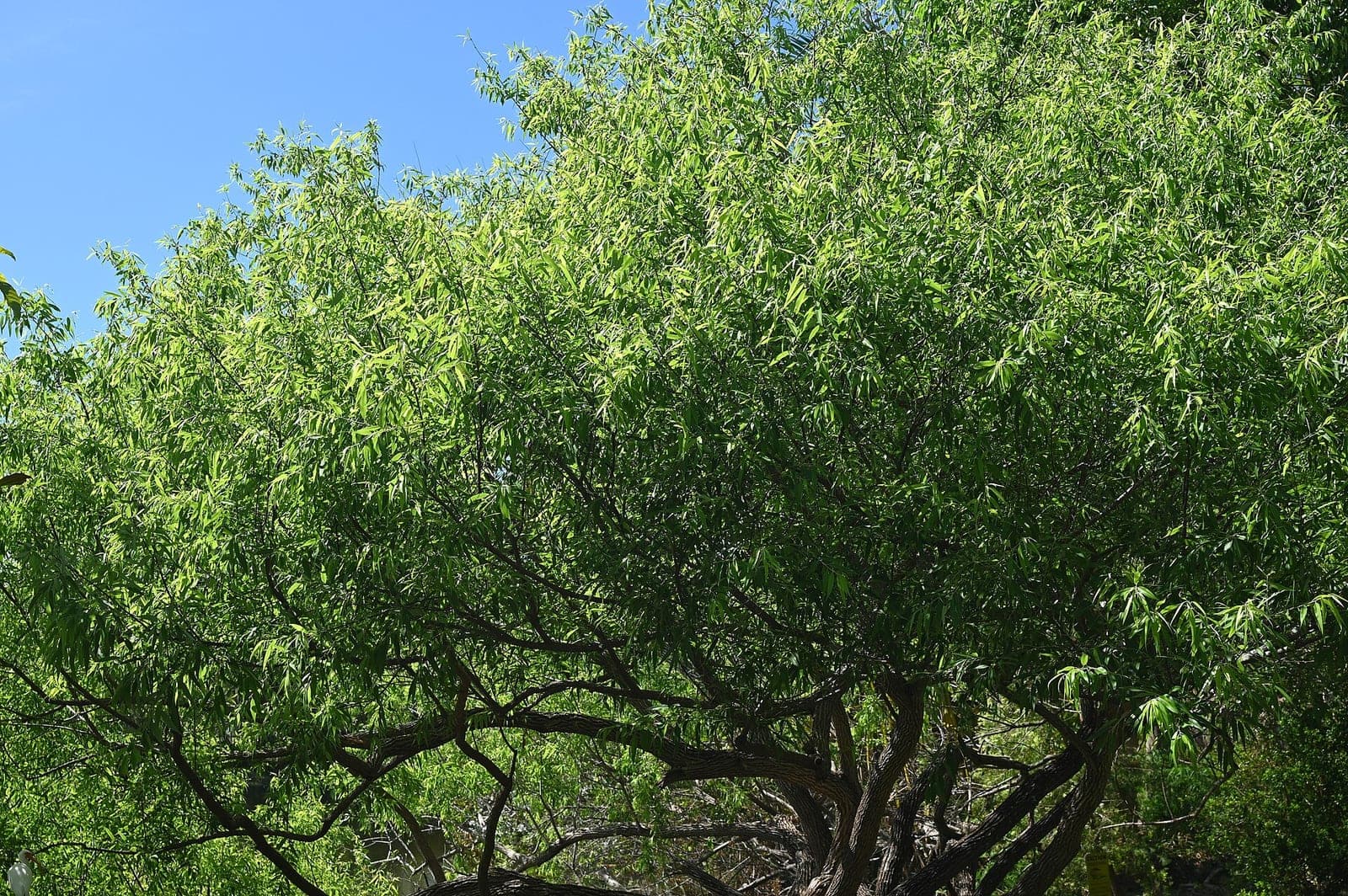
Salix caroliniana is a fast-growing shrub or small tree native to the wetlands and coastal plain of the southeastern United States, Mexico, and the Caribbean. It grows almost exclusively in saturated or flooded soils along streams, pond margins, marshes, and wet flatwoods, and is classified as an obligate wetland species. It is one of the dominant native willows in Florida and along the Gulf Coast.
In the Everglades it functions as an emergent, and without periodic fire it colonizes open herbaceous wetlands and converts them to forested wetland. Its spreading root system stabilizes streambanks and pond edges against erosion. In garden and restoration settings it spreads readily by root suckers; give it room and manage spread where adjacent planting areas must stay clear. It is not suited to upland or droughty sites.
Willow bark contains salicin, the natural precursor to salicylic acid, and bark preparations from native willows have long been used by indigenous peoples of the Southeast for fever and pain. Willows also rank among the top larval host plants for native caterpillars in North America, making this a high-value tree for insectivorous birds and wildlife in riparian and wetland landscapes.
Ecoregions:Eastern Temperate ForestsGreat PlainsTropical Wet Forests
Willow Scab
Olive-brown to black lesions appear on young leaves within days of bud break, causing rapid curling and leaf drop. Shoot tips blacken and die back. Dark, sunken lesions develop on current-season stems, and salmon-colored spore masses may be visible on infected tissue during humid weather.
Rake and destroy all fallen leaves and infected shoot tips each autumn. Apply a copper-based fungicide or myclobutanil at bud swell, then again at bud break. In persistently wet springs, repeat every 10–14 days until new shoot growth hardens off. Improve canopy airflow through selective pruning and avoid overhead irrigation.
Rust
Orange to brown raised pustules on the undersides of leaves, with yellow spotting on the upper surface. Heavy infections cause leaves to yellow and drop.
Remove and destroy infected leaves. Avoid overhead watering and improve air circulation. Apply a sulfur or copper-based fungicide if it spreads. Clear plant debris in fall.
Powdery mildew
White or grey powdery coating on leaves - usually starting on older growth in humid conditions or when nights cool.
Improve air circulation by thinning plants. Apply neem oil or potassium bicarbonate spray at first sign. Avoid overhead watering.
Cytospora Canker
White or blue-white pitch masses ooze from bark on lower branches and the trunk. Affected branches die back progressively from the tip inward; bark beneath the resin is discolored brown and may have a resinous, sunken appearance.
Prune infected branches well below the canker margin into healthy wood and destroy all cuttings. Sterilize pruning tools with 70% isopropyl alcohol between each cut. No effective fungicide is available; prevent recurrence by avoiding drought stress, soil compaction, and mechanical bark injury.
Botryosphaeria Canker
Dark, sunken cankers on stems and major branches, most often occurring after drought stress or mechanical wounding. Bark peeled back from affected areas reveals brown, discolored wood beneath. Branch tips wilt and die back progressively inward.
Prune infected branches at least 6 inches below the visible canker margin using sterilized tools, and dispose of all cuttings away from the garden. Reduce plant stress by maintaining consistent irrigation during dry periods and avoiding bark wounds during maintenance. No curative fungicide is available; keeping plants vigorous is the primary preventive strategy.
Fungal leaf spot
Brown or purplish spots on the leaves, often ringed with a yellow halo, that spread and merge in warm, humid, or wet weather; heavily spotted leaves yellow and drop early.
Pick off spotted leaves and clear fallen debris to remove overwintering spores. Improve air circulation by thinning, and water at the base so foliage dries quickly. If it persists, apply a copper- or sulfur-based fungicide at the first sign.
Armillaria Root Rot
Thinning, yellowing canopy with progressive dieback; white, fan-shaped mycelial mats visible beneath bark at or just below the soil line; honey-colored mushroom clusters appearing at the trunk base or on surface roots in autumn.
No chemical cure exists. Improve drainage and avoid any injury to roots or trunk. Remove severely infected trees along with as much root material as possible. Do not replant susceptible species in the same spot.