
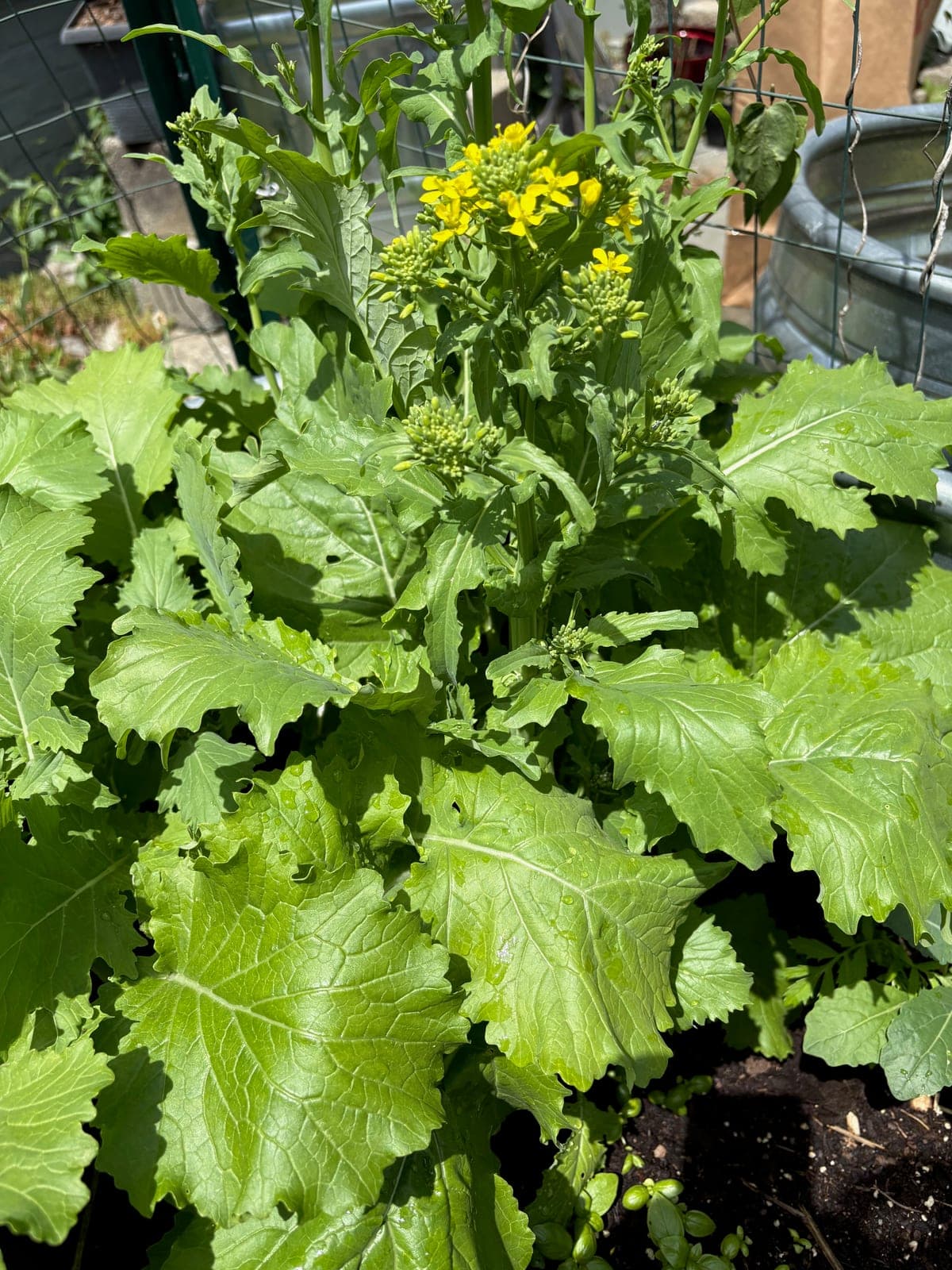
Broccoli raab (rapini) is a fast Italian green grown for its tender florets, leaves and stems rather than a tight head. It bolts quickly, and that is the point: the small broccoli-like buds, cut before the yellow flowers open, are nutty and slightly bitter and are at their best blanched then sautéed with garlic and chilli.
It is a cool-season crop that goes from seed to harvest in 40 to 60 days. Direct sow a quarter inch deep as soon as the soil can be worked, a few weeks before last frost, and again in late summer for a fall crop that holds through light frost. Thin to 6 to 9 inches, keep it watered so the stems stay tender, and sow a short row every two weeks rather than one long one, because the whole planting comes ready at once.
Cut the main shoot with 6 inches of stem when the buds are tight, and the plant throws side shoots for a second and third picking. It is a turnip relative rather than a true broccoli, so it shares turnip pests: flea beetles pepper the leaves in spring, and a row cover at sowing is the simple fix. Let a plant flower at the end and the bees will thank you.
Clubroot
Swollen, distorted roots; wilting in midday heat; stunted growth and yellowing foliage. Plants recover poorly even with watering.
Remove and destroy infected plants with roots. Raise soil pH toward 7.2 with lime. Improve drainage and rotate out of brassicas for several years.
Downy mildew
Yellowing on top of leaves with grey-purple fuzz underneath. Spreads rapidly in humid conditions.
Remove affected leaves. Improve air circulation. Avoid overhead watering. Copper spray as preventive.
White Rust
Raised white to cream-colored pustules on leaf undersides, with yellow blotches on upper surfaces. Infected tissue may swell or distort.
Remove and destroy infected leaves. Improve air circulation and avoid overhead watering. Rotate brassicas and avoid planting in previously infected soil.
Flea Beetle
Alticini →Small round shot-holes scattered across leaves; tiny dark beetles that jump when disturbed. Heavy feeding stunts young plants.
Use floating row covers on seedlings. Remove crop debris and weeds that harbor beetles. Apply kaolin clay or spinosad if damage is severe.
Cabbage Worm
Pieris rapae →Ragged holes in leaves and green velvety caterpillars on undersides; dark green frass collects in leaf crevices and head.
Handpick caterpillars and eggs. Apply Bacillus thuringiensis (Bt) weekly during egg-laying. Use floating row cover to exclude white cabbage moths.
Aphids
Aphididae →Clusters of small soft insects on new growth and flower buds.
Knock off with a strong jet of water. Ladybirds and lacewings are natural predators. Insecticidal soap as last resort.