
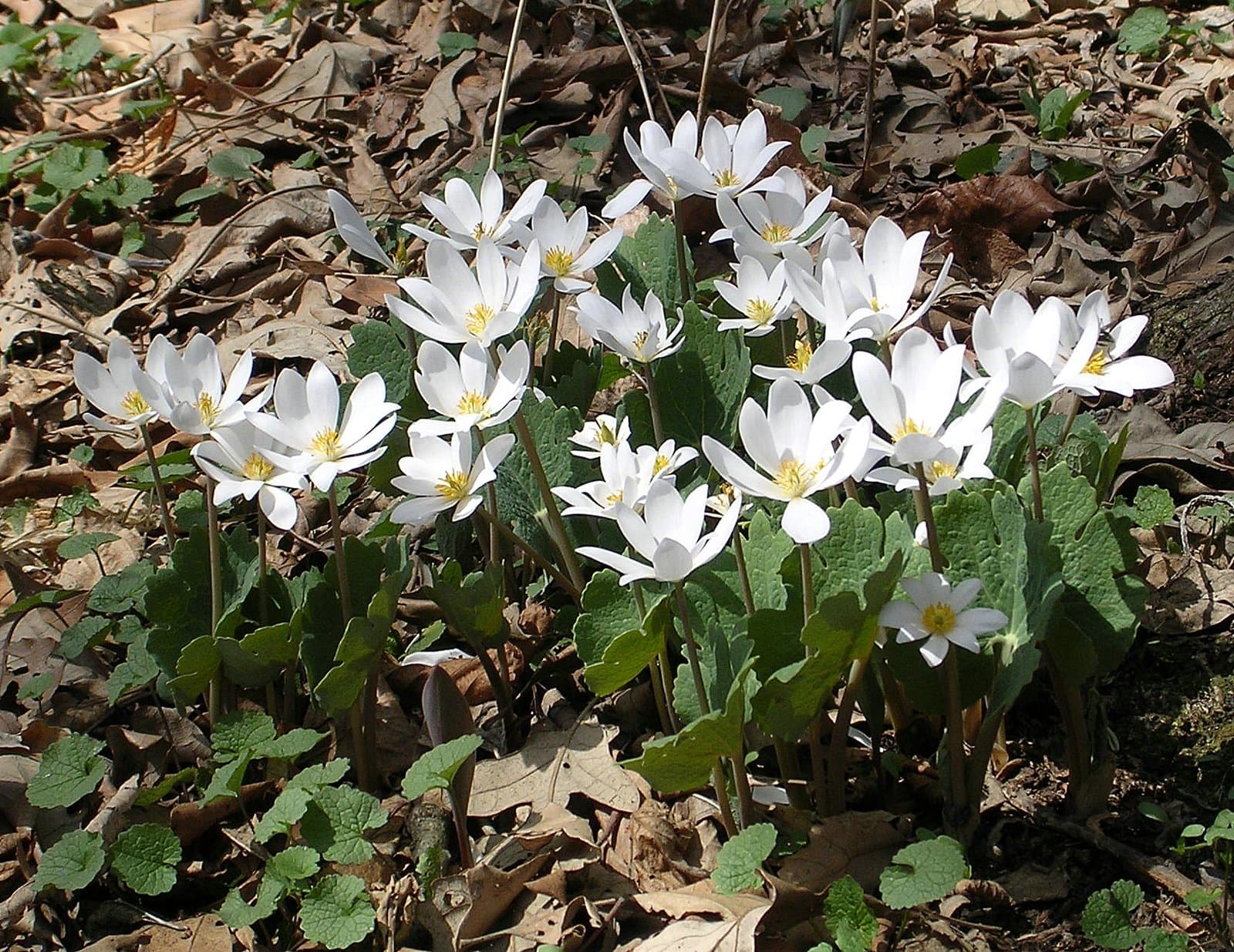
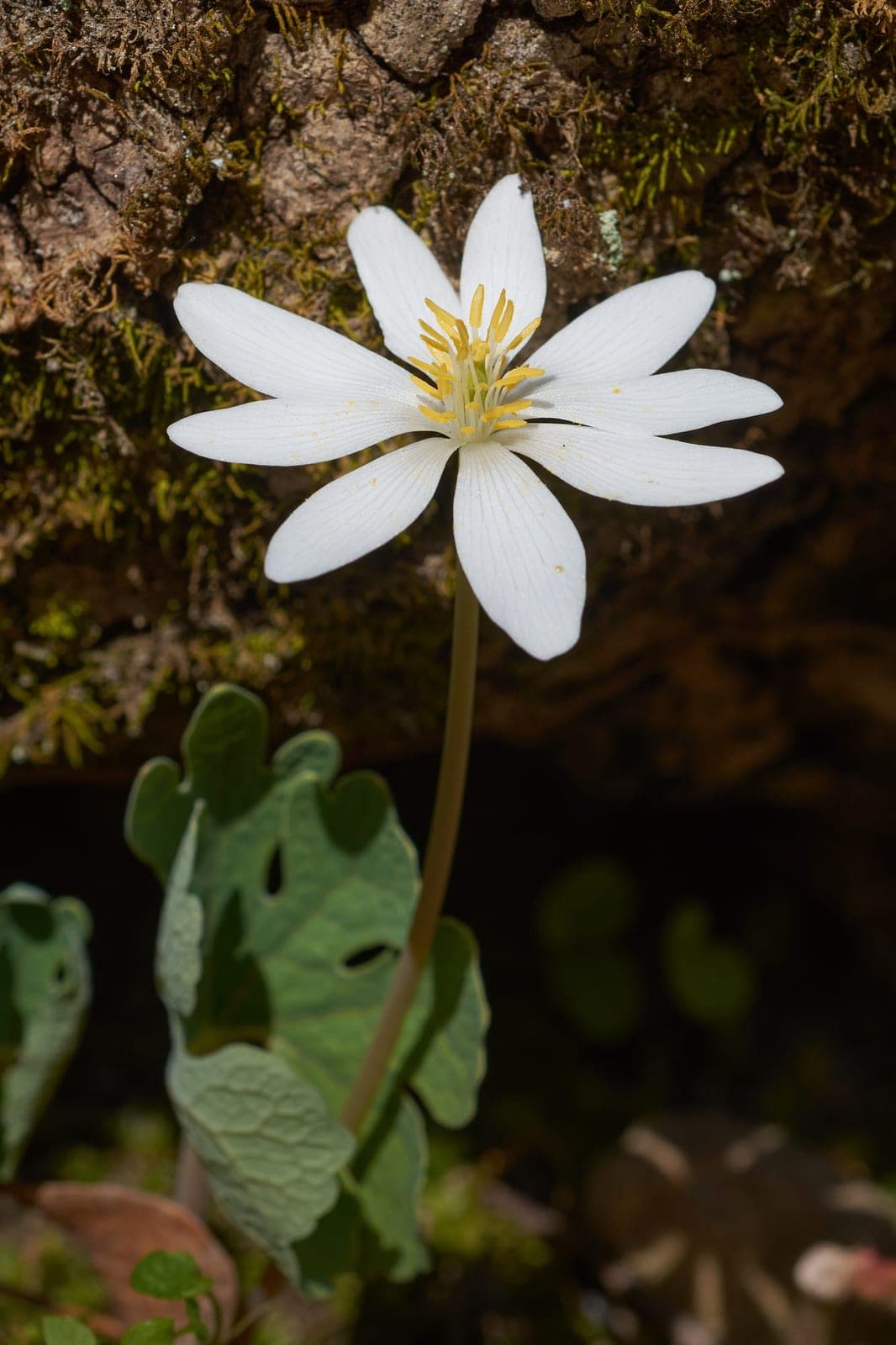
Bloodroot is a perennial spring ephemeral native to the deciduous woodlands of eastern North America and the only member of the genus Sanguinaria. It takes its name from the vivid orange-red sap inside its rhizome. The white, multi-petaled flower lasts only a few days in early spring, but the single, deeply lobed leaf that follows expands to several inches across and persists until midsummer, giving the plant a longer ornamental presence than its brief flowering period suggests.
Bloodroot spreads slowly by rhizome and disperses seed via ants (myrmecochory), gradually colonizing suitable ground. It thrives under deciduous trees, where winter sun reaches the forest floor before canopy leafout. Plant rhizomes in fall, growing tip up, 1–2 inches below the soil surface. Summer dormancy is normal and not a sign of stress. Avoid waterlogged conditions, especially during dormancy, as rhizomes rot readily in saturated soil.
The rhizome sap contains sanguinarine, a benzylisoquinoline alkaloid with documented antimicrobial properties. Native peoples of eastern North America used the rhizome as a red-orange dye for textiles and skin, and as a traditional remedy for skin conditions and respiratory ailments. Sanguinarine was incorporated into commercial toothpaste and mouthwash formulations in the 1980s but was largely withdrawn after epidemiological studies linked chronic exposure to oral leukoplakia. The whole plant is toxic if ingested.
Ecoregions:Northern ForestsEastern Temperate ForestsGreat Plains
Fungal leaf spot
Brown or purplish spots on the leaves, often ringed with a yellow halo, that spread and merge in warm, humid, or wet weather; heavily spotted leaves yellow and drop early.
Pick off spotted leaves and clear fallen debris to remove overwintering spores. Improve air circulation by thinning, and water at the base so foliage dries quickly. If it persists, apply a copper- or sulfur-based fungicide at the first sign.
Root rot
Plants wilt, yellow, and stunt even in moist soil; lower stems and roots turn brown, soft, and mushy and the plant may collapse. Most common in heavy, wet, or poorly drained ground.
Improve drainage and stop overwatering, and never plant too deep. Lift and destroy badly affected plants along with the soil around the roots. Grow in raised or free-draining beds to prevent it returning.