
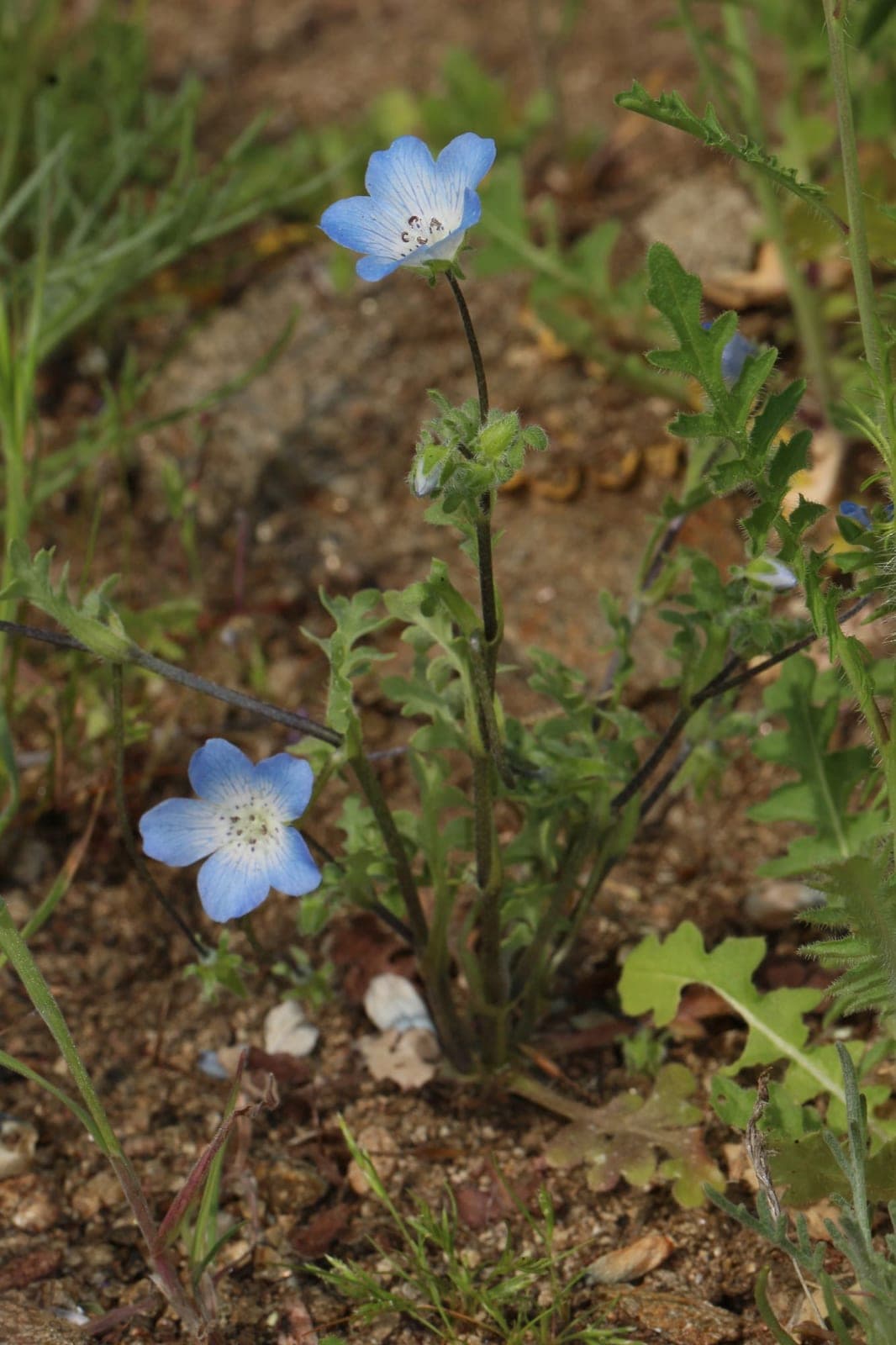
Baby blue eyes (Nemophila menziesii) is a low-growing California native annual that produces small, sky-blue flowers with pale, white-marked centers from late winter through spring. It fits naturally into wildflower meadows, rock gardens, and as a ground cover beneath spring bulbs.
A cool-season plant, it performs best when sown in fall in zones 8 and warmer, or in very early spring elsewhere. Seedlings tolerate light frost and decline quickly once summer heat arrives. It self-seeds reliably in loose, well-drained soil and will naturalize in favorable spots over successive years. Preferred soil pH is 6.0–7.0; avoid heavy clay or waterlogged ground.
The open-faced flowers attract native bees, hoverflies, and other early-season pollinators. In its native coastal scrub and oak woodland habitat in California and the Pacific Northwest, it forms dense seasonal carpets on hillsides and in dappled shade.
Ecoregions:Northwestern Forested MountainsMarine West Coast ForestNorth American DesertsMediterranean California
Damping Off
Seedlings collapse at the soil line with thin, water-soaked stems; seeds may fail to emerge or rot before sprouting.
Sow in well-draining mix, avoid overwatering, and ensure good airflow. Remove affected seedlings and let the surface dry between waterings.
Powdery mildew
White or grey powdery coating on leaves - usually starting on older growth in humid conditions or when nights cool.
Improve air circulation by thinning plants. Apply neem oil or potassium bicarbonate spray at first sign. Avoid overhead watering.
Botrytis (grey mould)
Grey fuzzy mould on petals and stems, worst in cool wet conditions.
Remove affected parts immediately. Improve air circulation. Avoid overhead watering. Apply copper fungicide if severe.
Root rot
Plants wilt, yellow, and stunt even in moist soil; lower stems and roots turn brown, soft, and mushy and the plant may collapse. Most common in heavy, wet, or poorly drained ground.
Improve drainage and stop overwatering, and never plant too deep. Lift and destroy badly affected plants along with the soil around the roots. Grow in raised or free-draining beds to prevent it returning.