
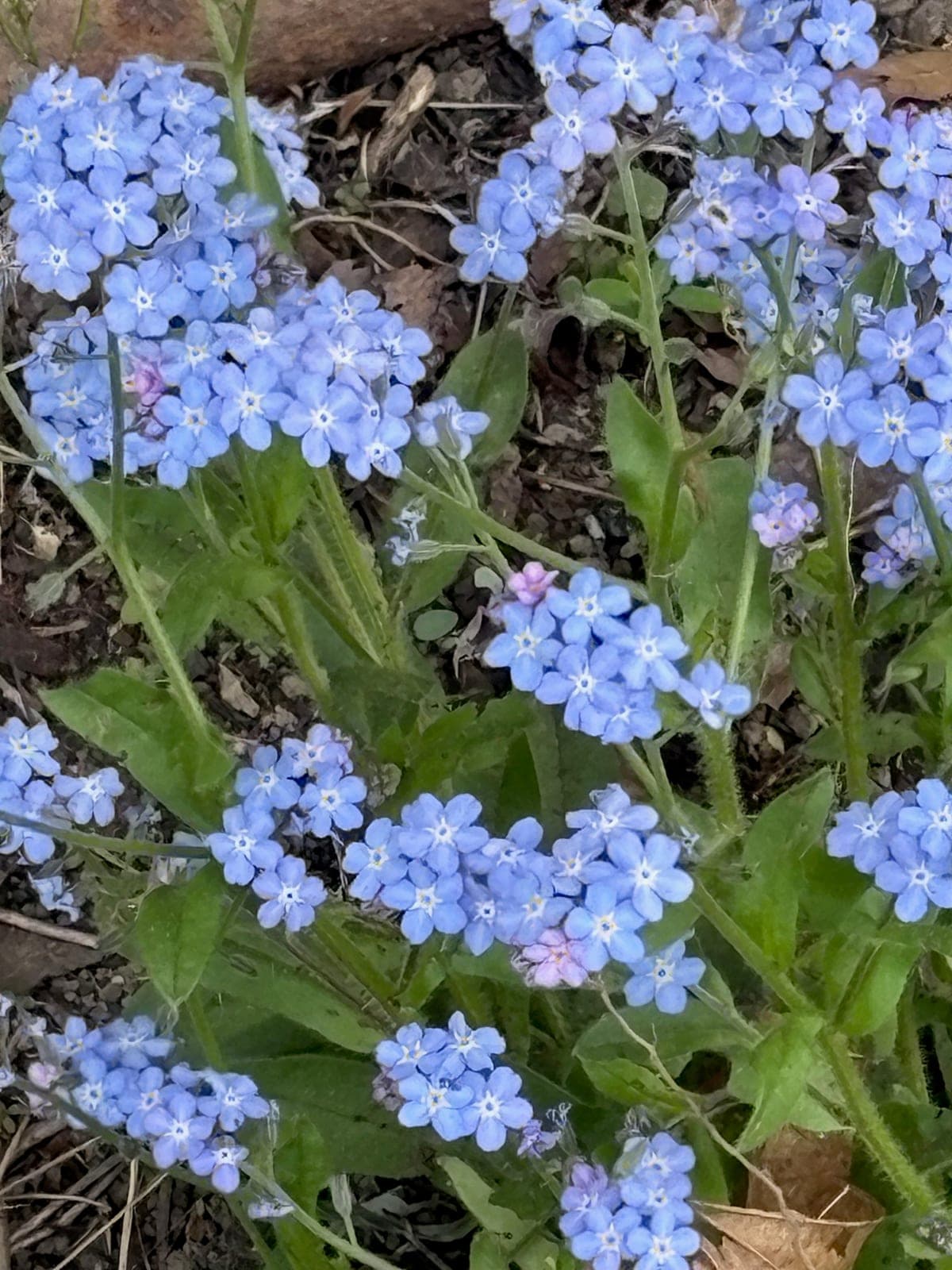
Forget-me-nots are the defining filler of the spring garden: a low carpet of tiny true-blue flowers, 8 to 12 inches high, that makes everything around it look better, from tulips and narcissus to bleeding heart. They are biennial, overwintering as rosettes and flowering from early spring for six weeks or more, and they self-seed so reliably that once established they need no further sowing. Native to Europe, they have naturalised across much of the US.
Sow in late summer or early autumn where they will flower, or in trays to plant out at 6 to 9 inches, in moist, average soil in sun or part shade; they like cool conditions and fade when summer heat arrives. Pull the plants as they brown in early summer, shaking the seed where you want next year's crop, and the seedlings come up in late summer.
As filler in spring bouquets they are unmatched; cut when the flowers are open and condition in water. The stems are short, so they suit mixed arrangements rather than standing alone. Small bees visit the flowers. Deer and rabbits leave them alone. The sticky seeds travel on clothing and fur, which is how a planting spreads around a garden; where that is unwelcome, pull before the seed ripens.
Powdery mildew
White or grey powdery coating on leaves - usually starting on older growth in humid conditions or when nights cool.
Improve air circulation by thinning plants. Apply neem oil or potassium bicarbonate spray at first sign. Avoid overhead watering.