
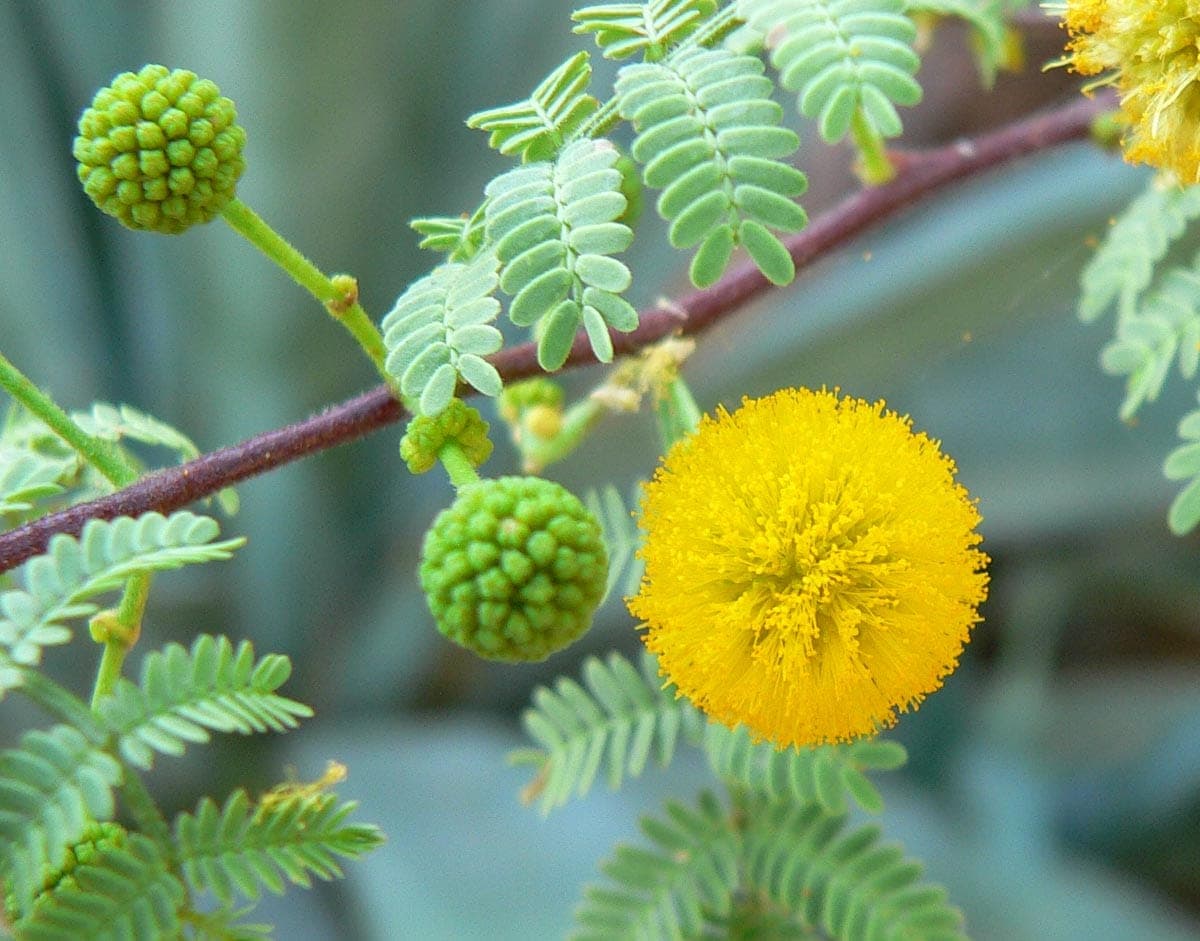
Vachellia constricta is a native desert shrub found across the Chihuahuan and Sonoran desert regions of the southwestern United States and northern Mexico. Paired white spines, often 1–2 inches long, give the plant its common name. Small yellow globose flower clusters appear in spring and again after summer monsoon rains, drawing bees and native pollinators. It is a reliable structural plant for low-water landscapes that need year-round presence and thorny screening.
This shrub demands full sun, sharp drainage, and minimal supplemental water once established. It thrives in rocky or sandy soils and handles extreme summer heat without stress. Heavy clay or irrigated soils increase susceptibility to root diseases, particularly Texas root rot, which is prevalent in the desert Southwest. Cold hardiness extends to approximately 5–10°F, making it viable at the upper edge of its range with some protection from prolonged hard freezes.
As a legume, whitethorn acacia fixes atmospheric nitrogen through root associations, gradually improving the soil around it. Its dense, thorny canopy provides nesting and roosting cover for small birds. Seed pods are consumed by deer, javelinas, and quail, making it a productive component of dry-land wildlife habitat restoration.
Ecoregions:North American DesertsSouthern Semi-Arid HighlandsTemperate Sierras
Root rot
Plants wilt, yellow, and stunt even in moist soil; lower stems and roots turn brown, soft, and mushy and the plant may collapse. Most common in heavy, wet, or poorly drained ground.
Improve drainage and stop overwatering, and never plant too deep. Lift and destroy badly affected plants along with the soil around the roots. Grow in raised or free-draining beds to prevent it returning.
Texas Root Rot
Sudden wilting of branches or the entire canopy, often following a wet period. White cottony fungal mats develop on infected roots. Wood at the crown appears dark and water-soaked. Decline can progress to tree death within weeks.
No effective chemical cure exists. Ensure excellent drainage and avoid overwatering. Remove and destroy all infected plant material. Avoid replanting susceptible species in the same soil for several years.