
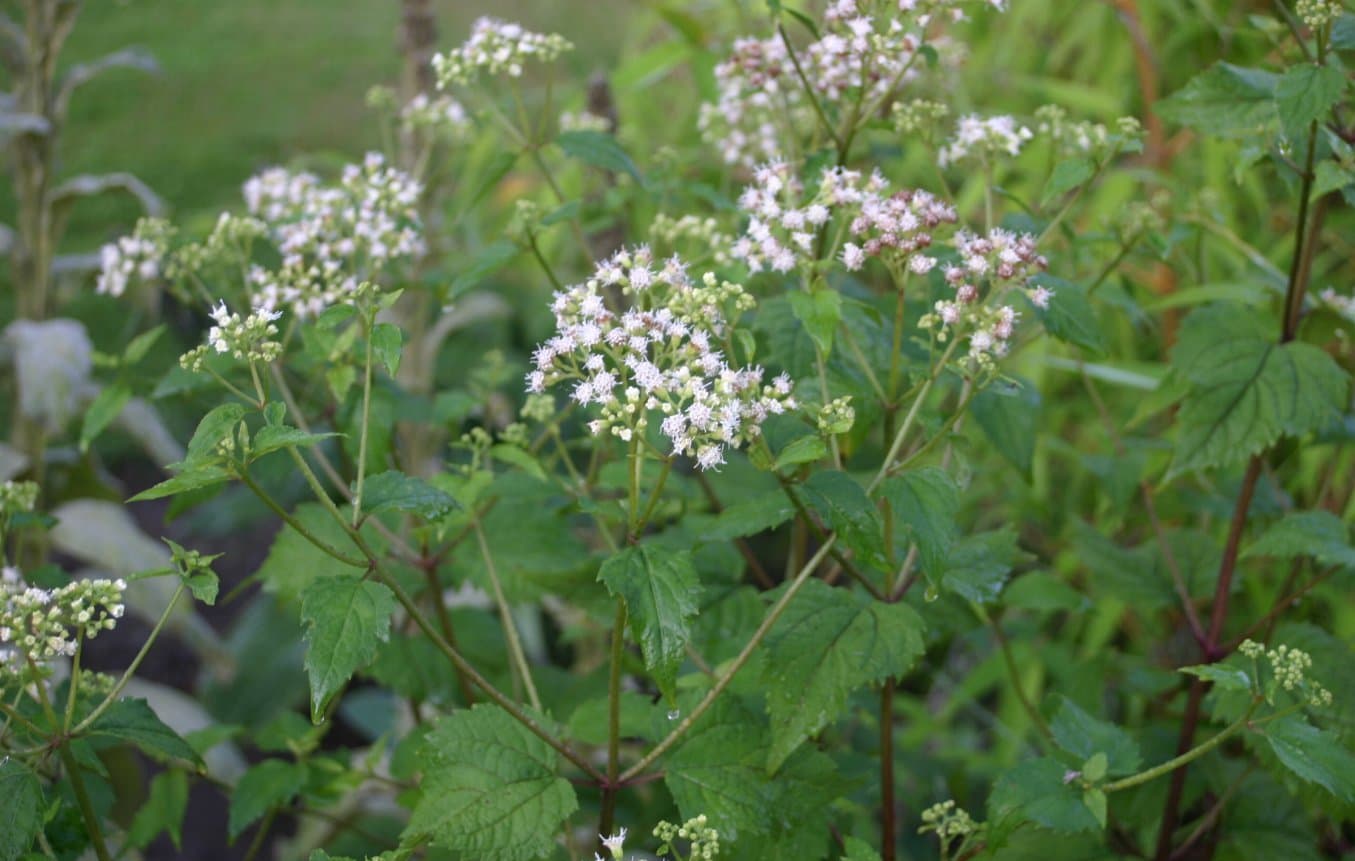
White snakeroot is a native woodland perennial found across eastern and central North America. It produces dense clusters of small white flowers from late summer into fall, filling a niche few other shade-tolerant natives occupy at that season. All parts of the plant contain tremetol, a toxic alcohol - it should never be planted near grazing livestock, and handling with gloves is prudent.
It grows naturally in forest understories, woodland edges, and moist disturbed sites. Plants spread by short rhizomes and self-seed prolifically; in favorable conditions they can naturalize aggressively. Removing spent seed heads before dispersal is the most effective way to limit spread. In rich, evenly moist soil under a tree canopy it performs well with minimal attention.
Cherokee and other Native American peoples used root preparations to treat fever, kidney ailments, and snakebite, which gave the plant its common name. Livestock that grazed on it produced milk containing tremetol, causing "milk sickness" - a fatal illness responsible for significant settler mortality in the Ohio Valley during the 18th and 19th centuries, including the death of Abraham Lincoln's mother, Nancy Hanks Lincoln.
Ecoregions:Northern ForestsEastern Temperate ForestsGreat Plains
Powdery mildew
White or grey powdery coating on leaves - usually starting on older growth in humid conditions or when nights cool.
Improve air circulation by thinning plants. Apply neem oil or potassium bicarbonate spray at first sign. Avoid overhead watering.
Fungal leaf spot
Brown or purplish spots on the leaves, often ringed with a yellow halo, that spread and merge in warm, humid, or wet weather; heavily spotted leaves yellow and drop early.
Pick off spotted leaves and clear fallen debris to remove overwintering spores. Improve air circulation by thinning, and water at the base so foliage dries quickly. If it persists, apply a copper- or sulfur-based fungicide at the first sign.
Root rot
Plants wilt, yellow, and stunt even in moist soil; lower stems and roots turn brown, soft, and mushy and the plant may collapse. Most common in heavy, wet, or poorly drained ground.
Improve drainage and stop overwatering, and never plant too deep. Lift and destroy badly affected plants along with the soil around the roots. Grow in raised or free-draining beds to prevent it returning.