
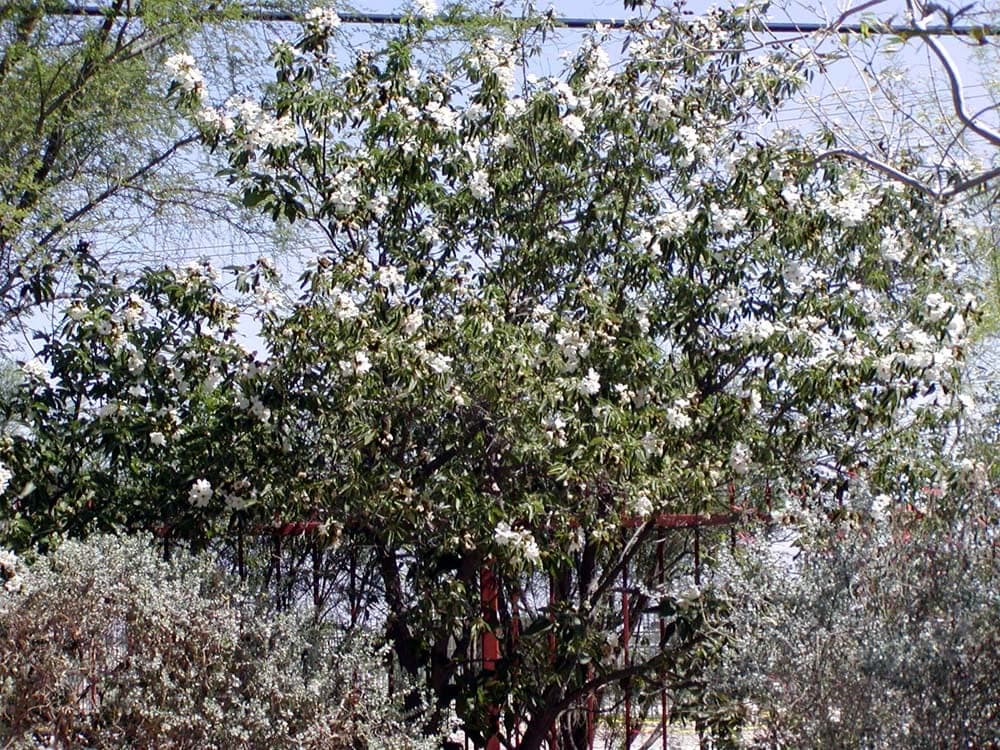
Cordia boissieri is a drought-tolerant evergreen shrub or small tree native to southern Texas and northeastern Mexico. It produces large white flowers with yellow throats throughout the warm season, drawing hummingbirds and native bees, and bears olive-like sticky fruits that ripen in fall. The gray-green, slightly rough-textured leaves persist year-round in frost-free climates.
Established plants handle extended drought, alkaline soils, and the caliche-heavy ground typical of south Texas and the Chihuahuan Desert region. In zone 8b, hard freezes can cause leaf drop or top dieback, but plants usually resprout from the base. Full sun and sharp drainage are essential; heavy clay or standing water promotes root rot. Supplemental irrigation can be phased out after the first full growing season.
Traditional medicine in northern Mexico and south Texas has used bark and leaf preparations to treat coughs, bronchitis, and upper respiratory irritation. The sweet, resinous fruits - known locally as anacahuitas - are edible and have been eaten fresh or used in preserves.
Ecoregions:Eastern Temperate ForestsGreat Plains
Texas Root Rot
Sudden wilting of branches or the entire canopy, often following a wet period. White cottony fungal mats develop on infected roots. Wood at the crown appears dark and water-soaked. Decline can progress to tree death within weeks.
No effective chemical cure exists. Ensure excellent drainage and avoid overwatering. Remove and destroy all infected plant material. Avoid replanting susceptible species in the same soil for several years.
Root rot
Plants wilt, yellow, and stunt even in moist soil; lower stems and roots turn brown, soft, and mushy and the plant may collapse. Most common in heavy, wet, or poorly drained ground.
Improve drainage and stop overwatering, and never plant too deep. Lift and destroy badly affected plants along with the soil around the roots. Grow in raised or free-draining beds to prevent it returning.
Fungal leaf spot
Brown or purplish spots on the leaves, often ringed with a yellow halo, that spread and merge in warm, humid, or wet weather; heavily spotted leaves yellow and drop early.
Pick off spotted leaves and clear fallen debris to remove overwintering spores. Improve air circulation by thinning, and water at the base so foliage dries quickly. If it persists, apply a copper- or sulfur-based fungicide at the first sign.