
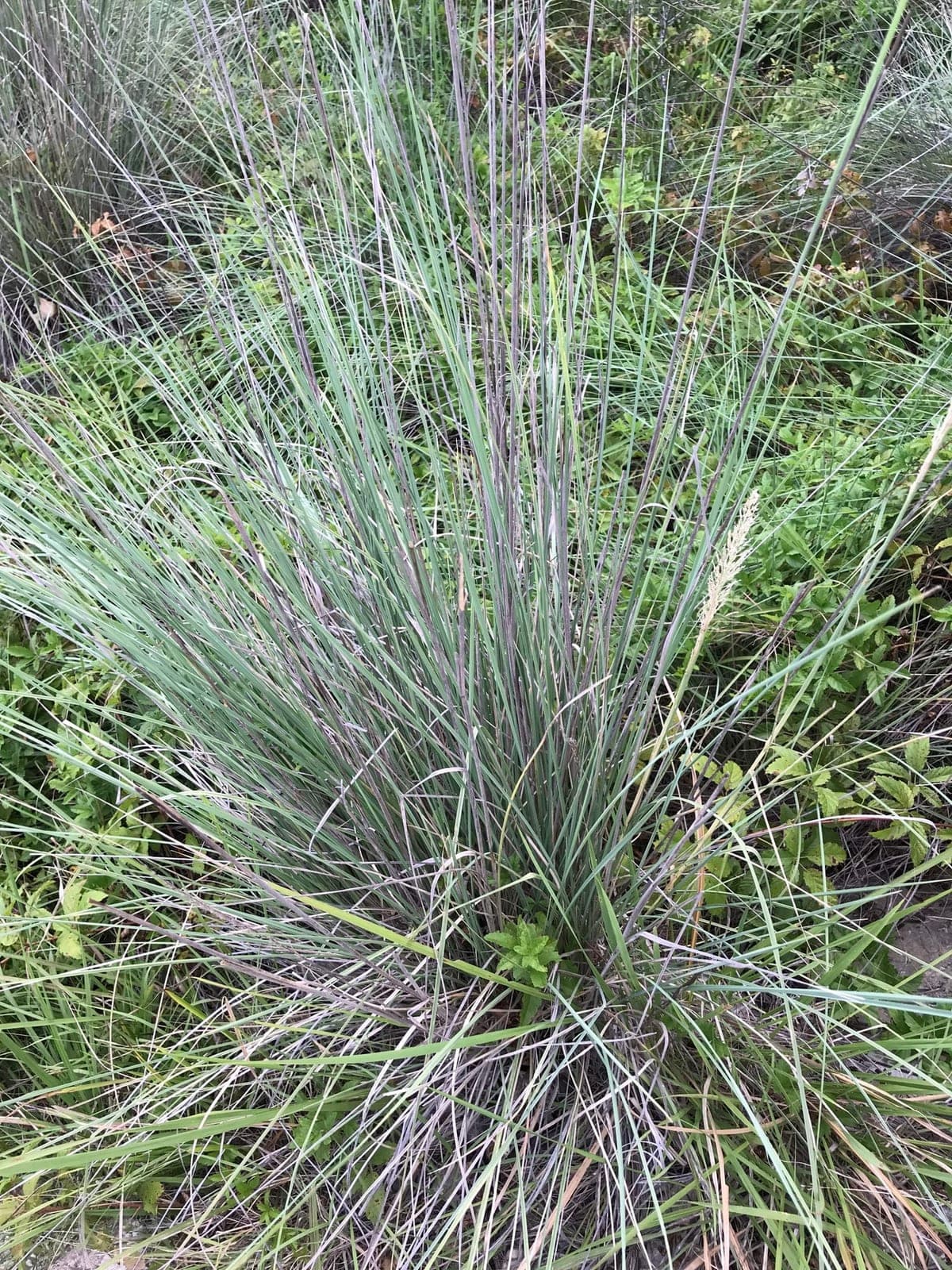
Lindheimer's Muhly is a large native bunch grass from the Edwards Plateau of Texas and adjacent northern Mexico, named for the naturalist Ferdinand Jacob Lindheimer, known as the Father of Texas Botany. Its blue-green arching foliage and silver-purple plumes - produced in fall and persisting into winter - give it strong structural value across multiple seasons.
Once established, this grass handles drought well and thrives in lean, rocky, or sandy soils with sharp drainage. Full sun and infertile soil keep clumps upright; supplemental irrigation or rich soil causes flopping. Cold-hardiness extends to zone 6a where drainage is excellent, but heavy clay or persistently wet sites increase winter dieback risk. Plants self-seed modestly and rarely need division.
Ecoregions:Great Plains
Crown Rot
Lower leaves yellow and wilt; the base of the rosette turns brown and soft, sometimes with white fungal threads at the soil line. Plants collapse in wet conditions.
Remove and destroy affected plants. Improve drainage and avoid overhead watering. Do not mulch directly against the crown. Space plants for airflow and avoid replanting in the same wet spot.
Root rot
Plants wilt, yellow, and stunt even in moist soil; lower stems and roots turn brown, soft, and mushy and the plant may collapse. Most common in heavy, wet, or poorly drained ground.
Improve drainage and stop overwatering, and never plant too deep. Lift and destroy badly affected plants along with the soil around the roots. Grow in raised or free-draining beds to prevent it returning.