
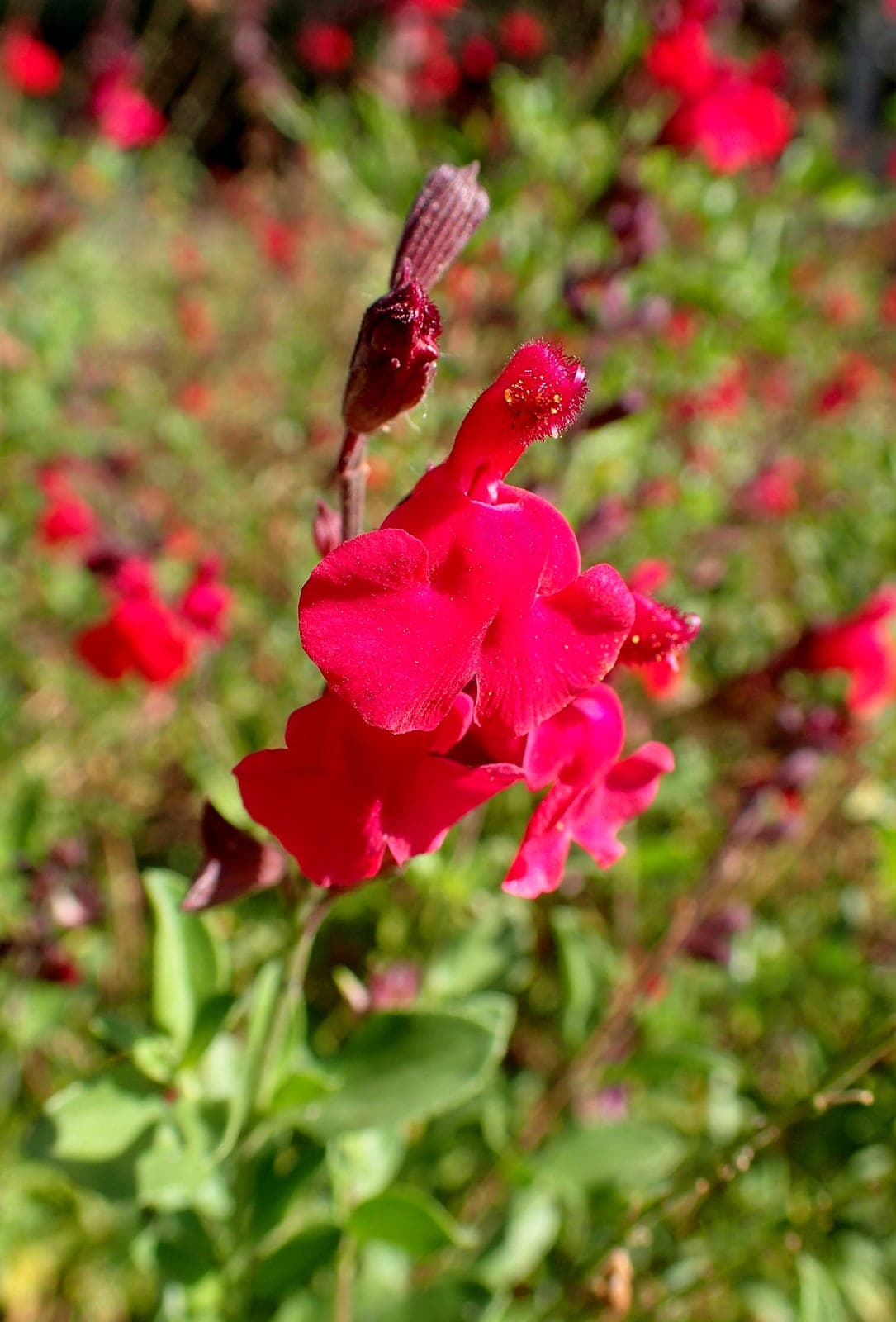
Native to rocky slopes from central Texas into northern Mexico, autumn sage is a compact, woody-based shrub that blooms on and off from spring through fall, with its heaviest flush arriving as temperatures cool in early autumn - hence the common name. Small tubular flowers in shades of red, pink, or purple depending on cultivar draw hummingbirds all season.
It's a true drought-tolerant plant once established, needing little supplemental water and full sun to bloom well; the biggest threat is poor drainage, which causes root rot over winter. A hard prune in late winter keeps the shrub compact and encourages fresh flowering wood.
Ecoregions:Great PlainsNorth American Deserts
Root rot
Plants wilt, yellow, and stunt even in moist soil; lower stems and roots turn brown, soft, and mushy and the plant may collapse. Most common in heavy, wet, or poorly drained ground.
Improve drainage and stop overwatering, and never plant too deep. Lift and destroy badly affected plants along with the soil around the roots. Grow in raised or free-draining beds to prevent it returning.