
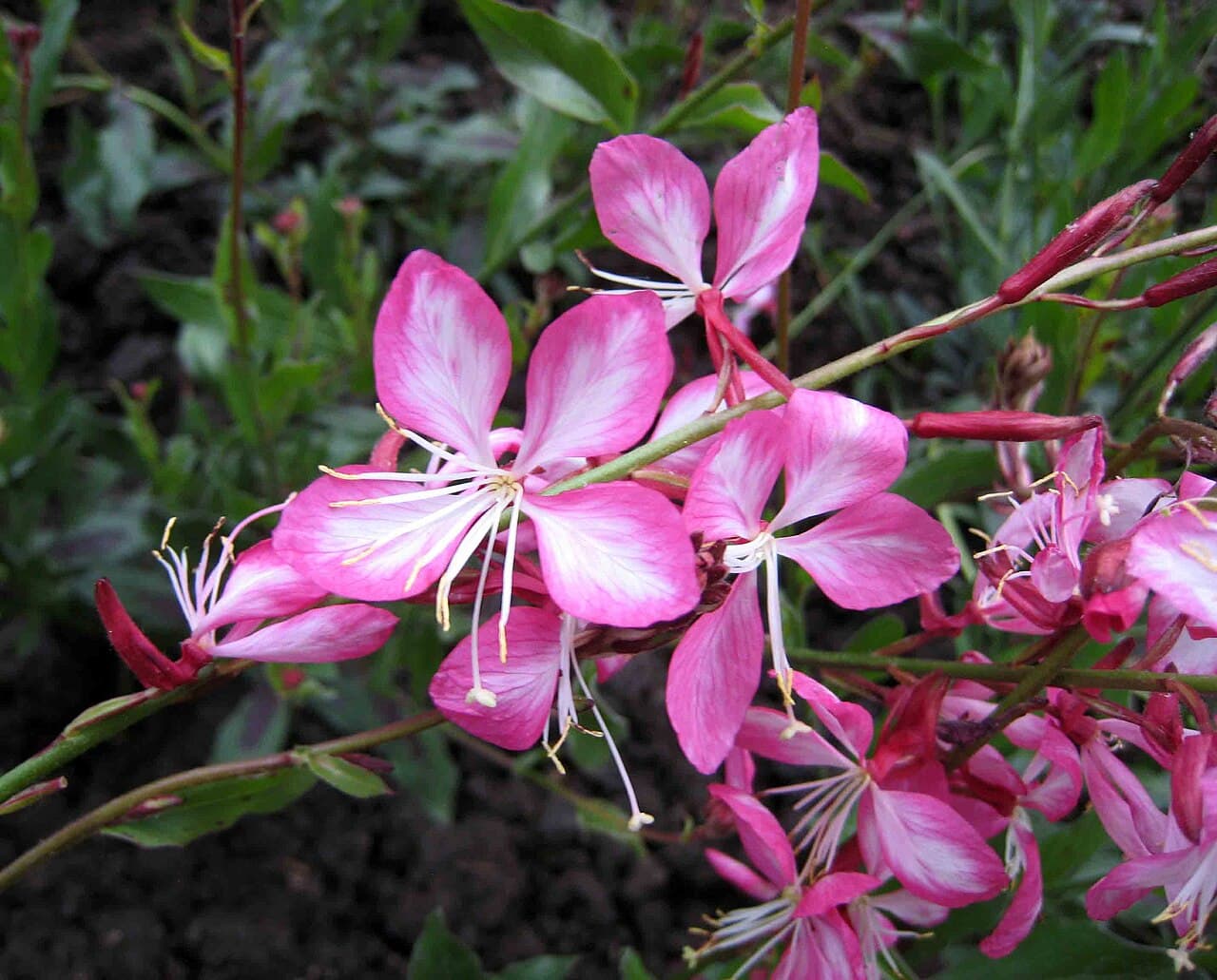
 'Rosy Jane' - white petals edged in rose-pink, compact habit. Photo: 阿橋 HQ, CC BY-SA 2.0.
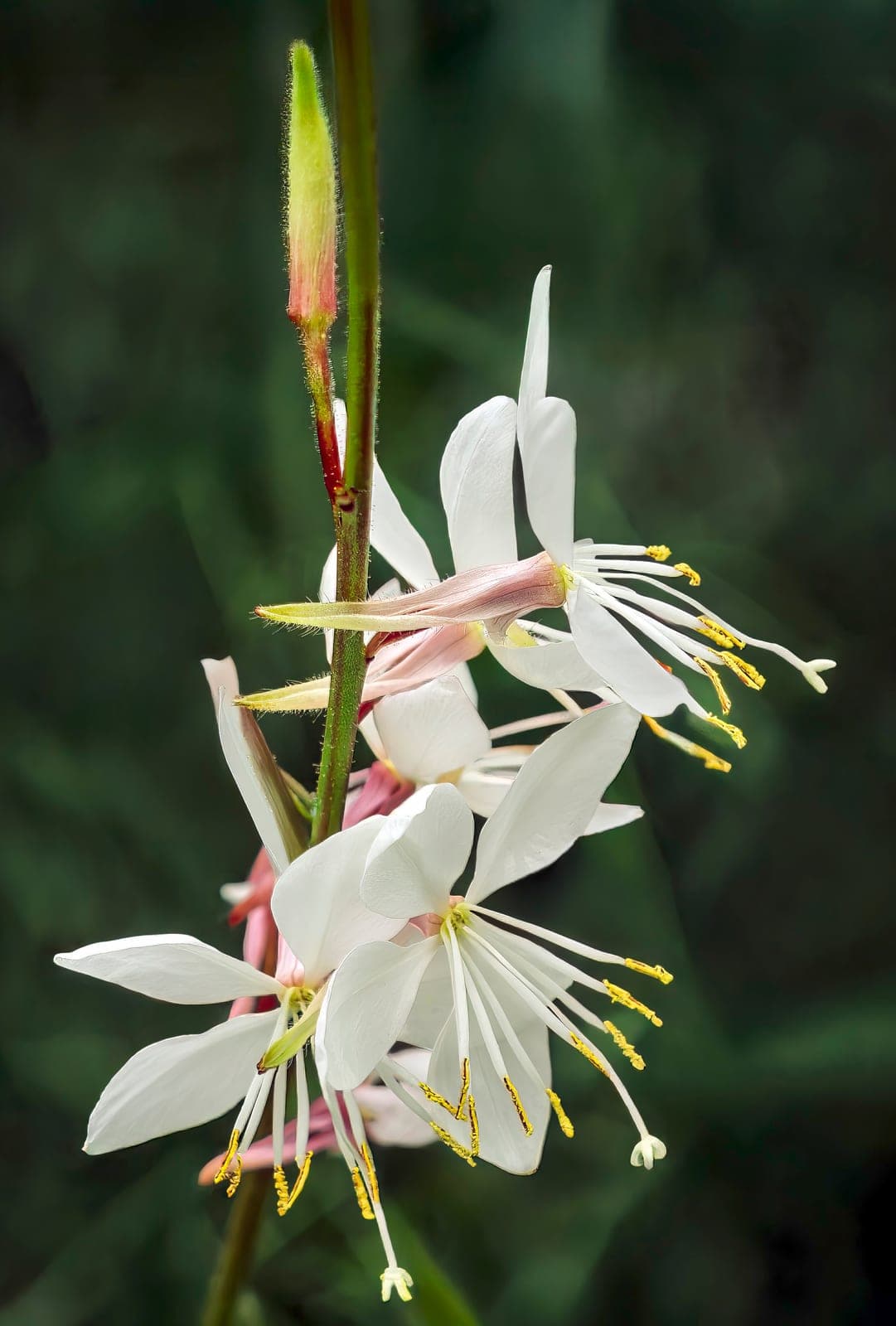
Whirling butterflies is a wiry, airy perennial native to Texas and Louisiana, sending up loose sprays of small pink-white flowers that flutter above the foliage on the lightest breeze - the resemblance to a cloud of tiny butterflies gives the plant its common name. It blooms from late spring straight through to frost with almost no deadheading required.
Its deep taproot makes it exceptional in drought and poor soil but also means it resents transplanting once established and struggles in heavy clay or consistently wet ground. Give it a lean, well-drained spot and leave it alone - it is not a plant that benefits from rich soil or frequent watering.
Ecoregions:Eastern Temperate ForestsGreat Plains
Root rot
Plants wilt, yellow, and stunt even in moist soil; lower stems and roots turn brown, soft, and mushy and the plant may collapse. Most common in heavy, wet, or poorly drained ground.
Improve drainage and stop overwatering, and never plant too deep. Lift and destroy badly affected plants along with the soil around the roots. Grow in raised or free-draining beds to prevent it returning.
Crown Rot
Lower leaves yellow and wilt; the base of the rosette turns brown and soft, sometimes with white fungal threads at the soil line. Plants collapse in wet conditions.
Remove and destroy affected plants. Improve drainage and avoid overhead watering. Do not mulch directly against the crown. Space plants for airflow and avoid replanting in the same wet spot.