
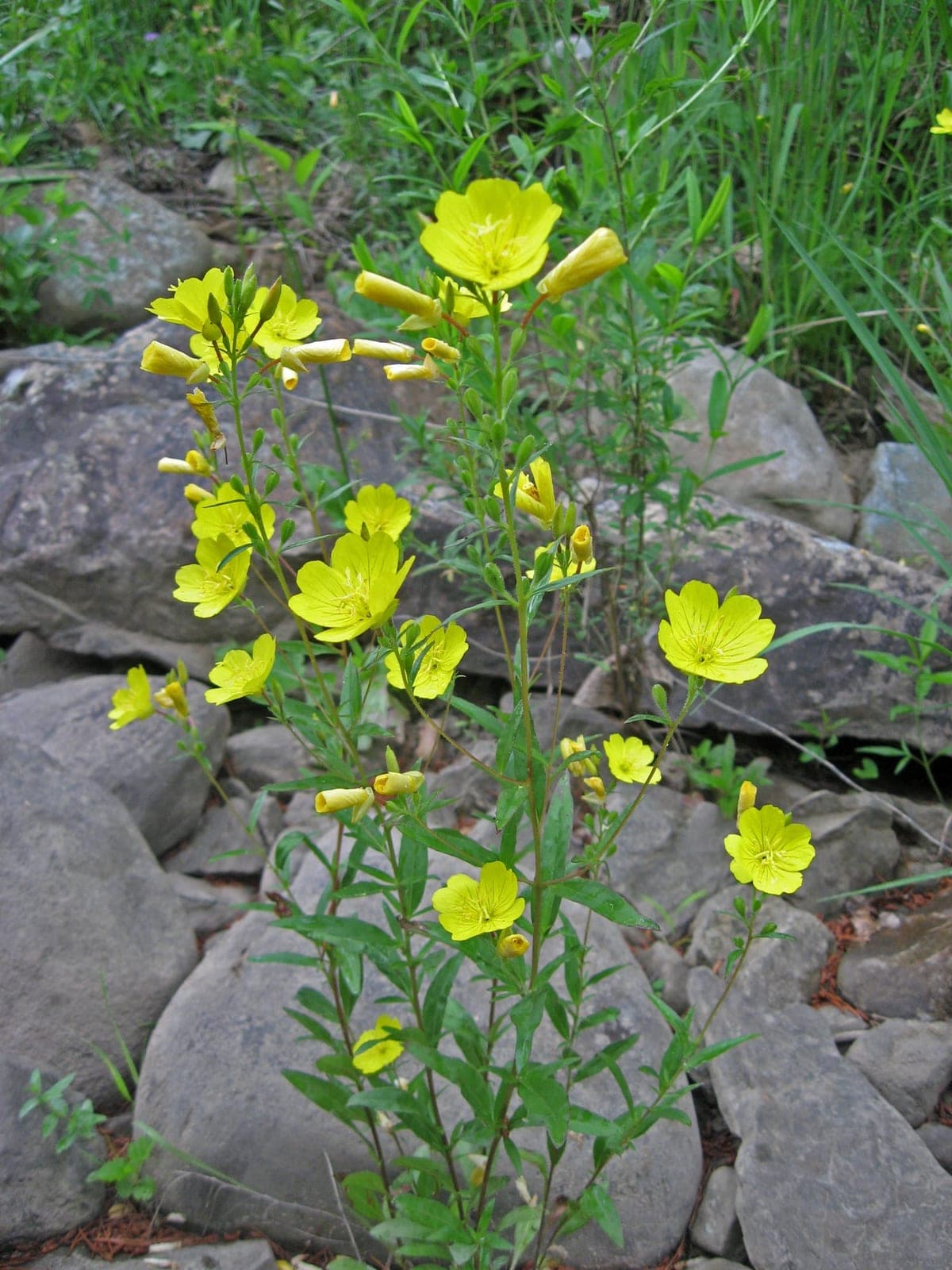
Oenothera fruticosa is a native North American perennial in the evening primrose family. It produces bright yellow, bowl-shaped flowers from late spring through early summer, opening during the day rather than at night as many related species do. Foliage often turns red to bronze in fall, extending seasonal interest into a second period.
Plants spread slowly by rhizomes to form loose colonies and suit sunny borders, naturalized meadow plantings, and slopes with good drainage. Lean to average, well-drained soil keeps growth upright and compact; overly rich or wet conditions produce floppy stems and increase disease pressure. Clumps benefit from division every three to four years to maintain vigor. pH slightly acidic to neutral suits them best, and they perform well in dry, rocky soils where more demanding perennials struggle.
Young stems and leaves of this species were used as food by Cherokee people of the eastern United States, placing sundrops among the edible native plants of the region.
Ecoregions:Northern ForestsEastern Temperate Forests
Powdery mildew
White or grey powdery coating on leaves - usually starting on older growth in humid conditions or when nights cool.
Improve air circulation by thinning plants. Apply neem oil or potassium bicarbonate spray at first sign. Avoid overhead watering.
Rust
Orange to brown raised pustules on the undersides of leaves, with yellow spotting on the upper surface. Heavy infections cause leaves to yellow and drop.
Remove and destroy infected leaves. Avoid overhead watering and improve air circulation. Apply a sulfur or copper-based fungicide if it spreads. Clear plant debris in fall.
Root rot
Plants wilt, yellow, and stunt even in moist soil; lower stems and roots turn brown, soft, and mushy and the plant may collapse. Most common in heavy, wet, or poorly drained ground.
Improve drainage and stop overwatering, and never plant too deep. Lift and destroy badly affected plants along with the soil around the roots. Grow in raised or free-draining beds to prevent it returning.
Fungal leaf spot
Brown or purplish spots on the leaves, often ringed with a yellow halo, that spread and merge in warm, humid, or wet weather; heavily spotted leaves yellow and drop early.
Pick off spotted leaves and clear fallen debris to remove overwintering spores. Improve air circulation by thinning, and water at the base so foliage dries quickly. If it persists, apply a copper- or sulfur-based fungicide at the first sign.