
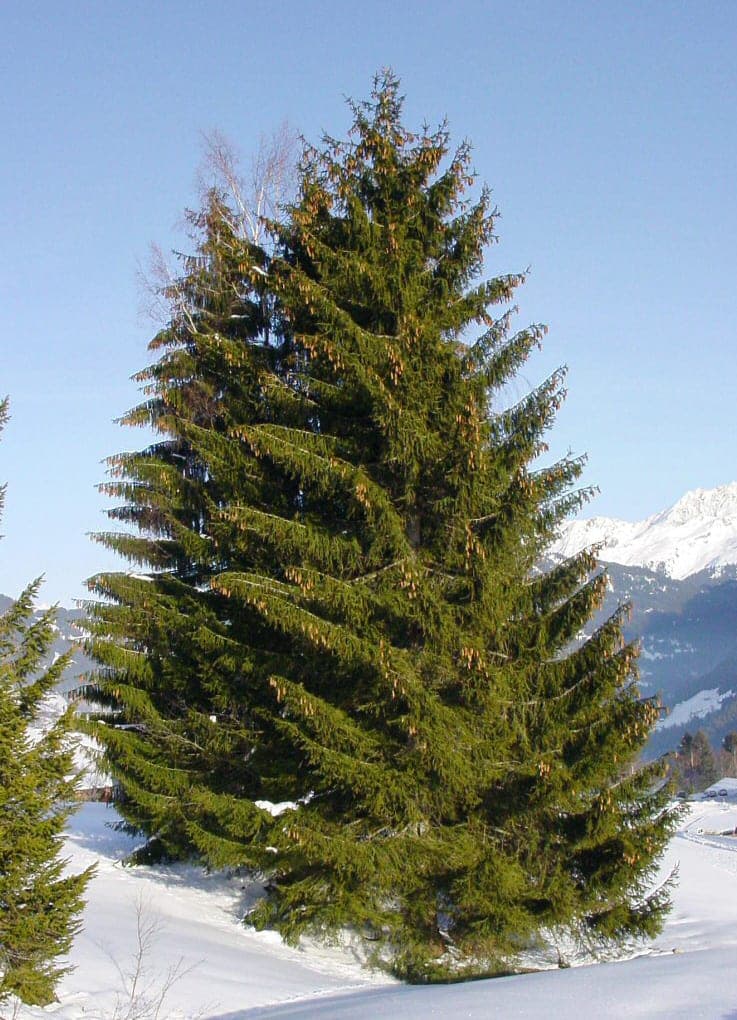
Picea pungens 'Niemetz' is a dwarf cultivar of Colorado spruce that forms a dense, broadly globose mound. Growth is typically 1–3 inches per year, and mature specimens rarely exceed 3–5 feet in height and width after several decades. The silver-blue needles and compact, self-shaping habit make it a low-maintenance anchor in rock gardens, foundation plantings, and mixed conifer borders where year-round structure is the goal.
Colorado spruce is native to the Rocky Mountains at elevations of 6,000–11,000 feet, giving this cultivar exceptional cold tolerance through zone 2a. It requires full sun and well-drained soil; poor drainage is the leading cause of decline. In humid climates, siting plants where air circulates freely significantly reduces the risk of Rhizosphaera needle cast, which is the most prevalent disease problem on this species. Slightly acidic soil is preferred, though near-neutral pH is tolerated. Because 'Niemetz' holds a natural symmetrical form, it needs little to no pruning.
Ecoregions:Northwestern Forested MountainsGreat PlainsNorth American DesertsTemperate Sierras
Cytospora Canker
White or blue-white pitch masses ooze from bark on lower branches and the trunk. Affected branches die back progressively from the tip inward; bark beneath the resin is discolored brown and may have a resinous, sunken appearance.
Prune infected branches well below the canker margin into healthy wood and destroy all cuttings. Sterilize pruning tools with 70% isopropyl alcohol between each cut. No effective fungicide is available; prevent recurrence by avoiding drought stress, soil compaction, and mechanical bark injury.
Rhizosphaera Needle Cast
Needles on inner and lower branches turn purple-brown in their second year and drop prematurely, leaving progressively bare branch sections that work upward through the canopy over multiple seasons. Rows of small black fungal fruiting bodies (pycnidia) are visible along needle undersides under a hand lens.
Apply chlorothalonil or copper-based fungicide when new needles reach half their final length; repeat 3–4 weeks later. Rake and remove fallen needles beneath the tree. Maintain adequate spacing for air circulation. Treat for 2–3 consecutive springs on heavily infected trees before evaluating recovery.