
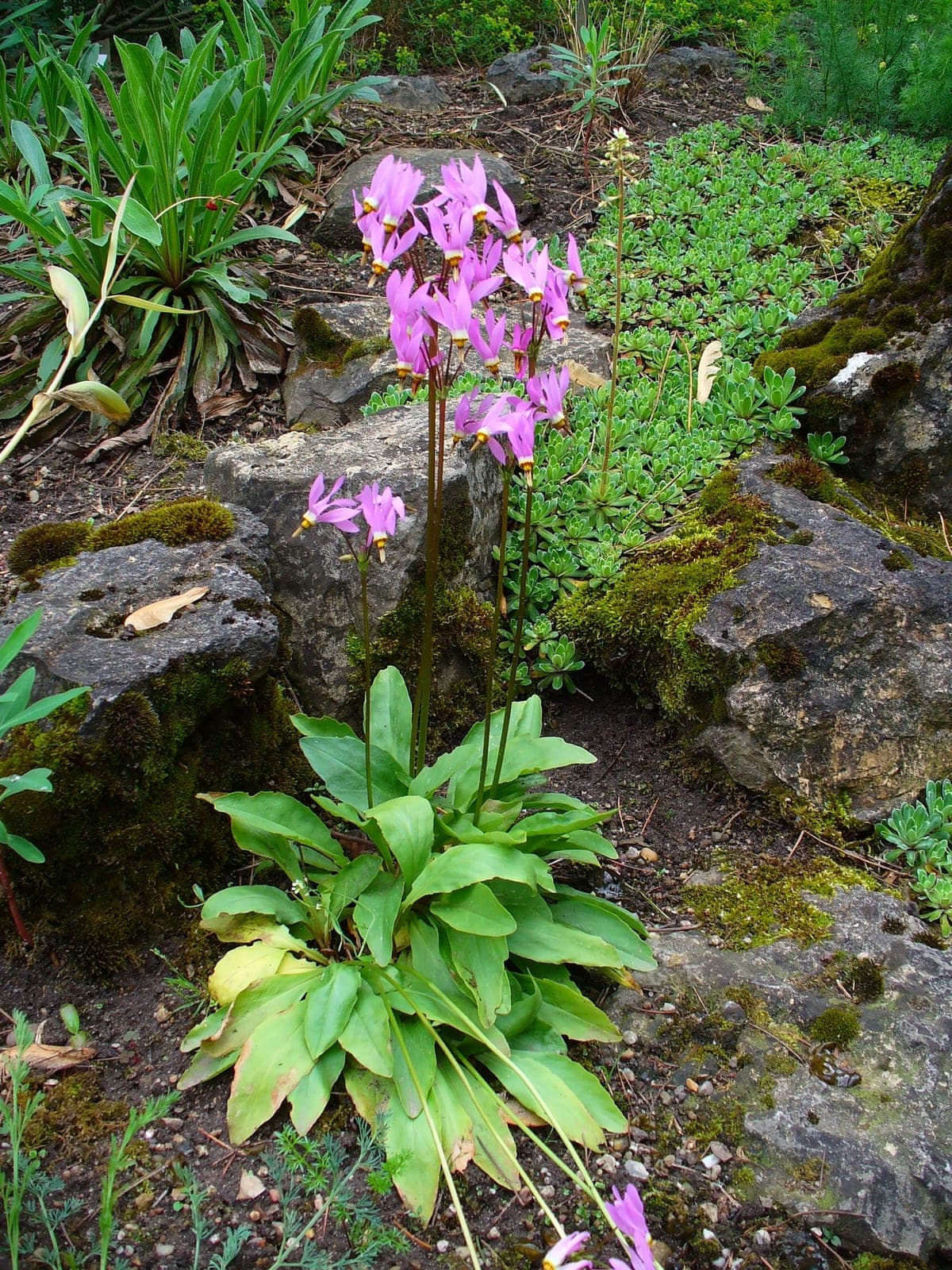
Shooting star is a native North American perennial found in prairies, open woodlands, and rocky glades from Pennsylvania to Kansas and south through the Ozarks. Its reflexed petals sweep backward from a pointed beak of fused stamens, giving the plant its name and silhouette. It produces stalks 12–20 inches above a flat basal rosette in April and May, then goes fully dormant by midsummer.
The species requires moist, humus-rich soil with reliable drainage; standing water during summer dormancy promotes crown rot. Plant it beneath deciduous trees or at the shaded border edge where spring light reaches before the canopy closes. Interplant with ferns, hostas, or sedges to fill the gap left by collapsing foliage in July. Mark clump locations in late summer before foliage disappears completely to prevent accidental digging during dormancy.
Shooting star is a buzz-pollination specialist: bumblebees grasp the stamen column and vibrate their flight muscles to release pollen through sonication, making it dependent on native bee populations. Cherokee people traditionally used root preparations externally for skin ailments and sore throats.
Ecoregions:Eastern Temperate ForestsGreat Plains
Crown Rot
Lower leaves yellow and wilt; the base of the rosette turns brown and soft, sometimes with white fungal threads at the soil line. Plants collapse in wet conditions.
Remove and destroy affected plants. Improve drainage and avoid overhead watering. Do not mulch directly against the crown. Space plants for airflow and avoid replanting in the same wet spot.
Root rot
Plants wilt, yellow, and stunt even in moist soil; lower stems and roots turn brown, soft, and mushy and the plant may collapse. Most common in heavy, wet, or poorly drained ground.
Improve drainage and stop overwatering, and never plant too deep. Lift and destroy badly affected plants along with the soil around the roots. Grow in raised or free-draining beds to prevent it returning.
Botrytis (grey mould)
Grey fuzzy mould on petals and stems, worst in cool wet conditions.
Remove affected parts immediately. Improve air circulation. Avoid overhead watering. Apply copper fungicide if severe.
Fungal leaf spot
Brown or purplish spots on the leaves, often ringed with a yellow halo, that spread and merge in warm, humid, or wet weather; heavily spotted leaves yellow and drop early.
Pick off spotted leaves and clear fallen debris to remove overwintering spores. Improve air circulation by thinning, and water at the base so foliage dries quickly. If it persists, apply a copper- or sulfur-based fungicide at the first sign.