
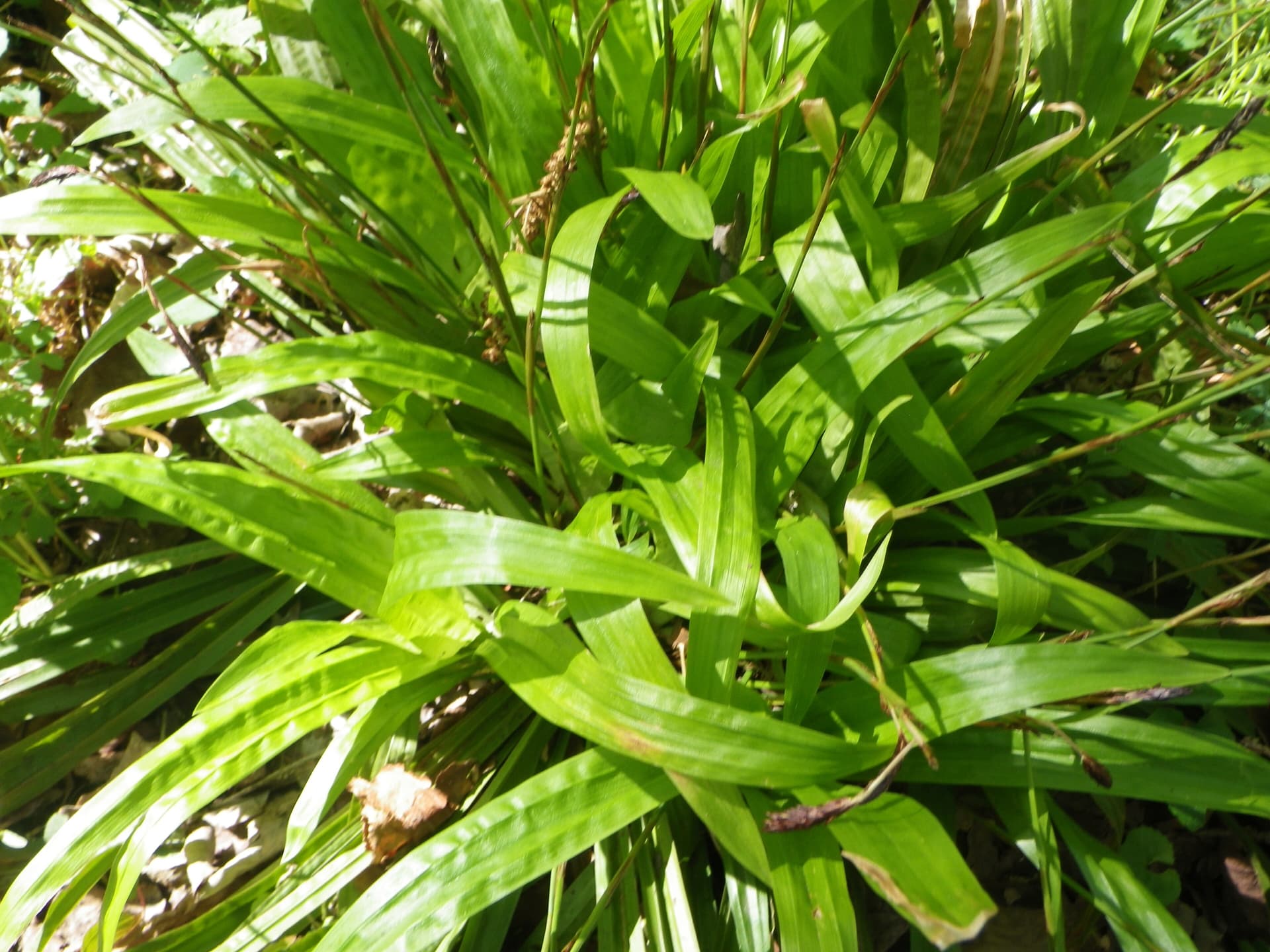
Carex plantaginea is a native North American woodland sedge grown for its broad, deeply pleated leaves that give the plant its common name. It ranges naturally from Quebec south to Georgia and west into the upper Midwest, occurring in rich, moist deciduous forests where it often carpets shaded slopes and ravine floors. Gardeners use it as a low-maintenance groundcover under trees and in shaded borders where turf and most ornamentals fail.
Clumps expand slowly and the plant self-seeds modestly under favorable conditions, gradually colonizing open ground without becoming aggressive. Foliage is semi-evergreen and holds through mild winters, extending its season of interest. Leaf litter mulch mimics its natural habitat, conserves moisture, and feeds the humus-rich soil it requires. Slightly acidic to neutral pH suits it best; avoid compacted or poorly drained sites.
Ecoregions:Northern ForestsEastern Temperate Forests
Fungal leaf spot
Brown or purplish spots on the leaves, often ringed with a yellow halo, that spread and merge in warm, humid, or wet weather; heavily spotted leaves yellow and drop early.
Pick off spotted leaves and clear fallen debris to remove overwintering spores. Improve air circulation by thinning, and water at the base so foliage dries quickly. If it persists, apply a copper- or sulfur-based fungicide at the first sign.
Root rot
Plants wilt, yellow, and stunt even in moist soil; lower stems and roots turn brown, soft, and mushy and the plant may collapse. Most common in heavy, wet, or poorly drained ground.
Improve drainage and stop overwatering, and never plant too deep. Lift and destroy badly affected plants along with the soil around the roots. Grow in raised or free-draining beds to prevent it returning.