
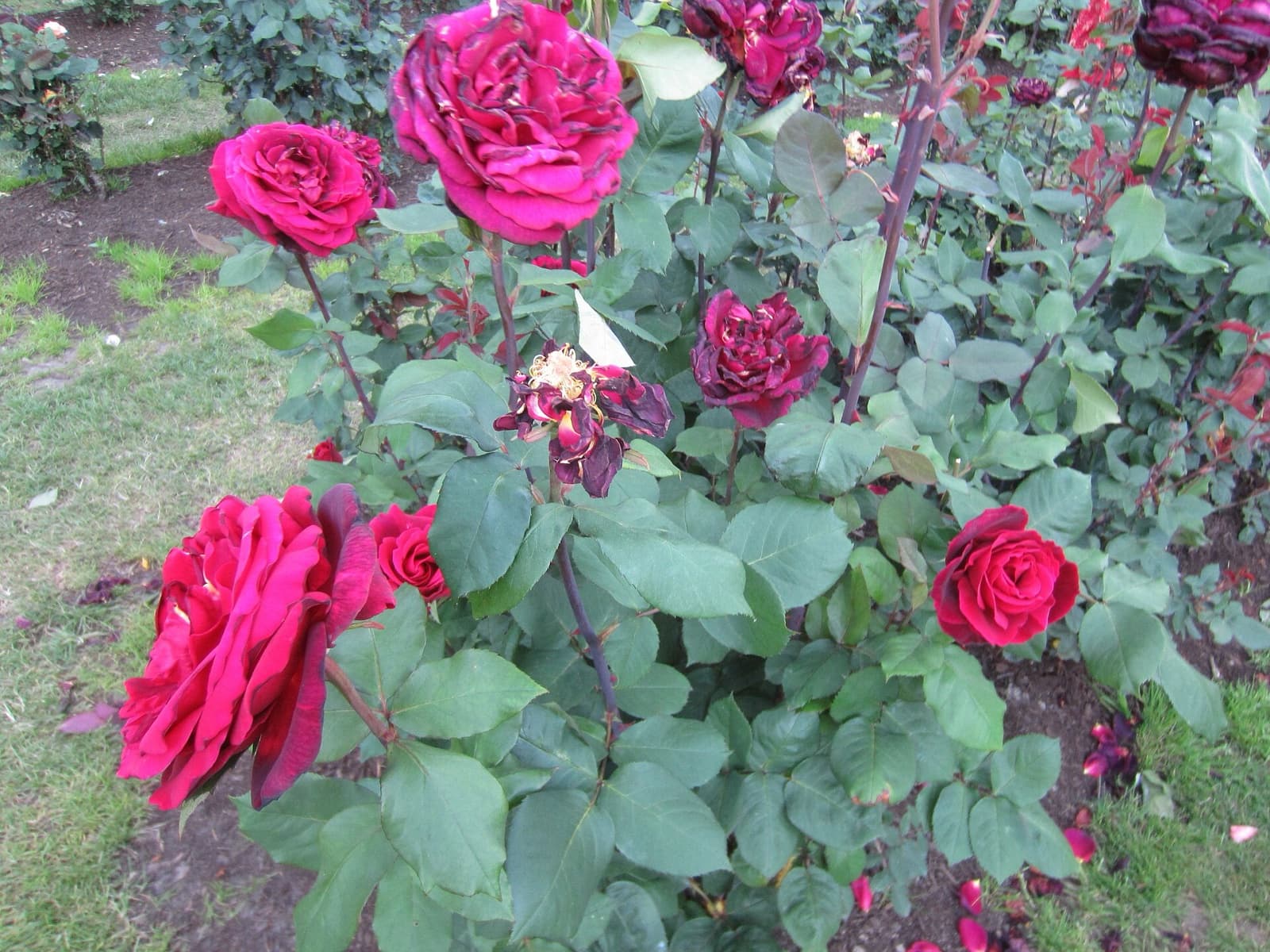
'Mister Lincoln' is the red rose people picture: deep, velvety crimson, high-centred blooms on long, straight stems, with a strong damask scent that many red roses lack. It was bred by Swim and Weeks in California and introduced in 1964, and it won the All-America Rose Selection the following year.
The bush is tall and upright, 4 to 6 feet, which makes it easy to cut from and better at the back of a bed than the front. It is a hybrid tea and wants the full treatment: full sun, rich soil, regular water, a hard prune each year as the buds swell, and deadheading through the season. It does best in warm summers and can be slow to flush in cool, wet ones.
Cut the flowers just as the buds begin to unfurl. In very hot sun the dark petals can scorch or blue slightly as they age.
Growing roses? Read the Rose Care Calendar - pruning by class, feeding, pests, climbers, and growing for hips, timed to your frost dates.These dates are for Zone 6b. Enter your ZIP to time every job to your own frost dates.
- cut · Feb 27 - Mar 20The main prune: Hybrid teas, floribunda, shrub and English roses, and climbers: prune while the plant is still dormant but the buds are swelling - the old cottage rule is to cut when the forsythia blooms.
- plant · Mar 13 - Apr 3Plant bare-root roses while still dormant - soak the roots for a few hours, spread them over a mound of soil in a wide hole, and water in well
- overwinter · Mar 27 - Apr 17First feed and mulch: As the buds break, work a balanced rose feed into the soil around the base and lay a thick mulch of compost or well-rotted manure over the root zone (keep it off the stems).
- watch · Apr 10Feed with a balanced rose fertilizer as the buds break, and again once the first flush of flowers fades
- watch · Apr 24 - Jun 5Watch for black spot and aphids: As the new growth softens, aphids cluster on the tips and the first spots of fungal disease appear on the lower leaves.
- watch · May 8Spray roses preventively against yellow spot (rose rust) in preparation - a mix of copper fungicide, milk and water with a little dish soap, plus a garlic spray - before the spots can take hold
- watch · May 29Check leaf undersides weekly for yellow spot (rose rust) - once roses get the spot there's no cure, so remove and destroy infected leaves immediately
- cut · Jun 5 - Jul 31Deadhead through the flush: On repeat-flowering roses, cut spent blooms back to the first strong outward-facing leaf to push the next flush.
- watch · Jun 12 - Jun 26Second feed after the first flush: Once the first big flush fades, feed again to fuel the repeat.
- cut · Any time in summerDeadhead spent blooms back to the first outward-facing five-leaflet leaf to keep the repeat flushes coming
- watch · Sep 4 - Sep 18Last feed of the year: Stop feeding six to eight weeks before your first frost.
- overwinter · Nov 20 - Dec 25Winter tidy and protect: After leaf-fall, shorten very long canes by a third so winter wind can't rock the roots loose, and mound compost or bark over the graft union of grafted roses in cold zones.
- buy · Jan 2 - Jan 16Order bare-root roses - about two months before planting; named varieties sell out early
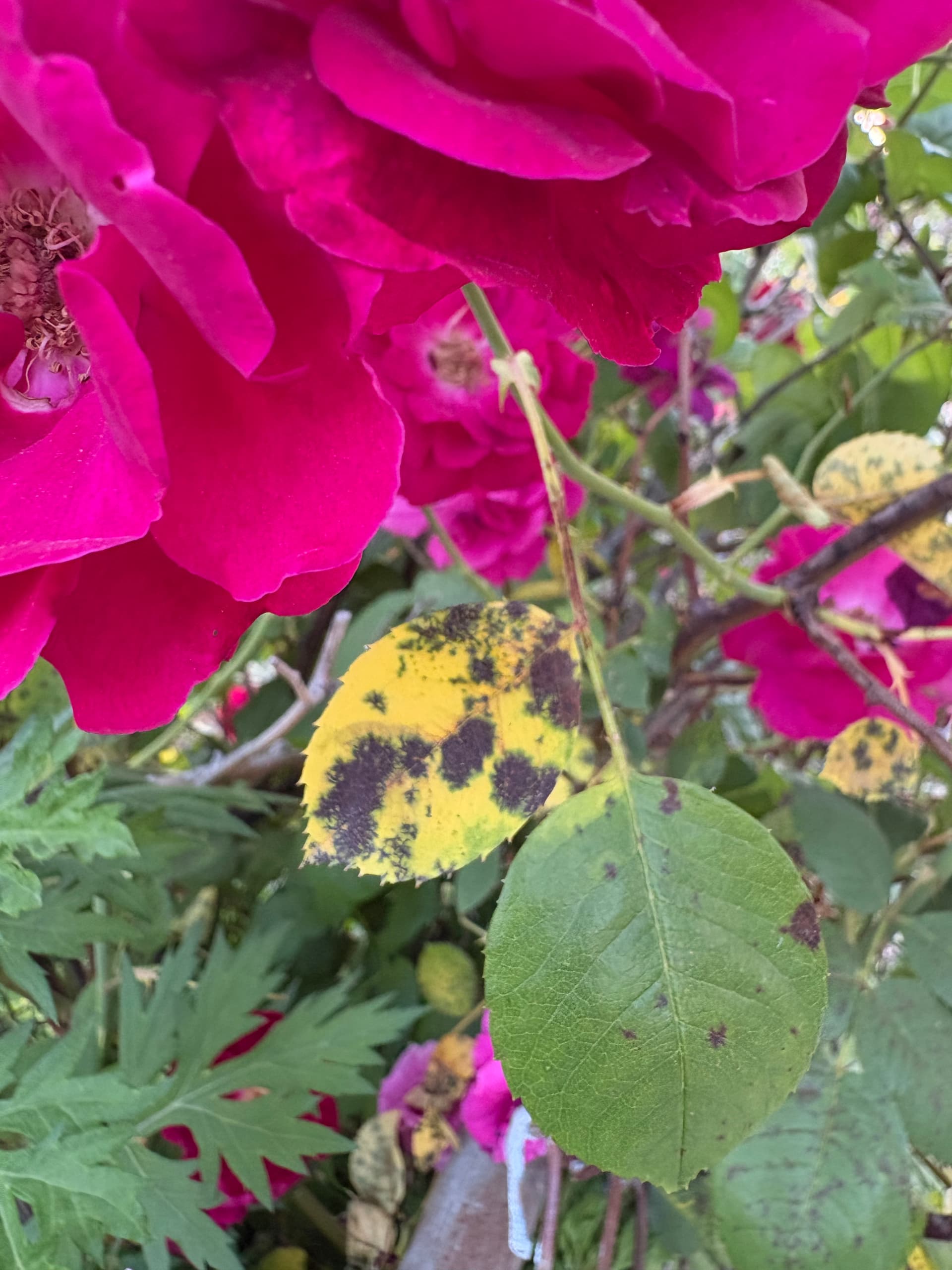
Yellow spot (rose rust)
Bright yellow spots on the upper surface of leaves, with orange-yellow powdery pustules on the underside. Leaves may drop prematurely. Worst in cool, wet springs.
Remove and bin all affected leaves - do not compost. Apply a systemic fungicide (myclobutanil or trifloxystrobin) at first sign and repeat every 10–14 days. Spray preventively from early spring before infection takes hold. Improve air circulation by pruning to an open centre.
Rose Black Spot
Round black spots with fringed edges on leaves, often surrounded by yellowing. Affected leaves drop early, weakening the plant.
Remove and destroy infected leaves and fallen debris. Avoid overhead watering. Apply a fungicide labeled for black spot at first sign and repeat per label. Choose resistant varieties and space plants for airflow.
Powdery mildew
White or grey powdery coating on leaves - usually starting on older growth in humid conditions or when nights cool.
Improve air circulation by thinning plants. Apply neem oil or potassium bicarbonate spray at first sign. Avoid overhead watering.
Botrytis (grey mould)
Grey fuzzy mould on petals and stems, worst in cool wet conditions.
Remove affected parts immediately. Improve air circulation. Avoid overhead watering. Apply copper fungicide if severe.
Aphids
Aphididae →Clusters of small soft insects on new growth and flower buds.
Knock off with a strong jet of water. Ladybirds and lacewings are natural predators. Insecticidal soap as last resort.
Japanese Beetle
Popillia japonica →Adults skeletonize leaves and devour petals and buds; aggregations escalate rapidly. Grubs destroy turf in late summer and fall.
Hand-pick adults in early morning into soapy water - beetles are sluggish when cool. Neem oil applied to foliage deters feeding but must be reapplied after rain. For grubs, apply milky spore (Bacillus popilliae) to turf - it takes 1–3 seasons to establish but provides long-term biological control. Beneficial nematodes (Heterorhabditis bacteriophora) applied in late August when grubs are young and near the surface offer faster results. Never use pheromone traps.